Pets
What I Wish Every Basenji Owner Knew
What two Basenjis taught me: they'll outsmart you, they pick their person, they escape anything, and every owner should know the word Fanconi.
I've had two Basenjis. Rocco, a red and white boy. And Ghost, my tricolor girl: black, white and red.
People ask me what they're like, and I never know where to start. They're funny. They're stubborn. They're smarter than you'd believe until you live with one. And they'll get so deep into your heart that losing one changes you.
This isn't a breed profile. I already wrote that: Basenji: The Barkless Dog, Explained by Somebody Who's Lived With Them. This is the other stuff. The things I learned from Rocco and Ghost that I wish somebody had sat me down and told me before day one. Some of it is funny, some of it cost me a set of blinds and some of it I'd give anything to have known sooner. All of it is real. Where I mention breed facts, they come from the American Kennel Club, the Basenji Club of America and Basenji Rescue and Transport, the same sources behind my breed guide.
Short answer: A Basenji will outsmart you if you let it, so you have to stay steps ahead. They learn fast when it's worth their while. They pick their person, and when they pick you, you know it. Don't leave them alone with anything you care about until you know what they'll do, and don't trust a crate, a fence or a closed door to stop a determined one. And learn the word Fanconi before you ever need it.

1. You Have to Stay 20 Steps Ahead
If I could give a new Basenji owner one piece of advice, it's this: you have to be about 20 steps ahead of their cleverness. Not one step. Not two. Twenty.
A Basenji is always working on something. It's watching how you open the door. It's figuring out which drawer has the treats. It's noticing that the gate latch doesn't quite catch. You think you're the one running the house, and you are, right up until the moment you aren't.
That's not a bad thing. It's what makes them so much fun. But it means you can't coast. You have to think like them: where would I go if I wanted to get out? What would I chew if I were bored? What would I steal if nobody was looking?
The American Kennel Club describes the breed as "quite independent and aloof at times." That independence is real. A Basenji doesn't wait for permission. It makes its own plans. Your job is to see those plans coming.
What staying ahead looks like
- Walk the house at their level. Look for cords, gaps, shoes, trash and anything chewable. If you can reach it on your knees, so can they.
- Assume every door, gate and latch will be tested.
- Change things up. A Basenji that figures out your routine will use it.
- Give that brain a job. Puzzle toys, short training sessions and new walks keep a smart dog busy in ways you choose.
2. They're Smarter, and More Trainable, Than People Say
You'll hear that Basenjis can't be trained. That's not my experience. Ghost picked things up fast. It surprised me how quickly I could train her.
The secret isn't that Basenjis are easy. It's that they're smart, and smart dogs learn fast when they decide it's worth it.
The AKC says Basenjis "lose interest quickly, so training sessions should last no more than five or 10 minutes." That matches what I'd tell anyone: keep it short, make it rewarding and stop before they get bored.
Training that works
- Short sessions. Five to ten minutes, a few times a day, beats one long session.
- Real rewards. Find out what your Basenji actually wants, and use it.
- Make it a game. A Basenji will work hard for something it finds interesting.
- End on a win. Finish with something they already know, so the last thing they remember is success.
- Be consistent. If the rule changes depending on your mood, a Basenji will notice, and it'll use that.
What training won't fix
Training doesn't switch off instinct. The AKC says a Basenji "should never run loose," and Basenji Rescue and Transport warns that Basenjis "will instantly give chase after anything that moves." A well-trained Basenji is still a sighthound with a hunter's brain. Recall is a skill to practice in a safe space, not a reason to drop the leash.
3. They Pick Their Person
The first day I brought Ghost home, she hopped up on my bed and smiled at me. Just like that. Day one.
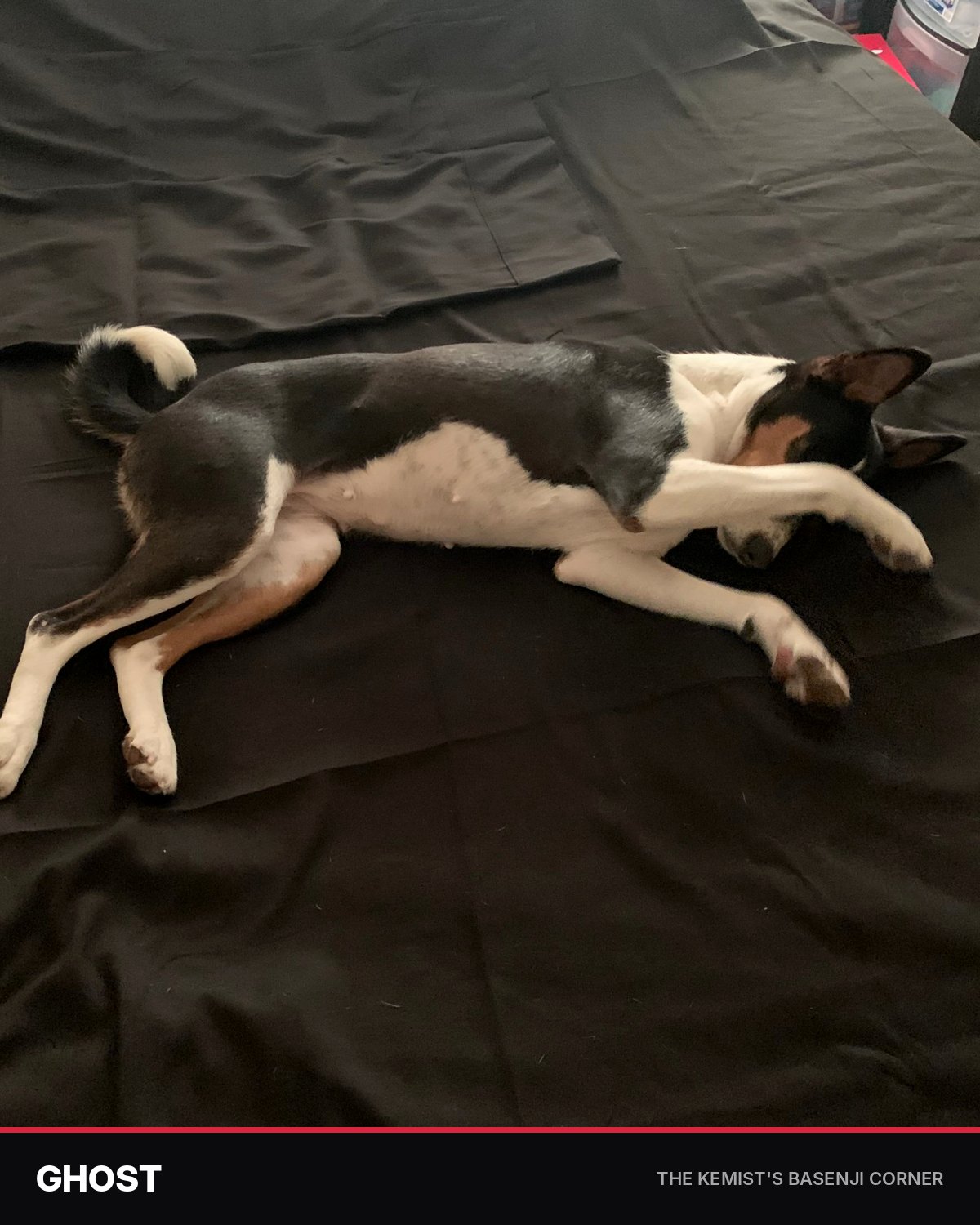
I'll never forget it. If you've had a Basenji, you probably know the look I mean. If you haven't, you'll understand the first time you see it.
Basenjis aren't known for loving everybody. The AKC describes them as "alert and careful with strangers, open and calm with friends." They have an inner circle, and they decide who's in it. When a Basenji lets you in, it's not a small thing.
What that means for you
- Give them time with new people. Let a Basenji approach on its own terms.
- Don't expect a party dog. Some Basenjis warm up to everyone. Many don't. That's normal.
- Earn the trust. Patience, consistency and respect go a long way with a dog that's always reading you.
- Expect a shadow. When a Basenji picks you, it often wants to know where you are.
4. Never Underestimate What They'll Do When You Leave
This is the lesson I learned the hard way, more than once.
I was out of the house for a short period of time, and when I came back, my blinds were demolished. Not chewed a little. Demolished.

And Ghost? I got her a big crate so she'd have extra space and feel comfortable. She broke through it anyway. She got out to search for me when I left the house.
That's a Basenji. Strong-willed, clever and, when she's attached to you, determined to find you. I can laugh about it now. It's also exactly why I say you have to stay 20 steps ahead of them, not one.
What I wish I'd done sooner
I'm not a trainer or a vet, so take this as an owner's experience, not a professional plan. These are the things I'd look at if I were starting again:
- Start alone time small. A few minutes, then longer, so being alone becomes normal.
- Tire them out first. A Basenji that's had a real walk and some play is more likely to rest while you're gone.
- Make the space Basenji-proof. Blinds, cords, shoes and anything at window height are fair game. Move it or block it.
- If your dog fights the crate or tries to break out, stop and get help. A dog that's struggling to escape can hurt itself. A stronger crate isn't the answer on its own. Talk to your vet or a qualified behavior professional about a safe plan.
- Watch for stress. A dog that destroys things or breaks out to find you may be anxious about being left. That's a sign to get professional help, not a sign the dog is bad.
Basenji Rescue and Transport puts it well when it talks about Basenjis that end up in rescue: "These dogs are not bad dogs." A destroyed set of blinds isn't a bad dog. It's a smart, bored or worried one telling you something.
5. A Fence Is Only as Good as Its Weakest Spot
If a Basenji can break through a crate to find you, it can find the gap in your fence.
Basenji Rescue and Transport recommends a 6-foot privacy fence for outdoor containment, and it won't place a dog in a home that relies on an electronic or invisible fence. As its guidance explains, a Basenji in chase mode will run straight through the shock, and then it has no reason to come back.
Check your setup
- Walk the fence line for gaps, loose boards and anything they could climb.
- Watch the gate. Latches, kids and visitors are the usual weak spots.
- Supervise yard time, especially at first.
- Keep the leash on outside the fence. Every time.

6. They Make You Laugh Every Single Day
I don't want this to sound like a list of warnings. Living with a Basenji is hilarious.
They yodel instead of bark. The AKC describes the sound as "something between a chortle and a yodel." They clean themselves like cats; the AKC calls them "fastidious." They stare at you like they're judging your life choices. They steal things just to see what you'll do.
Rocco and Ghost made every day more interesting. Even the blinds story is funny now. Mostly.

If you want a dog that does exactly what it's told and never surprises you, a Basenji isn't it. If you want a roommate with a personality and a sense of humor, there's nothing like it.
7. Every Basenji Is Its Own Dog
Rocco and Ghost were both Basenjis, but they weren't the same dog. A red and white boy and a tricolor girl, each one their own.
Breed traits are a starting point, not a script. The guides, including mine, tell you what's common. Your dog will tell you who it actually is. Pay attention.
Basenji Rescue and Transport says "most Basenji people believe that two Basenjis are twice as much fun as one." Two Basenjis also means two plans being made at once. Ask anyone with blinds.
8. Learn the Word Fanconi Before You Need It
This is the one that matters most to me.
I lost Ghost to Fanconi syndrome. Where I lived, I was the one who knew the most about the breed, and no vet around me knew how to handle it.
The Basenji Club of America calls Fanconi syndrome "the most common inherited lethal disease in basenjis." It's a kidney condition, and there's a DNA test that shows whether a dog is Clear, Carrier or Affected. For Affected dogs, the club recommends regular home urine glucose strip testing starting around age 1 to 2 and continuing for life.
What I want every owner to do
- Know your dog's Fanconi DNA status, or ask about testing.
- Set up a monitoring plan with your vet if your dog is Affected or its status is unknown.
- Know the signs: drinking a lot more, peeing a lot more, accidents in a house-trained dog.
- Get your vet the information before you need it. Don't assume they've seen it before.
I wrote a full guide so nobody has to piece this together in a panic: Basenji Fanconi Syndrome: What Owners Should Know and Ask Their Vet.

9. Find Your Vet Before You Need One
Finding a vet in advance makes an emergency less stressful. Ask whether they've treated Basenjis before, and keep your dog's records, including any Fanconi DNA report, together in one place you can grab quickly when it counts.
Basenjis aren't the most common breed, and a rare condition like Fanconi can be new to a general-practice vet. That's not a knock on vets. It just means you need to find one who'll listen, read and work with you, before an emergency.
- Ask about Basenji experience when you choose a vet.
- Ask if they'd be willing to read the breed club's health information.
- Keep your dog's records together: DNA results, test logs, blood work and medications.
- Know where your nearest emergency vet is.
You might end up being the person in the room who knows the most about your dog's breed. Be ready for that. I was. Bring your notes, ask your questions and don't be shy about pointing your vet to the breed club's resources. The right vet will work with you, and together you'll give your dog the best shot.
10. Rescue Is a Real Option
There are good Basenjis in rescue waiting for someone who already understands them.
Basenji Rescue and Transport is a volunteer-run national rescue. Dogs end up there for all kinds of reasons, and as BRAT puts it, "These dogs are not bad dogs." The process involves an application, a home visit and matching you with the right dog, and it can take time. That's a good thing. It means they're making sure the fit is right.
If you've loved a Basenji before, you already have what a rescue Basenji needs most: someone who gets it. I'm looking at adopting again through a Basenji rescue myself.
11. Be Honest With Yourself Before You Bring One Home
A Basenji isn't the right dog for everyone, and that's OK. The kindest thing you can do for a Basenji is be honest about your life before you bring one home.
Basenji Rescue and Transport asks would-be adopters to think hard if they answer "yes" to questions like these:
- Is your home life hectic right now, with small children and lots of activity?
- Are you away many hours each day for work or travel?
- Do you want a dog that's highly obedient and lives only to please you?
- Do you want a dog that can safely run off-leash?
- Do you want a dog that just lies around the house all the time?
- Do you want a dog that has never met a stranger and loves everyone instantly?
If several of those are a yes, a Basenji might not fit your life right now. That doesn't mean never. It means not yet.
And if they're mostly no? If you're home a good amount, you've got a secure fence or you're committed to leash walks, you're patient and you think a dog with opinions sounds fun, a Basenji might be exactly your dog.
12. Puppies Are Chaos With Teeth
Basenji puppies are adorable. They're also a lot.
Basenji Rescue and Transport lists "typical Basenji puppy antics" as one of the reasons dogs end up in rescue: people bring home a puppy and aren't ready for what it does. A Basenji puppy is fast, curious and into everything.
If you're going the puppy route:
- Puppy-proof like you mean it. Everything at floor level is a toy until proven otherwise.
- Start crate training and short training sessions early.
- Plan for exercise and supervision. A busy puppy is a happier puppy, and so are your shoes.
- Ask the breeder for health testing, including both parents' Fanconi DNA results.
An adult Basenji from rescue can be a great alternative. You often know more about the dog's personality up front, and you're giving a dog a second chance.
13. Budget for the Whole Life, Not the First Day
The price of a Basenji, whether it's a breeder's fee or a rescue's placement fee, is the smallest cost.
Think about fencing, a crate if it suits your dog, training, toys that can survive a Basenji, vet care, health testing and replacing what gets chewed in the first year. Blinds included. The AKC lists a life expectancy of 13 to 14 years. Plan for the dog you'll have for all of those years, not just the day you bring it home.
14. Exercise Is Part of the Deal
A tired Basenji is a good Basenji. A bored one finds its own fun, and you probably won't like it.
Daily walks, play, safe sprints in a fenced yard and games that use their brain all help. Lure coursing is an option if you want to go all in. Once they've burned off that energy, many Basenjis are happy to curl up somewhere warm, which is usually right next to you.
15. Think About the Other Animals in Your Home
A Basenji's hunting instinct doesn't switch off indoors. That chase drive Basenji Rescue and Transport describes applies to more than squirrels.
- Small pets: hamsters, rabbits, birds and other small animals can be a risky mix with a Basenji. Keep them fully separated and secure.
- Cats: some Basenjis live well with cats they've grown up with. Others never settle. Introduce slowly and supervise.
- Other dogs: many Basenjis enjoy canine company, especially another Basenji. Meet on neutral ground first, and give them time.
If you already have pets, tell the breeder or rescue. A good match up front saves everyone stress later.
16. Expect a Clean Roommate With Opinions
Here's a part people don't expect. Basenjis are tidy. The AKC calls them "fastidious" and says they "groom themselves like cats." Their short coat sheds lightly, and they're known for having little doggy odor.
What they lack in mess, they make up for in commentary. Yodels when they're excited. Grumbles when they're annoyed. A scream if something really offends them. And that stare, the one that makes you feel like you've done something wrong even when you haven't.
You'll get used to it. Then you'll miss it when it's quiet.
What I'd Tell You Before Day One
If you're thinking about a Basenji, here's my short list:
- Stay 20 steps ahead. They're smarter than you think.
- Train in short, fun sessions. They can learn fast.
- Let them pick you. When they do, you'll know.
- Basenji-proof everything before you leave them alone.
- Never trust a crate, fence or door to stop a determined Basenji. Plan for it.
- Keep the leash on outside a secure fence.
- Laugh. Every day.
- Learn the word Fanconi, and find your vet early.
- Be honest about whether your life fits a Basenji right now.
- Think about the other animals in your home.
- Budget for 13 to 14 years, not just day one.
- Consider rescue.
The Love Is Real
Rocco and Ghost gave me more than I can put into an article. The blinds, the crate, the first-day smile on my bed. Every bit of it.
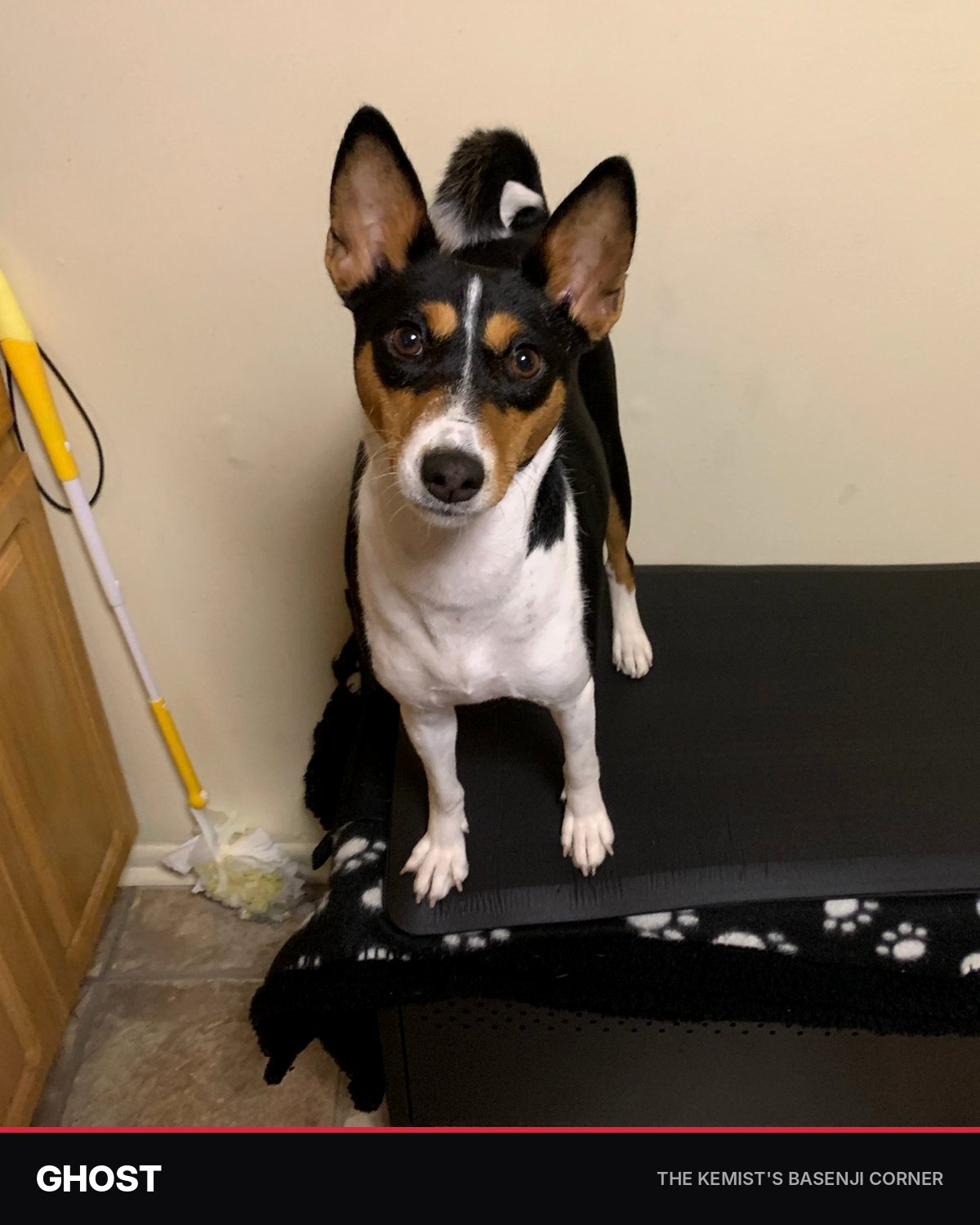
Losing Ghost still hurts. But I'd do it all again. And if writing this helps one person be a little more ready for their Basenji, or helps one dog get diagnosed a little sooner, then she's still out here making a difference.
More on the breed, Fanconi and rescue lives in the Basenji Corner.
More from The Kemist's Basenji Corner, including the Basenji Fanconi syndrome guide.
Frequently asked questions
Are Basenjis easy to train? They're smart and can learn quickly, but they're independent. The AKC recommends short training sessions of no more than five or ten minutes, with positive rewards.
Can Basenjis be left alone? Some can, with preparation, but they can be destructive or try to escape when bored or anxious. Build up alone time gradually, exercise them first and Basenji-proof the space. Talk to your vet or a qualified trainer if your dog is distressed when left.
Do Basenjis need a fence? Basenji Rescue and Transport recommends a 6-foot privacy fence and won't place dogs in homes that rely on electronic or invisible fences. The AKC says a Basenji should never run loose.
What health problem should every Basenji owner know about? Fanconi syndrome, an inherited kidney condition that the Basenji Club of America calls the most common inherited lethal disease in the breed. Know your dog's DNA status and set up a monitoring plan with your vet.
Sources
- Basenji Dog Breed Information (American Kennel Club) (breed registry)
- Basenji Health (Basenji Club of America) and Direct Fanconi Syndrome DNA Test FAQ (breed parent club)
- BRAT FAQ (Basenji Rescue and Transport) (breed rescue)