Gaming & Culture
Why GTA V Still Feels Like Home After 13 Years
A drive through Los Santos, a favorite radio station and the very normal decision to pretend Franklin’s house and dog were mine.
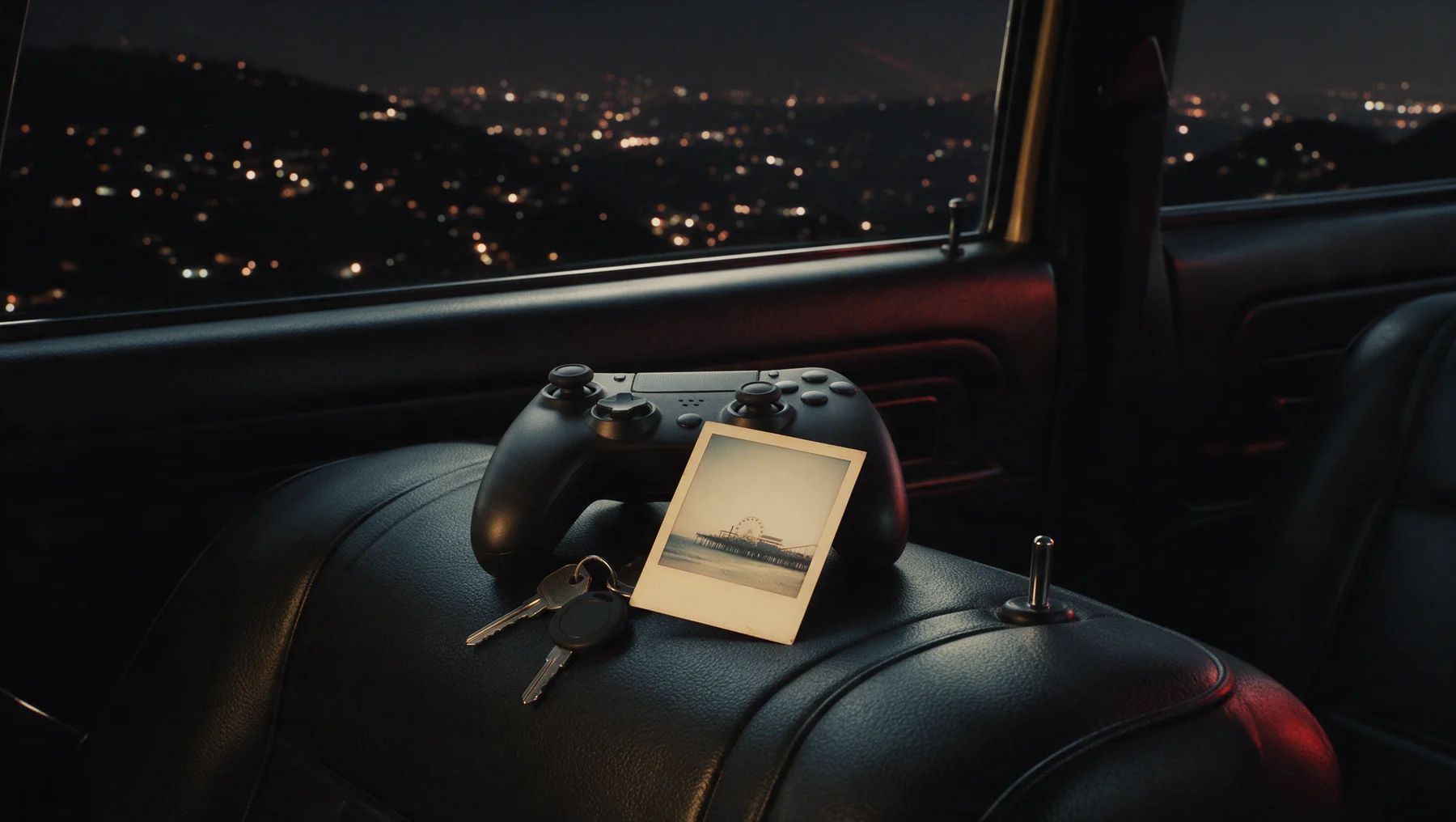
Franklin had a house in the hills, and I was very generous about letting him stay there.
That’s how I remember playing Grand Theft Auto V. I’d get in a car, put on some music and drive around Los Santos. Chop was my dog when it suited me. The view was mine when it suited me. Any obligations associated with either one went straight back to Franklin.
With GTA VI out, plenty of us are revisiting the old city. I can think of a dozen reasons to look back at a game this big. Mine starts with a much smaller question. How did a place built for car chases become somewhere I could go to do absolutely nothing? Rockstar’s GTA VI launch announcement
The city eventually stopped needing an introduction
In this article
- The city eventually stopped needing an introduction
- A map can become a place you recognize
- Franklin’s house was the funniest part of the dream
- Three guys, three ways to get comfortable
- A song sounds different when you have somewhere to go
- The radio makes a trip feel like it belongs to you
- Returning to a game brings back different things for different people
- Revisiting Los Santos years later
- Give Los Santos one evening with your own rules
- Let the new city become familiar at its own speed
- I’m still claiming the dog
GTA V launched in September 2013. Rockstar’s original trailer sold Los Santos as a city of aging celebrities, self-help and people trying to make it. You get to know the place through Michael, Franklin and Trevor, each with their own idea of what a good life would cost. But after enough time in the city, you can come in with a little agenda of your own. Rockstar’s original GTA V trailer · Take-Two’s original release announcement
The first time you see a big game map, it might as well be somebody else’s restaurant menu. You look at the whole thing and wonder how much you’re supposed to know before you order. Later, you recognize what’s over the next hill. You know the kind of mood that would send you toward the coast. Sometimes a landmark does enough of the navigating that the route stops being a series of instructions.
I like that point in a game when you can tell somebody how to get somewhere using the same useless directions you give in real life. “Just keep going till you see the thing.” If they’ve played long enough, they probably know which thing.
A map can become a place you recognize
A big map impresses you once. It gives you a little reason to stay every time you begin recognizing it. A city starts to feel different when you can look up from the navigation and tell where you are by the way the road bends. There’s information in how the buildings spread out, how far you can see and whether the next thing on the horizon looks like a place to stop. The game can give you a route. Repetition is what gives you your bearings.
The funny thing about knowing a fictional city is that you can develop a preference about how you enter it. In an unfamiliar part of town, the shortest way sounds sensible. Once you can picture the choices, you might prefer the street that opens up to a view or the approach that makes the city lights show up all at once. That preference belongs to you. It can form even if you have no idea how many missions you have left or what percentage is on the save file.
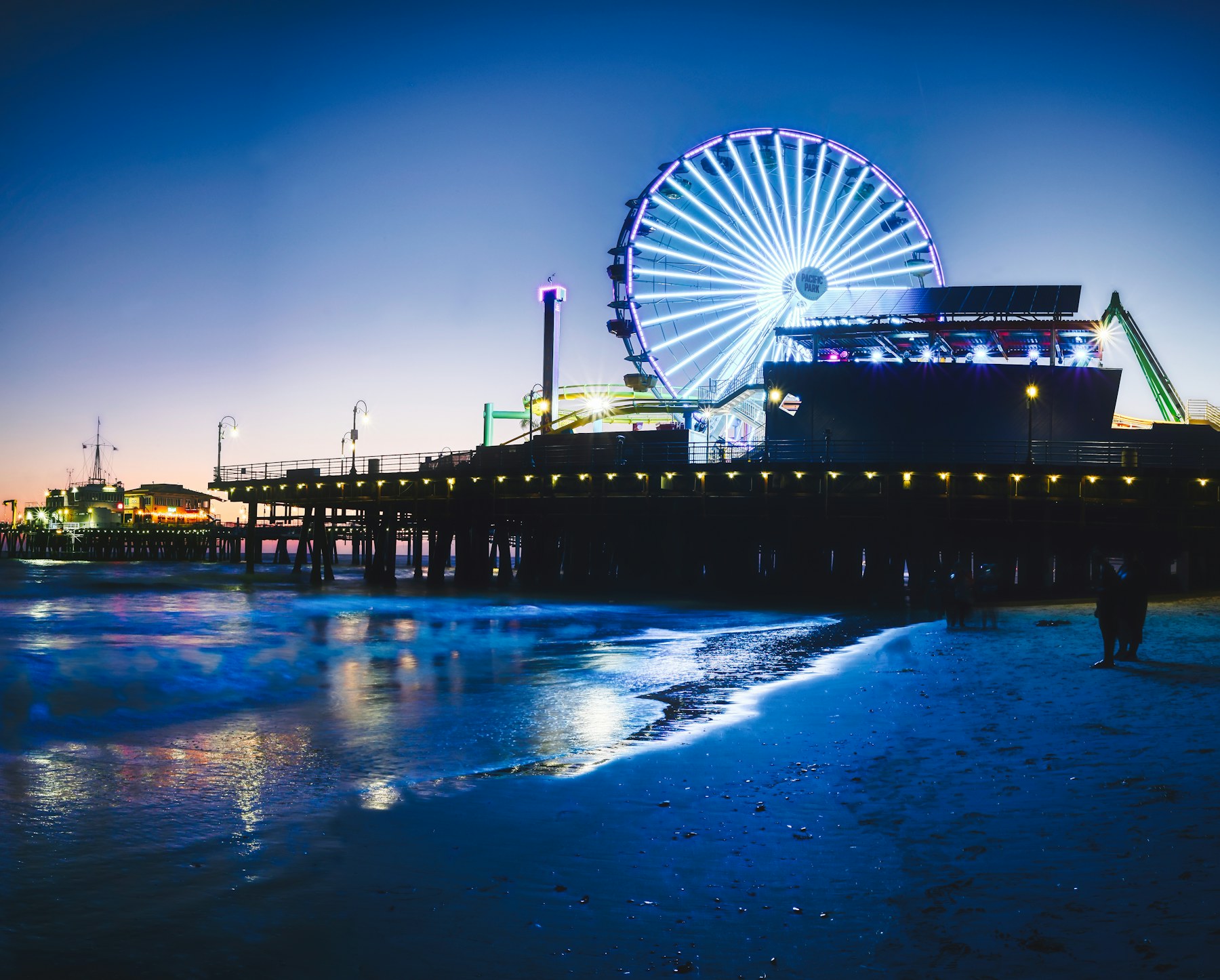
Think about the difference between the hills and Del Perro Pier. The hill suggests a kind of distance from everything. At the pier you can look in one direction and see a ride lit up beside the water. Those are different moods within one drive. Rockstar has even highlighted players’ photos of the pier, Vespucci Beach and Mount Chiliad. The geography gave those players somewhere to look, and each person decided what to keep in the frame. Rockstar’s community photography showcase
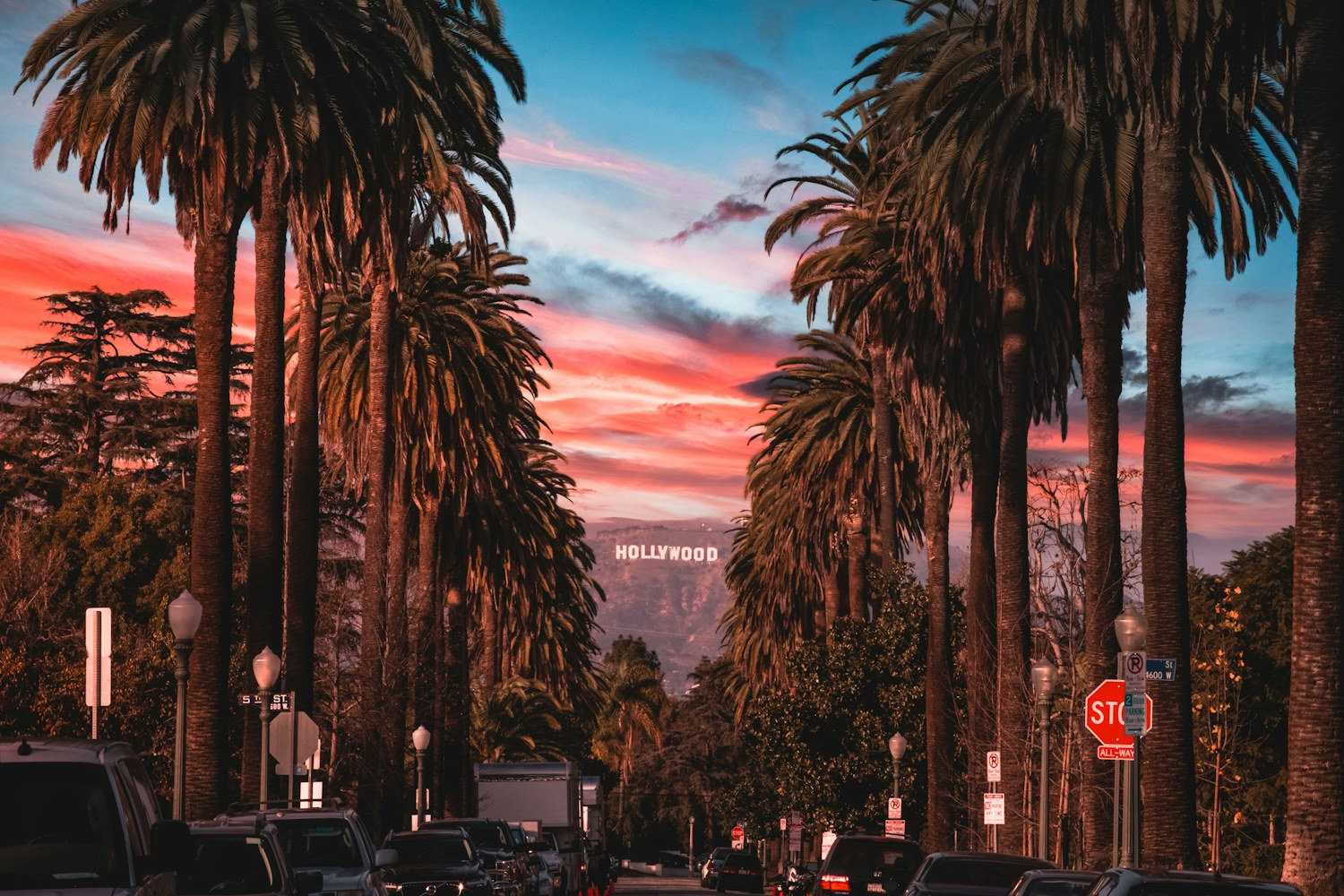
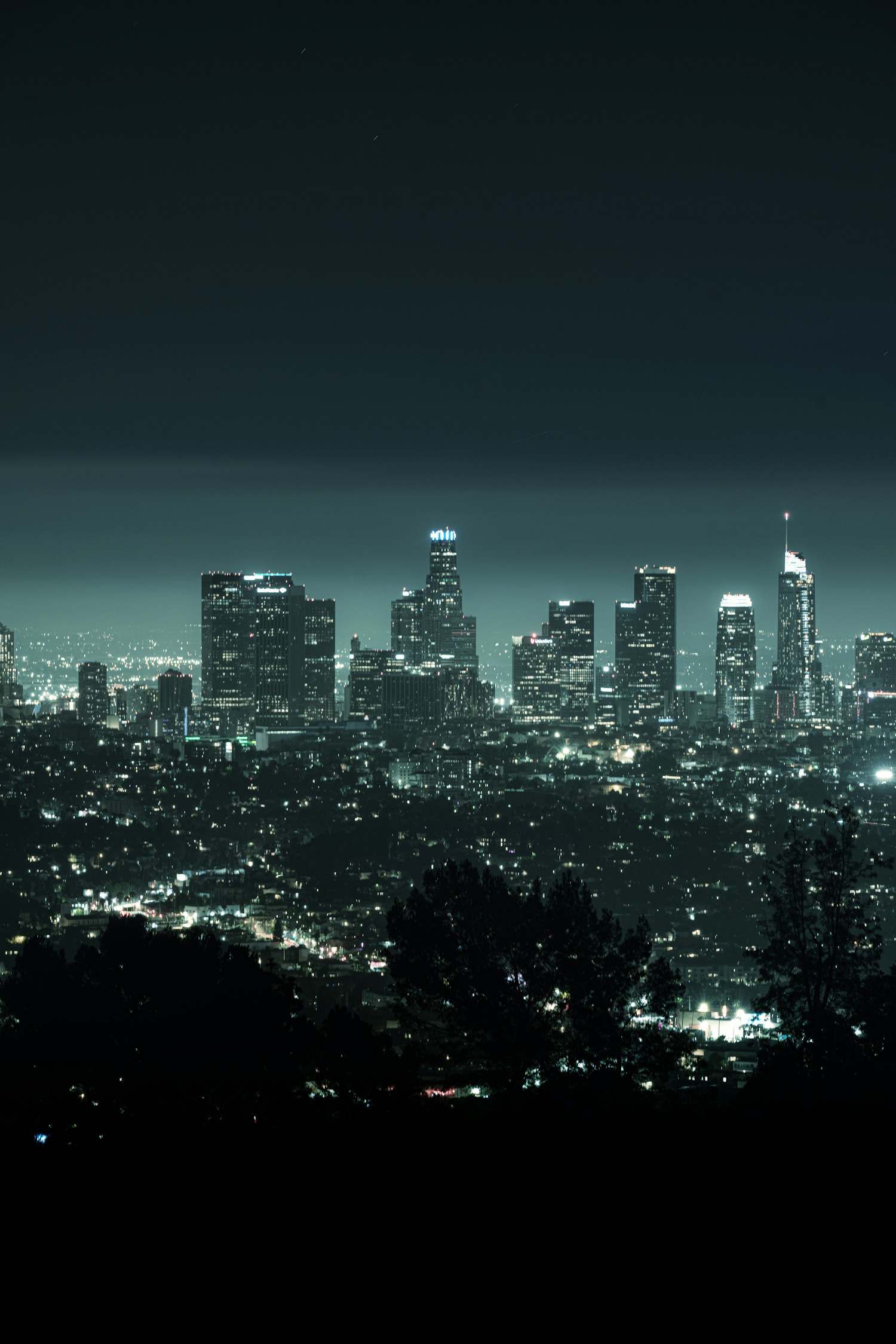
That’s where the comparison with real Los Angeles works for me. A palm-lined street or a view across the city lends the fictional world some visual familiarity. The game makes its own arrangement out of those cues. If you’ve ever seen hillside lights from a distance, you can understand the appeal of stopping above the city. If you’ve never been there, the sight still gives you a way to make sense of the relationship between the hills and the neighborhoods below. One place can feel aspirational and the other can feel ordinary, even while they are close enough to go between in an evening.
A lot of the affection for Los Santos fits inside that tiny decision to turn toward something familiar. I can imagine making the same drive at a different time of day and seeing a completely different version of the same street. The place earns another visit without needing to put a new mission on it.
Franklin’s house was the funniest part of the dream
There’s a big, funny gap between the story’s idea of what you do with a mansion and my idea of what I do with one. The game can use the house to tell you where Franklin is in his life. I can use it to imagine having a place with a view. You can hold both ideas while looking at the same damn building.
Chop makes the fantasy feel domestic. Put a dog in a room with somebody living an exciting life and suddenly you’ve given them the one responsibility a lot of us can picture having. Rockstar leaned into that enough to include a Chop feature in its original companion app. I remember adopting him mentally, which came with all the benefits of having a dog and considerably less paperwork. Rockstar’s Chop companion announcement
That’s the piece of open-world design I keep coming back to. A location can serve the plot, give you somewhere to recover between missions and become a place you develop a completely silly attachment to. The designers supplied a fictional home. I supplied the extent of my delusion.
Three guys, three ways to get comfortable
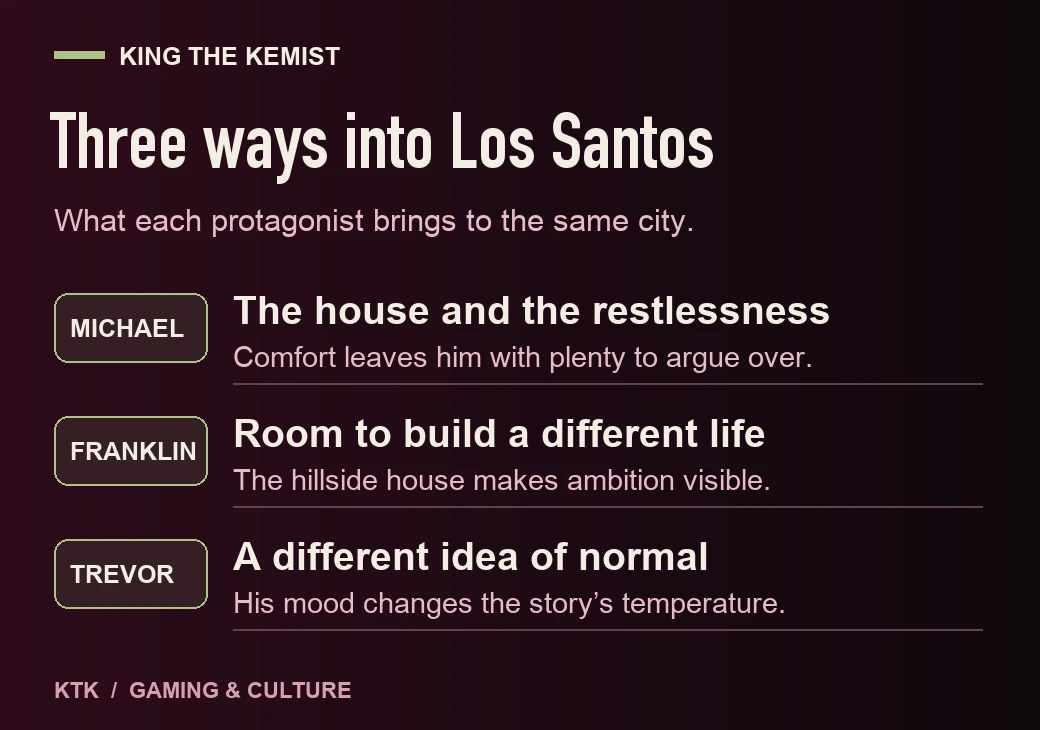
I care about the three protagonists for different reasons. Franklin especially gets me thinking about what it means to have room to breathe. Michael’s corner of the story makes it hard to equate a nice house with peace of mind. Trevor has a way of making any attempt to describe a normal day feel optimistic. They give the city several points of entry. Each man brings his own baggage, and the city doesn’t make the same promises to all of them.
That matters when you want to live with a game for a while. A lot of stories would give you one view of the place and ask you to stick with it. Here you have three men who notice different problems, with different ideas of what counts as getting ahead. I can see why somebody whose favorite is Michael would tell a different version of what the game felt like than somebody who mostly remembers Franklin. Ask three people where they felt at home and you might get three completely different addresses.
For me there’s something almost suburban about the fantasy that survived. I like the idea of being able to go out, drive around, see some lights and return somewhere that feels settled. The house and Chop work together in that memory. A big empty house is an advertisement for success. Put a dog in the picture and I immediately start making domestic arrangements for a life I do not have. I’m thinking about where he would sit while whichever actual homeowner was busy being the main character.
It’s also a funny trade. The game let me borrow Franklin’s point of view, and I borrowed a little more than that. I could run around in his world and supply motives that belonged to me. That’s a very specific kind of participation. An actor performs a character, then a player shows up and decides the character needs to hear the end of a record. The two decisions can coexist in the same city.
A song sounds different when you have somewhere to go
I make music and DJ, so a radio dial is its own attraction for me. The placement of a track changes how you hear it. Get the right one at the right moment in a drive, and suddenly the street and the sound belong together. You remember the feeling even if the name of the song takes you a minute.
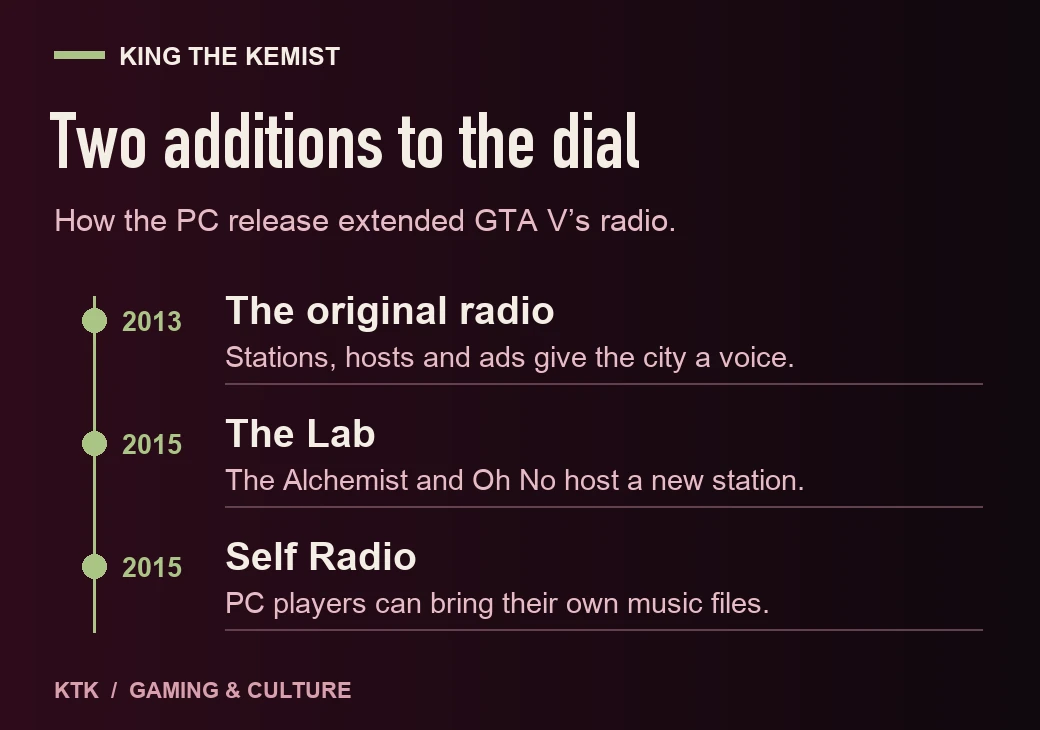
Rockstar made that connection part of the game. When GTA V came to PC, it added Self Radio for personal music files. It also added The Lab, hosted by The Alchemist and Oh No, with music from their Welcome to Los Santos project. One feature gave players their own station. The other gave the city another voice. Both recognized how much time people spend in cars when they have a whole world to wander around in. Rockstar on Self Radio · Rockstar on The Lab
A mission marker will wait for you while a song plays. That permission seems tiny until you play something that keeps sending you a message every time you take too long. When the only thing trying to tell me where to go is a little mark on a map, I can give a song its last verse. That’s a good night right there. I’ve also written about how music can send a chill down your spine. Put a track beside a place you know well and it can start bringing the whole place back with it.
The radio makes a trip feel like it belongs to you
There are three decisions I’d make on a drive through Los Santos. The first is what kind of sound I want in the car. The second is whether the road fits the sound. The third is whether I want to stop before the track ends. I like when those three decisions are mine. The designers can set up the station and the landscape and still leave room for me to put them together in a way that lands differently from the next player’s drive.
Here’s what that means in practice. Pick a stretch of road that lets you see a fair distance ahead. Let a track start while you’re already moving. The approach to a turn has a little more shape when you hear the drums before you take it. Now imagine switching to a talk show for the same road. The host’s voice becomes the thing connecting one view to the next. Suddenly there’s room to pay attention to the city and to whatever completely ridiculous opinion the fictional person on the radio is selling you.
Those pieces of radio have jobs. The songs give a drive pace. The voice on the station gives the place a point of view. The occasional ad tells you what the city thinks everybody ought to want. In a real station you can hear how somebody imagines their listeners. In a fictional station you can hear how somebody imagines a whole city. A great playlist can tell you what mood you’re in. A great station gives you another mind in the car for a few minutes.
It’s worth mentioning that a game’s radio can feel personal without the music being yours. Self Radio offered a way for PC players to bring their own files into the experience. Plenty of the pleasure also comes from hearing something you wouldn’t have picked for yourself. A stranger’s selection can make a familiar road feel new. I like both ideas. Put music I already know in the world, and it belongs to the drive for a while. Give me a station I’ve never spent time with, and now I’ve got something to look forward to on the next trip.
Returning to a game brings back different things for different people
When people talk about nostalgia, I always want to know what object they would take out of the memory if they could. Is it the city? The controller? The shot they finally figured out how to get? The song that was on every time they ended up in a particular car? Those are different answers, even if all of them come out of the same game.
Researchers Nicholas David Bowman and Tim Wulf distinguish between nostalgia for experiences we had ourselves and nostalgia for times we know through other people or media. That makes sense for a game that’s been passed down across generations of hardware. A person could fall for Los Santos years after 2013 and have a set of memories every bit as specific as somebody who was there on release day. Bowman and Wulf’s review of gaming nostalgia
The same game can feel different when you come back to it. Some jokes get more dated. A long drive can feel longer when you suddenly have less time to play. You can recognize a turn you used to take and realize how much you forgot about what was on either side of it. Part of the fun of going back is finding out which pieces of the city you actually carried around with you.
Revisiting Los Santos years later
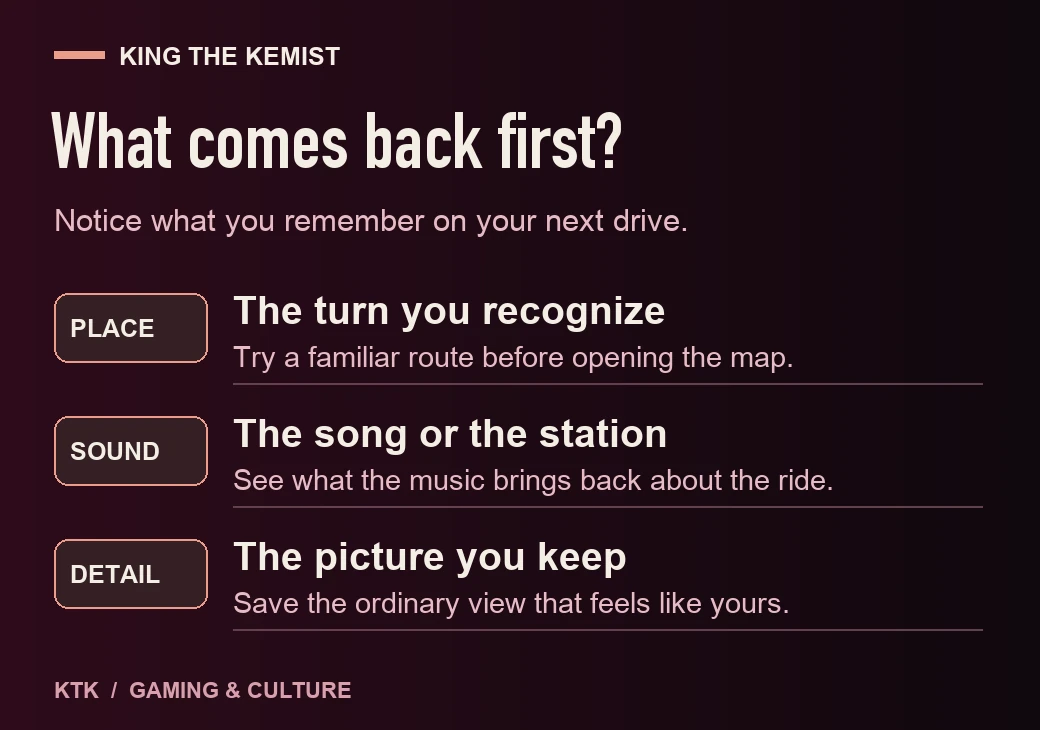
If you want to see what stayed with you, choose a route from memory and resist checking the map until you actually need it. Notice the first thing you recognize. It’s fine if it’s a building you can’t name. You can get around a real neighborhood for years without learning the address of the place you pass every day. Familiarity is about what guides you as much as the things you can recite.
Then notice what feels different. Maybe the traffic that used to feel lively now feels sparse. Maybe a joke you remember only as a punch line turns out to have a weirdly specific rhythm. Maybe you get a clearer sense of where one neighborhood ends and another begins. Revisiting a large game is a chance to learn what your earlier attention had room for. You see some pieces more clearly because you no longer have to learn all of them at once.
There’s a difference between somebody who remembers launch week and somebody who picked up the game years into its life. Each player had a first week. They can both show you a picture of the same pier and have different reasons to care about it. I’m interested in hearing what happened in those later visits too. An old city stays alive in conversation because somebody always arrives there for the first time with a fresh, very particular idea of what to do.
A return trip can help you pick apart what you mean when you say the game takes you back. You might miss the feeling of being able to sink a whole afternoon into one place. You might miss a particular sound. You might discover that the fantasy you liked was unusually simple. A car, a place to go, and a version of an evening where there was room for an extra turn.
Give Los Santos one evening with your own rules
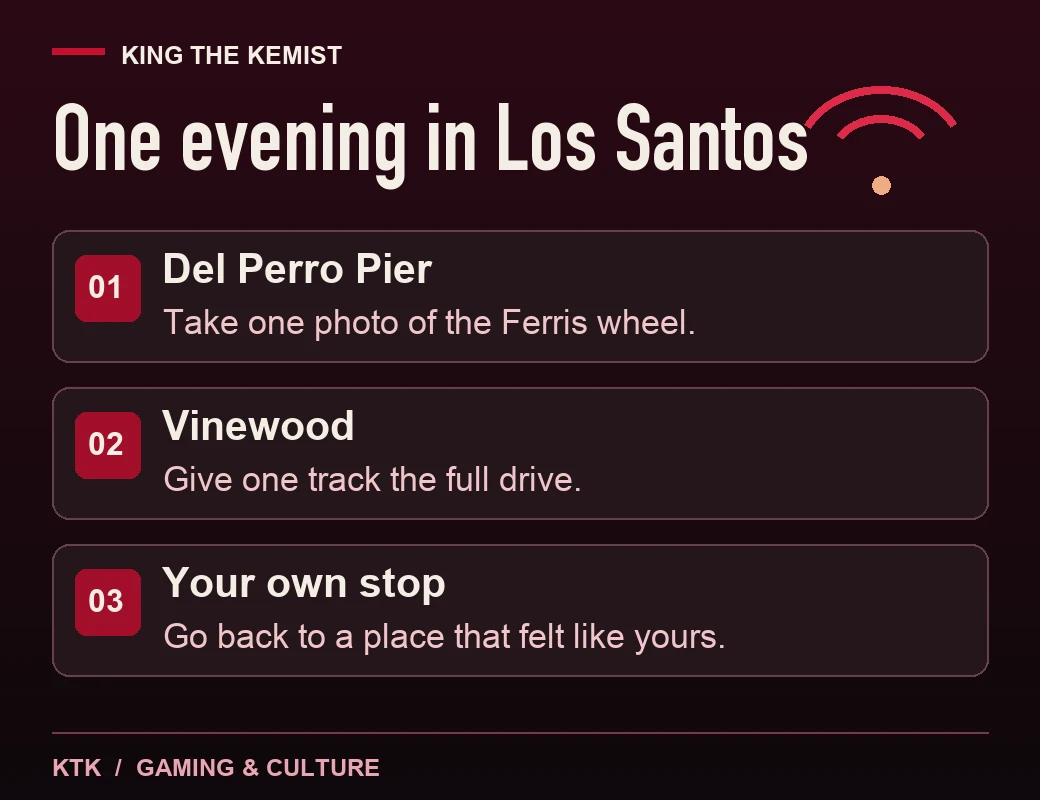
If you go back, try setting aside enough time for three small stops. Find a view of the Ferris wheel at Del Perro Pier and take a screenshot. Find a stretch of road in Vinewood and give one track the full drive. Pick a third place because you remember it, even if you couldn’t explain why somebody else should make the trip.
You could also make a case for never leaving the car. There are worse ways to spend a little time. Put on a station and drive until you decide what kind of photograph you want to take. That’s a different way of playing even if the only thing you changed was what you came in to do.
The screenshot can be ordinary. The view might be from a parking spot nobody would put on a tour. Keep it anyway. A few years from now, the interesting detail could be the little thing in the corner you never meant to capture. That’s why I like the photograph as a goodbye. It gives you something concrete to look at later, after the launch chatter and the arguments about which game was better have moved on.
Let the new city become familiar at its own speed
GTA VI gives us another place to learn, and there’s a kind of pleasure in having fewer bearings again. Rockstar describes Leonida through several places, including Vice City and the Keys. I also wrote about how Florida headlines became part of Leonida. I’m curious which locations will eventually become the ordinary parts of people’s sessions. The first places anybody photographs will probably be the ones they’re eager to show. Years later somebody may remember a perfectly unremarkable stop because they made it every time they left town. Rockstar’s guide to the people and places of Leonida
The temptation with a new game is to want it to produce the same feelings immediately. I’d give it a little patience. Los Santos had to become familiar one drive at a time. A pretty view in the new game might be impressive on the first day. To become somebody’s view, the game has to give them time to come back to it. I want to hear what people are still driving past after the guides, reviews and comparisons stop setting the schedule.
There’s room for both cities. You can spend a night in the old one because you already know why you like it, then learn where you want to go in the new one. In the meantime, I’m still perfectly comfortable with my understanding of the property arrangements in Los Santos.
I’m still claiming the dog
Michael, Franklin and Trevor have been living in some people’s heads for thirteen years. The farewell is for everybody who knew at least one of those guys’ routines, even if their own routine was just driving around and listening to the radio. There’s a new city now. I’m curious which places in it people are going to get attached to without realizing it.
If I drop back into Los Santos, I know the arrangement. Franklin can keep the keys. I’m still claiming the dog.
Which stop would you make first if you had one more evening in Los Santos? And what station are we putting on for the drive?
Pick a station and take the long way. Grab the free-roam pack and GTA V Story Mode cheat sheet.