Grown Man Notes
Why Am I Always the Friend Who Reaches Out?
Some friends meet you halfway. Some never do. Here's how I tell the difference, and what I do once I know.

You know the feeling.
You look at your messages and realize every conversation with a certain friend starts with you. You text first. You suggest the plans. You check in when they go quiet. And if you stopped, you’re pretty sure the whole friendship would stop with you.
So you start wondering: am I the only one trying here?

Am I always the friend who reaches out? Honestly, it depends on the friend. Some of my friendships are a real fifty-fifty. Somebody hits me up, I hit them back, we both make the effort. Others? I’ve definitely been the one carrying it.
And I’ve learned something about myself in those friendships. When I know I’ve done all I could, and they still aren’t meeting me halfway, my feelings naturally fade. No big speech. No dramatic exit. It just fades.
Plus, I get over people quick. 😂
So let’s talk about it. Why some friendships end up one-sided, what research says about reaching out (some of it might surprise you), the signs it’s actually one-sided and not just a busy season, and what to do once you know.
You’re not imagining it: adult friendship got harder
If it feels like friendships take more work than they used to, you’re not wrong.
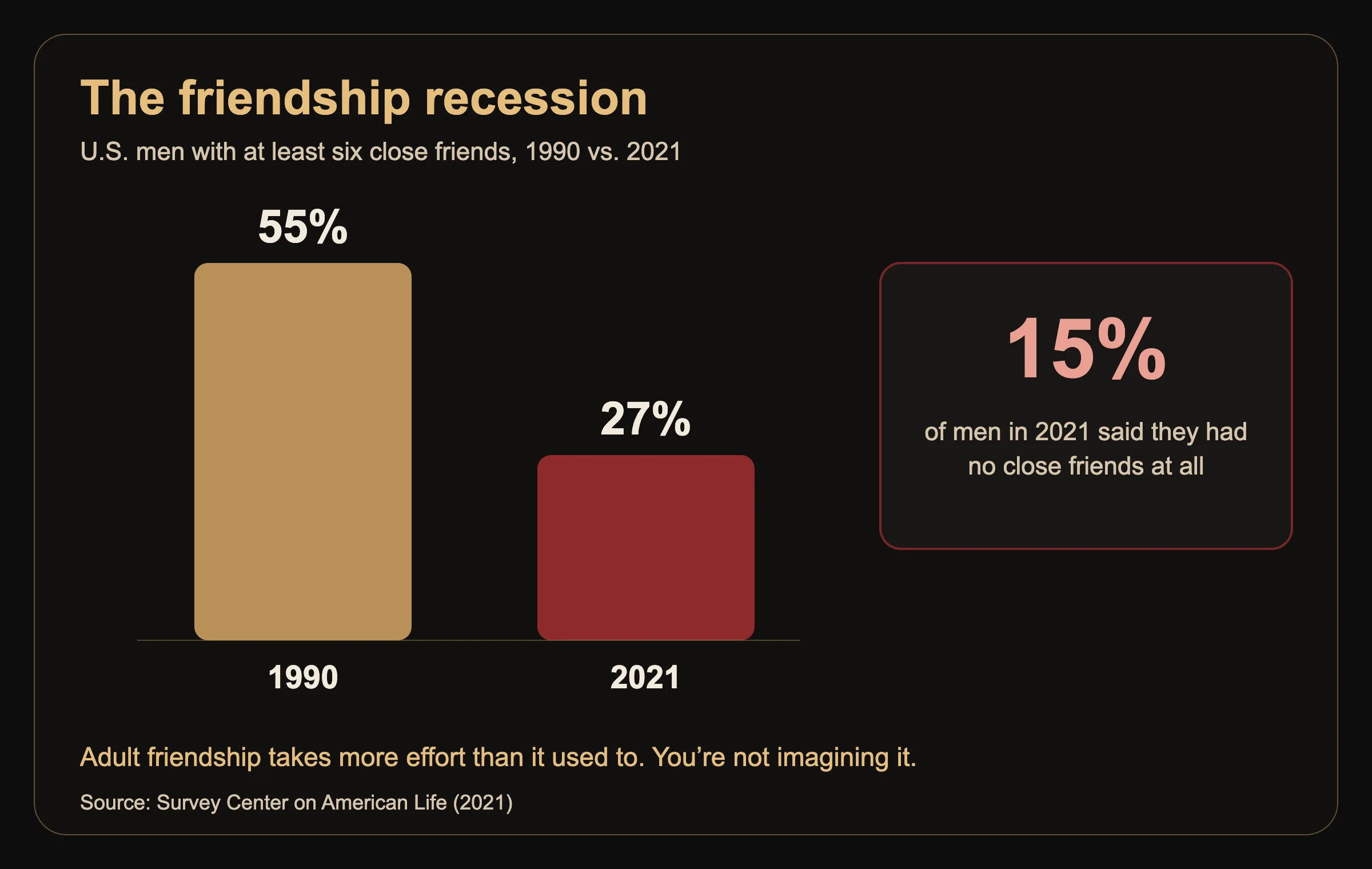
The Survey Center on American Life reported in 2021 that 15% of American men said they didn’t have a single close friend. Back in 1990, 55% of men said they had at least six close friends. By 2021, that number was 27%. Researchers started calling it a "friendship recession."
Women reported a drop too. Adults of every kind are juggling jobs, partners, kids, side hustles and phones that never stop buzzing. Friendship is usually the first thing that gets pushed to "later."
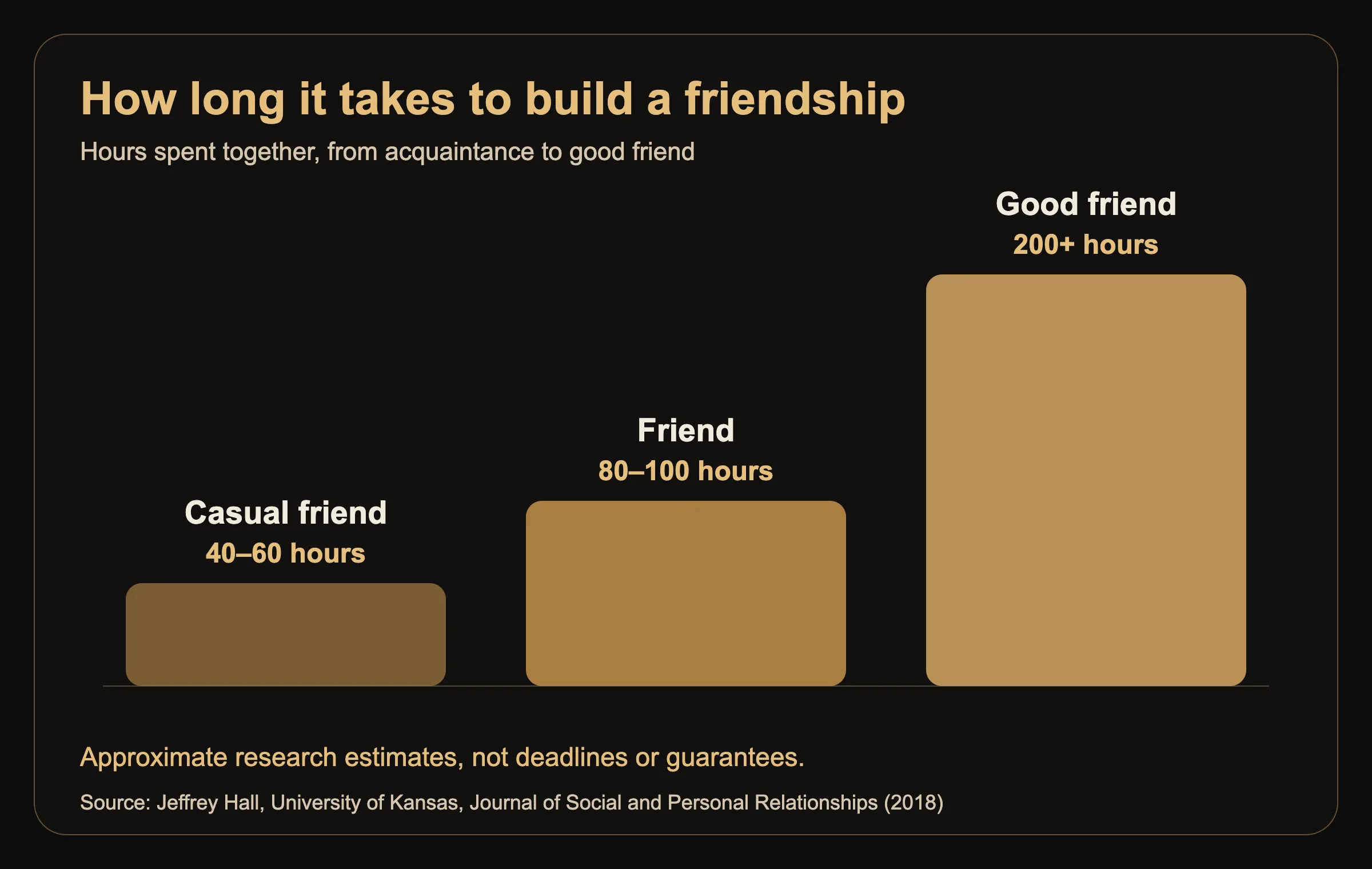
And friendship takes real time to build. Communication researcher Jeffrey Hall at the University of Kansas studied adults who had recently moved and were trying to make new friends. As the university reported in 2018, it took roughly 40 to 60 hours together to go from acquaintance to casual friend, 80 to 100 hours to become a friend, and more than 200 hours to become a good friend.
Two hundred hours. That’s a lot of texts, plans and showing up.
So when one person stops putting in time, the other person feels it. Fast.
We may see a friendship differently
Here’s a study that stuck with me.
In 2016, researchers from the MIT Media Lab asked students in a class to rate each other on a friendship scale. Then they compared the ratings. In the study, published in PLOS ONE, almost half of the friendships people reported were not mutual. One person thought "we’re friends." The other didn’t rate it the same way.
And people mostly expected their friendships to be mutual. They just weren’t as often as they thought.

It was one class of 84 students, so I wouldn’t stretch it too far. But it matches what a lot of people feel: you can be all in on a friendship that the other person sees as "cool, we hang sometimes."
That doesn’t make either person a villain. It just means two people can be in the same friendship and experience it very differently.
Men and the "we should link" problem
I want to say something specifically to the fellas, because that friendship recession number hit men hard.
A lot of male friendships run on "we should link." We say it. We mean it. And then nobody picks a date, so it never happens. Months go by. Then we see each other at a wedding and say "we should link" again. 😂
Part of it is how a lot of men bond. Many of us connect side by side, doing something together: playing ball, watching the game, working on a project, hitting the gym. When that shared activity disappears, the friendship can lose its structure fast.

So if you’re the one always reaching out to your guys, try making it easier for them to say yes. Don’t just say "we should link." Say "I’m going to the game Saturday, you in?" Give a time and a place. Make the plan concrete.
Some friends aren’t ignoring you. They just won’t be the ones to turn "we should link" into an actual plan. That still counts as information, but it’s different from not caring.
Before you stop reaching out, read this
Now the plot twist. Because I don’t want anybody reading this and deciding to ghost everyone. 😂
In 2022, researchers Peggy Liu, SoYon Rim, Lauren Min and Kate Min ran a series of experiments with more than 5,900 people, published in the Journal of Personality and Social Psychology. People who reached out to someone they hadn’t talked to in a while, with a quick text, a note or a small gift, consistently underestimated how much the other person appreciated it.
The gap got even bigger when the message was a surprise, or when the two people weren’t that close anymore.
So here’s what that means. When you’re the one reaching out, your brain might be telling you, "They don’t care. They didn’t text first." But the research suggests the other person often values it more than you think.
Some people just aren’t initiators. They love hearing from you. They just don’t think to start it.
That’s why I don’t treat "they didn’t text first" as the whole story. It’s one piece of information. The rest of it is what happens after you reach out.
Why some friendships end up one-sided
From what I’ve seen, and from what keeps coming up when people talk about this online, one-sided friendships usually come from a few places. Not all of them mean the other person doesn’t care.
Different initiating styles. Some people are planners. Some people are "I’m down for whatever you plan." If you’re the planner and they’re the down-for-whatever friend, you’ll always look like you’re doing more. You might be.
A rough season. A new job, a breakup, a new baby, a family emergency, depression, burnout. People go quiet for a lot of reasons that have nothing to do with you.
Drifting apart. Sometimes the friendship was built around something that’s gone: a job, a school, a neighborhood, a phase of life. It’s nobody’s fault. The thing that held you together just isn’t there anymore.
They’re comfortable. Some people get used to you always doing the work. Not in an evil way. They just know you’ll call, so they don’t have to.
It was never as mutual as you thought. That’s the MIT study. Sometimes you were closer to them than they were to you.
The first two usually deserve patience. The last three deserve honesty, mostly with yourself.
Signs a friendship is actually one-sided
One unanswered text doesn’t make a friendship one-sided. A pattern does.
Here are the signs I’d look at:
You always start it. Not sometimes. Always. Months go by and they never once text first.
Plans only happen if you make them. And when you do, they cancel or say "maybe" a lot.
The conversation is about them. They call when they need something: advice, a favor, a ride, an audience. When you need something, they’re busy.
They don’t follow up. You tell them something big, and they never ask how it went.
You feel tired after, not good. That’s a big one for me. A real friend can be a lot sometimes, but you usually leave feeling better, not drained.
You’re scared that if you stopped, it would end. If the only thing keeping the friendship alive is you, that tells you something.
If you’re seeing a lot of these, and it’s been going on for a while, not just a hard month, it’s fair to call it one-sided.
What I do: do my part, then let it fade
Here’s my honest approach.
First, I do my part. I reach out. I make the effort. I show up. That 2022 research backs up something I already value: making an effort. I’d rather be the kind of friend who reaches out than the kind who keeps score.
But doing my part has a limit.
When I know I’ve done all I could, and they still aren’t meeting me halfway, my feelings naturally fade. I don’t plan it. I don’t announce it. It’s not a punishment. It’s just what happens when the effort only goes one direction for long enough.
And then I move on. I get over people quick. 😂

Some people hear that and think it sounds cold. I don’t think it is. I think it’s honest. I’d rather let a friendship fade gracefully than keep forcing something and slowly start resenting the person.
It also connects to something I wrote about in Why Does a Libra Man Go Quiet?. A lot of the time, when a Libra is done, they’re just done. By the time I’ve stopped reaching out, I usually made peace with it a while ago.
Should you say something first?
My way is usually to do my part and then let my feelings settle where they settle. If you’ve read Why Do Libras Avoid Conflict?, that probably doesn’t surprise you. 😂
But I’ll also be fair. Letting it fade isn’t always the best move. Sometimes the other person has no idea how it feels on your side. And sometimes one honest conversation saves a friendship that was worth saving.
If the friendship matters to you, here’s a way to say it that isn’t an attack:
"Hey, I’ve noticed I’m usually the one reaching out. I’m not mad, I just miss hearing from you. Is everything good?"
That does three things. It names the pattern. It doesn’t accuse them of anything. And it leaves room for the real answer, which might be "I’ve been going through it" or "I didn’t even realize."
If you want to go one step further:
"I value this friendship. It would mean a lot if you reached out sometimes too."
Don’t judge everything from their first reaction. Some people get a little defensive in the moment and then really step up. Watch whether they listen and make a sustained effort over the next few weeks. That tells you more than the first thing they say.
How to pull back without drama
If you decide to stop being the only one reaching out, you don’t have to make a scene.
Stop initiating, but stay warm. If they reach out, respond like normal. You’re not punishing them. You’re just letting them show up.
Give it real time. Think about how often you two usually talk and what’s going on in their life right now. A friend you talk to every day and a friend you see twice a year need different amounts of patience.
Don’t keep score out loud. Watching who texts first is fine. Announcing it every time they finally do is not.
Redirect your energy. Put the time you were spending chasing them into the friendships that already meet you halfway.
Leave the door open. People come back sometimes. When they do, you get to decide if you want to pick it back up.
Some people online call this "matching energy." That’s basically it. Not cold, not petty. Just stop over-giving and see what’s actually there.

What one-sided friendships do to you
I don’t want to skip this part.
Being the only one trying can mess with your head. You start wondering if you’re annoying. If you’re too much. If people only tolerate you.
Most of the time, that’s not what’s happening. It’s usually one of the reasons I listed above: different styles, a hard season, drifting apart, or a mismatch in how close you each felt.
It also helps to remember that one person not meeting you halfway says something about that friendship, not about whether you’re worth being friends with. Look at the friends who do show up for you. That’s the more accurate picture.
And if you’ve noticed that a lot of your friendships feel one-sided, not just one or two, it might be worth looking at the pattern. Are you picking people who don’t give back? Are you giving so much that nobody gets a chance to? Those are honest questions, and sometimes the answers are uncomfortable. I’ve asked myself the same ones.
If you’re the friend who never reaches out
Quick message to the other side, because some of you reading this are the ones being chased. 😂
If you love your friends but never text first, try this: send one message this week. Not a big one. "Saw this and thought of you." "How’s the new job?" "We should link soon."
Remember that research: people underestimate how much a reach-out is appreciated. Your friend who always texts first? They’d probably love it if, just once, you texted first.
The Libra side of all this
I’ll be real about how being a Libra plays into this.
Libras like harmony. We like people to feel good. So we’re often the ones checking in, planning the hangout, making sure nobody feels left out. That’s not a complaint. That’s just how a lot of us are built.
The flip side is that Libras can over-give to keep the peace. We’ll keep reaching out to avoid admitting something feels off, because admitting it might lead to a hard conversation.
That’s why I’ve learned to trust the fade. When I’ve done all I could and my feelings start fading, that’s my answer. I don’t fight it. And the friendships that are still standing are the ones where we both show up.
Easy ways to reach out that don’t feel forced
If you’re going to keep being the one who reaches out, at least make it easy on yourself. Here are some low-pressure ways to check in:
Send the thing that made you think of them. A song, a meme, a video, a photo from back in the day. No paragraph needed.
Ask about something specific. "How did the interview go?" hits different than "wyd."
Make a plan with a date. "Breakfast Sunday at 11?" is easier to say yes to than "we should link."
Do a voice note. For some people it feels more personal than a text and less pressure than a phone call.
Celebrate their wins. New job, new baby, new release, birthday. People remember who showed up for their good news.
Keep it short. You don’t have to explain why you’re reaching out. "Thinking about you, hope you’re good" is enough.
None of these take more than a minute. And based on that 2022 research, the person on the other end will probably appreciate it more than you expect.
What people ask about one-sided friendships
When you look at what people search and talk about online, the same questions keep coming up. There’s a whole Reddit thread on r/friendship about being the one who always reaches out. Here are my honest takes.
Is it bad if I’m always the one who reaches out? Not by itself. Some people are natural initiators. It becomes a problem when the effort only goes one way and you feel drained or taken for granted.
Should I stop texting first to see if they care? You can pull back to protect your energy, but don’t turn it into a test they have to pass. Some people love you and just don’t initiate. Give it time, and watch how they respond when you do talk.
How long should I wait before letting a friendship go? There’s no rule. For me, it’s when I know I’ve done everything I reasonably could. Pulling back can protect your energy, but it shouldn’t turn into a secret test.
Is it normal to lose friends as an adult? Yes. Jobs, moves, relationships and kids reshape everybody’s life. Some friendships survive that and some don’t.
Quick answers
Why am I always the one reaching out? Usually it’s different initiating styles, a busy or hard season for them, drifting apart, or a friendship that’s more important to you than to them.
How do I know if a friendship is one-sided? Look for a pattern over months: you always initiate, plans only happen when you make them, and they’re around when they need something but busy when you do.
Do people appreciate being reached out to? More than we think. A 2022 study of more than 5,900 people found senders consistently underestimated how much recipients appreciated hearing from them.
Should I tell my friend it feels one-sided? If the friendship matters to you, yes. Keep it simple and non-accusing: "I’ve noticed I usually reach out first. I miss hearing from you."
What should I do if they don’t change? Stop over-giving, stay friendly, and put your energy into the friendships that meet you halfway.
Meet me halfway
Here’s where I’ve landed.
I’ll reach out. I’ll make the plans. I’ll check in. I’m not going to keep a scorecard over every text.
But a friendship is two people walking toward each other. If I’m the only one walking, eventually I notice. And when I know I’ve done all I could, I let it fade and I don’t hold a grudge about it.
The people who meet me halfway? Those are my people. That’s where my energy goes.

So if you’re always the friend who reaches out, here’s my advice: do your part, say something if it’s worth saving, and then trust what happens next. You don’t need to chase anybody. 👑
And when you do reach out, bring something better than "wyd." I built The Brotherhood Deck: 150 questions to ask your friends, from funny to deep, with a deck you can shuffle at the next hang.