Creative Chemistry
My Job Takes All My Energy. How Do I Keep Creating?
Work gets the best of you, and the music gets whatever's left. I've been there. Here's what kept me creating anyway.
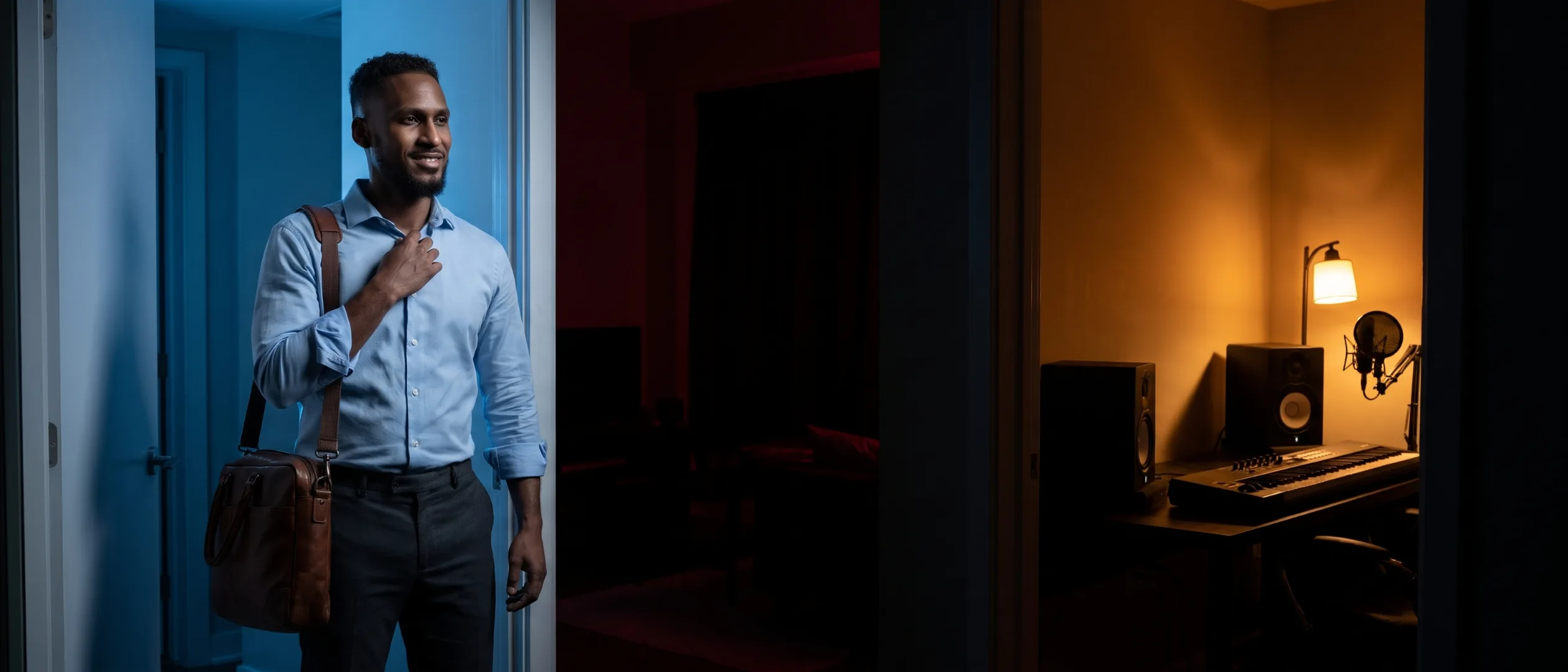
You get home. You drop your bag. You look at the keyboard, the mic, the notebook, the laptop with the half-finished project on it.
And you sit on the couch instead.
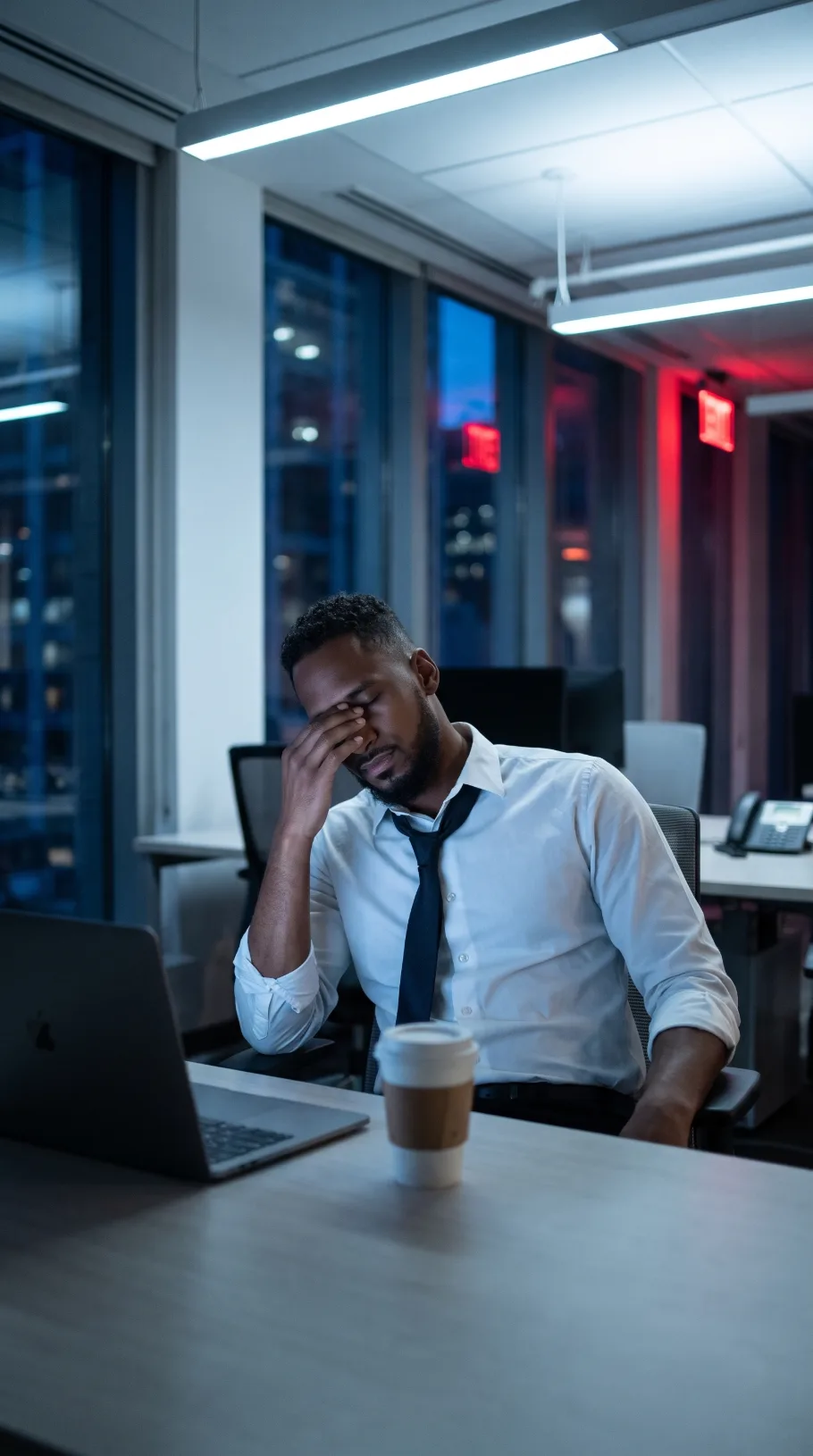
Not because you don’t care. You care a lot. You’re just empty. Work took everything, and there’s nothing left for the thing you actually love.
Have I been there? Yes. I’ve had stretches where work took the energy I needed for music and content.
So I’m not writing this from some perfect schedule where I wake up at 5am, meditate, journal, work out and record three songs before breakfast. 😂 I’m writing it as somebody who knows what it feels like when the job gets the best of you and your creative life gets the leftovers.
Let’s talk about why it happens, what research says about work, stress and creativity, and what actually kept me going.
It’s not a time problem. It’s an energy problem.
Most advice about creating with a full-time job is about time. Wake up earlier. Block your calendar. Use your lunch break.
That’s fine. But a lot of people have the time. They just don’t have the energy.
You can have three free hours every night and still not make anything, because by the time you get there, your brain is fried. You’ve been solving problems, answering messages, dealing with people and holding it together all day. Creating needs a different kind of energy, and the job already spent it.
That’s why "just make time" can feel so frustrating. You’re not missing hours. You’re missing fuel.
So the real question isn’t "How do I find time to create?" It’s "How do I protect enough energy to create?"
You’re not lazy. A lot of people are running on empty.
If you feel drained by work, you have a lot of company.
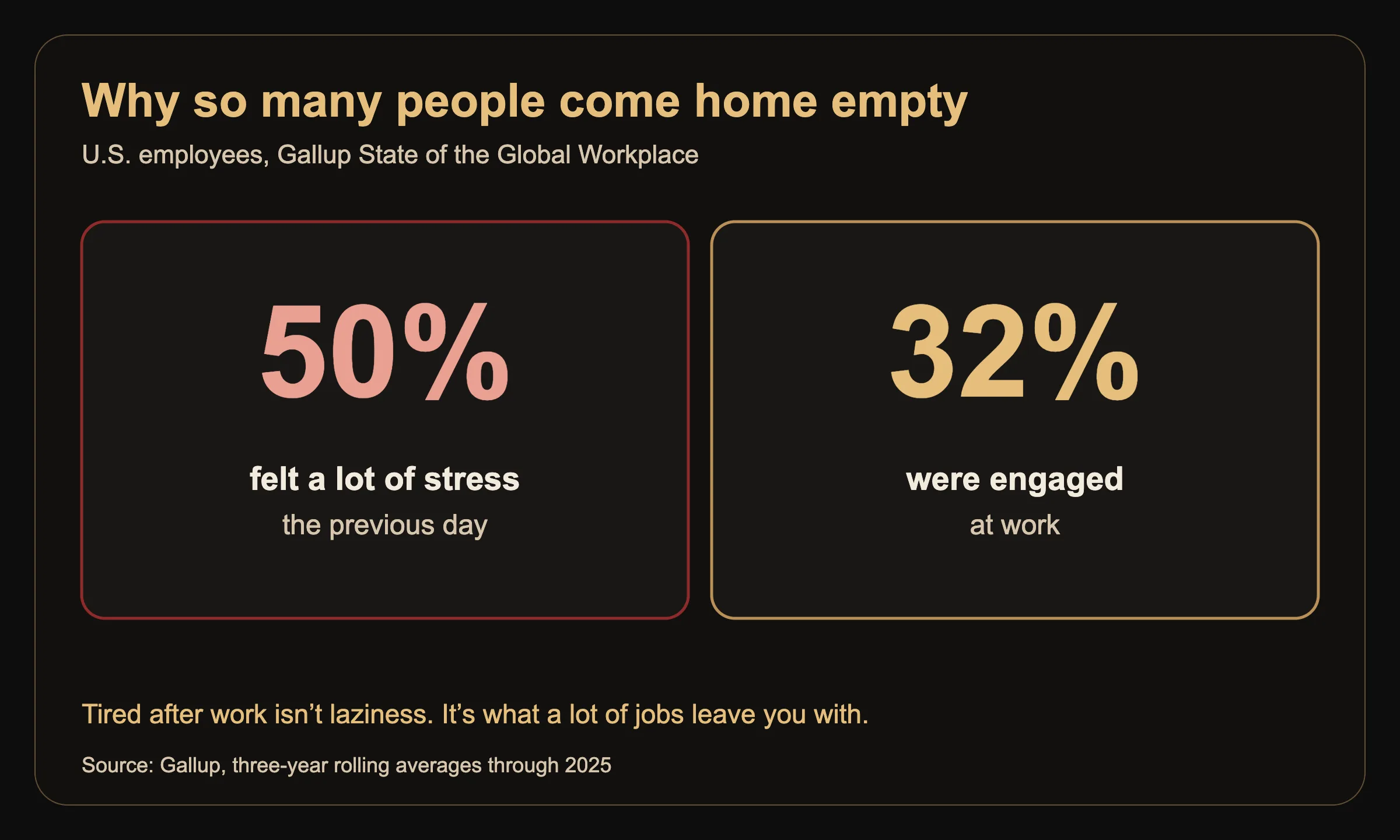
In Gallup’s State of the Global Workplace data for the United States, 50% of employees said they experienced a lot of stress the previous day, and only 32% were engaged at work. Those are three-year rolling averages through 2025.
So half of workers are carrying real stress around, and most don’t feel engaged by what they do all day. That’s a recipe for coming home empty.
When you’re in that place, it’s easy to tell yourself a story: "If I really wanted it, I’d find a way. Maybe I’m just lazy. Maybe I’m not a real artist."
I don’t buy it. Being tired after a long day doesn’t mean you don’t care about your art. It means you’re a human with a limited amount of energy, and a big chunk of it is going somewhere else.
What actually kept me going: I love it
When I thought about what really kept me creating during those stretches, the honest answer wasn’t a schedule or a system.
It was love of it.
I love making music. I love creating. That’s what kept pulling me back even when I was tired. On a lot of nights, the music wasn’t one more thing draining me. It was the thing that gave something back.
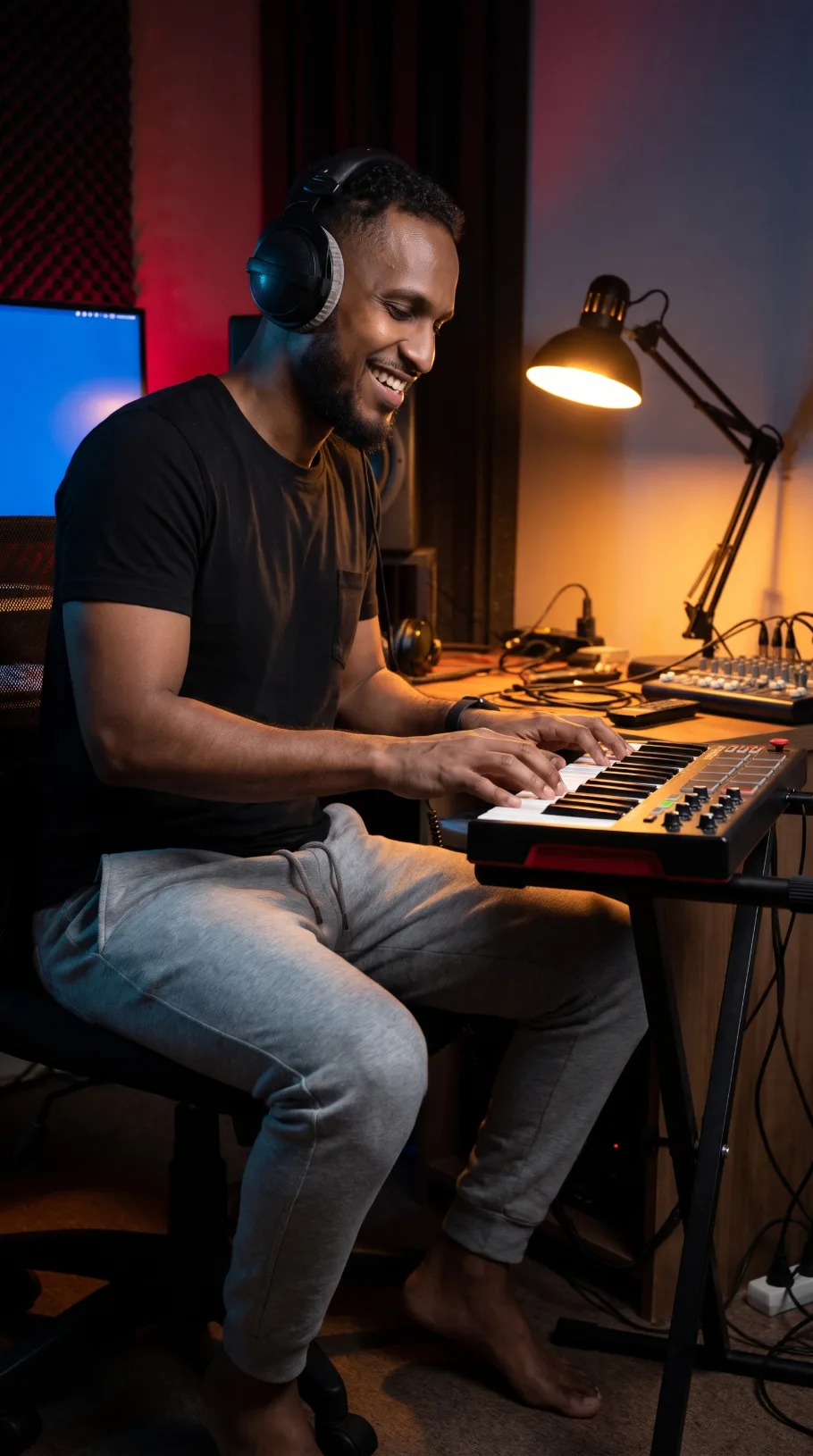
That’s a big difference. If your creative work feels like a second job, you’ll avoid it when you’re tired, because nobody wants a second shift. If it feels like the thing you get to do, you’ll find a way back to it, even if it’s for ten minutes.
Research backs this up: creating can give energy back
There’s real research on this.
In a 2018 study in the Journal of Positive Psychology, psychologists Tamlin Conner, Colin DeYoung and Paul Silvia followed 658 young adults for 13 days. Every day, people reported how much time they spent on creative activities and how they felt. On days after they did more creative activity than usual, they reported more positive energy and a greater sense of flourishing.
The interesting part: it didn’t work the other way. Feeling good one day didn’t predict more creativity the next day. The creativity seemed to come first.
Another study looked at people with jobs. Kevin Eschleman and colleagues at San Francisco State University studied 341 employees and 92 Air Force captains, published in 2014 in the Journal of Occupational and Organizational Psychology. People who did more creative activities outside work tended to recover better from work and showed more creative problem solving and helping behavior on the job.
These studies have limits. One followed young adults, mostly students, for two weeks. The other found links, not proof that creativity causes better work. But they point in the same direction as my experience: creative work isn’t only something that drains you. Done the right way, it can give something back.
Why work drains creative energy so much
It helps to understand why the job hits your creativity so hard.
You’ve been making decisions all day. Every email, meeting and problem asks something of your brain. Creative work is a whole lot of decisions too: which sound, which word, which take.
You’ve been "on" for other people. If your job involves people, you’ve been managing your face, your tone and your patience for hours. Creating asks you to be open and honest, and that’s hard when you’ve been performing all day.
The work feels more urgent. The job pays the bills and has deadlines. Your art usually doesn’t, so it always loses the fight for your attention.
Screens eat the in-between. A lot of us come home and scroll. It feels like rest, but it usually isn’t.
None of that means you’re doing something wrong. It just means you need a plan that works with your energy, not against it.
Match the creative task to your energy
This is one of the most useful shifts I know. Not every creative task needs your best energy.
Some tasks need a sharp brain: writing a whole verse, arranging a song, mixing, making big decisions.
Some tasks just need a little attention: listening back to demos, organizing files, saving references, making a playlist that inspires you.
And some tasks need almost nothing: humming an idea into your phone, writing one line, picking a sound you like.
On a drained night, don’t try to write the whole song. Do the small thing. You still moved the project forward, and you didn’t burn the last of your energy fighting yourself.
Over weeks, the small things add up to a lot more than the big sessions that never happen.
A creative menu for every energy level
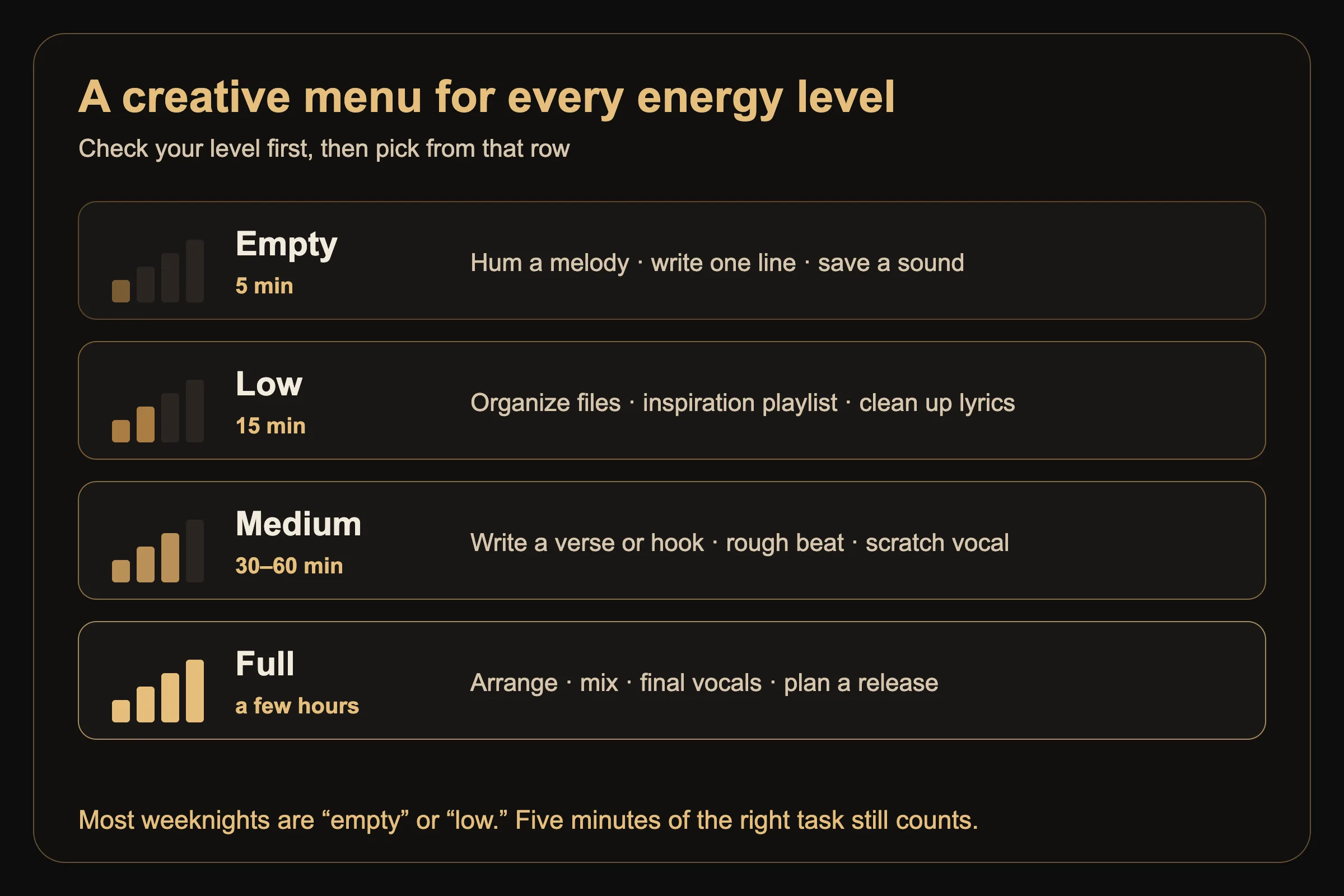
Here’s a simple way to use that idea. Before you decide you’re "too tired," check which level you’re actually at, then pick something from that row.
Empty (5 minutes). Hum a melody into your phone. Write one line. Save one sound or reference. Listen to one demo.
Low (15 minutes). Organize a folder. Make an inspiration playlist. Clean up lyrics you already wrote. Pick drum sounds for the next session.
Medium (30 to 60 minutes). Write a verse or a hook. Build a rough beat. Record a scratch vocal. Edit a short video.
Full (a few hours). Arrange a full song. Mix. Record final vocals. Plan a release.
Most weeknights after work, you’re probably at "empty" or "low." That’s fine. The trick is to stop treating those nights as zero. Five minutes of the right task is still progress.
Make it feel like play again
If love of it is what keeps you creating, then protect the love.
Sometimes the reason creating feels heavy after work is that it’s turned into another job in your head. You’re thinking about numbers, release plans, algorithms and whether this song will "do well."
That’s real, and it matters at some point. But it’s not where the love lives.
Some nights, give yourself permission to make something just because you want to. No plan to release it. No pressure to finish. Just play. Make a beat you’d never put out. Freestyle. Try a genre you don’t usually touch.
Play is how a lot of people remember why they started. And remembering why you started is a lot more motivating than a to-do list.
Capture ideas during the day
Ideas don’t care about your work schedule. They show up in the shower, on the commute, in the middle of a meeting.
If you’re drained at night, catching ideas during the day means you’re not starting from zero when you sit down.
Keep a voice memo habit. Hum the melody, say the line, record the rhythm. Ten seconds is enough.

Keep one running note. Lyrics, titles, concepts, things somebody said. Put them all in one place.
Save sounds and references. Hear something that inspires you? Save it right away.
Then when you get home with low energy, you don’t have to create something from nothing. You just open the folder and pick one idea to play with.
Let the job feed the work
Here’s a reframe that helps a lot of artists: your job isn’t only taking from your creativity. It can also give you material.
The people you deal with, the conversations you overhear, the frustrations, the inside jokes, the moments that make you shake your head. That’s real life. A lot of great songs, jokes and stories come from exactly that.
So when work gets wild, write it down. Not to complain, but to collect. A ridiculous meeting might become a funny post. A tough week might become the feeling behind a song. Some of the most relatable art comes from regular people describing regular life honestly.
It doesn’t make the tired days less tired. But it can make them feel a little less wasted.
Find one creative ally
Creating alone after a long day is hard. Having one person in your corner makes it easier.
That could be a friend who also makes music, a producer you trade ideas with, or someone who just asks, "What are you working on?" every week.
You’re not looking for a coach or a boss. You’re looking for somebody who reminds you that the creative side of you matters, especially on weeks when work makes it feel like it doesn’t.
Share a rough idea with them. Swap demos. Set a small goal together. A little bit of connection can turn "I’ll do it someday" into "I told them I’d send it Friday."
Protect a slice, even a small one
Even if love of it is your fuel, it helps to give the fuel somewhere to go.
That doesn’t have to mean a strict routine. It can be small.
One protected block a week. A Saturday morning, a Sunday night. Treat it like an appointment with yourself.

A short daily window. Even ten or fifteen minutes. Consistency often matters more than length.
Create before the day takes it. Some people do their creative work first thing, before work gets their energy. Others are night people. Find the window where you still have something left.
Keep your setup ready. If you have to untangle cables and set up gear every time, a tired version of you will skip it. Keep the mic plugged in, the session open, the notebook on the desk.
The point isn’t perfect discipline. It’s making it easy for the tired version of you to start.
Rest is part of the creative process
Here’s something I wish more people said out loud: sometimes the right move is to rest.
If you’re completely burned out, forcing yourself to create every night can make you hate the thing you love. That’s the opposite of what we want.
Real rest might look like sleep, a walk, time with people you love, or a night of doing nothing without guilt. I talked about resetting in The Royal Reset. Sometimes you have to refill before you can pour.
The difference between resting and quitting is intention. Resting is "I’m taking tonight off so I can come back." Quitting is "I don’t do this anymore." Rest is allowed. It’s part of the work.
Stop comparing yourself to full-time creators
Social media makes this one hard.
You see people posting new music every week, constant content, studio sessions every day. And you think, "How am I supposed to keep up with a full-time job?"
You’re not supposed to keep up with them. You’re running a different race.
A lot of people you see online have more time, more help, or more money behind them. Some are burning out quietly. You don’t know their whole story, and they don’t know yours.
Your job is to keep showing up for your own work at a pace you can keep. One song a month is a lot of songs in a year. One good idea a week is a lot of ideas.
I wrote about not fitting into one box in my piece on not being just one thing. The same applies here. You don’t have to follow anybody else’s version of what an artist’s life looks like.
Count the small wins
When you’re creating around a job, progress can feel invisible. You don’t get the big studio day. You get a hook on Tuesday, a beat idea on Thursday and twenty minutes of vocals on Sunday.
That’s still progress. Keep a simple log of what you made each week: one line per session, nothing fancy. At the end of the month, read it back. Most people are surprised by how much they actually did.
Seeing it written down does two things. It proves you’re not standing still, and it reminds the tired version of you that small sessions really do add up into finished work.
When it’s more than just being tired
Sometimes the drain is bigger than a busy season.
If you feel exhausted all the time, can’t enjoy things you used to love, or dread every single day, that’s worth taking seriously. Burnout and depression can look a lot like "I’m just too tired to create." Talking to a doctor or a mental health professional is a strong move, not a weak one.
And sometimes the honest answer is that the job itself needs to change. That’s a big decision, and it depends on your money, your responsibilities and your goals. Nobody can make it for you. But it’s okay to ask yourself whether the work you do all day leaves room for the life you actually want.
What people ask about creating with a full-time job
When you look at what people search for and talk about, the same questions come up again and again. Here are my honest takes.
How do I stay creative when I’m exhausted after work? Lower the bar for tired nights. Do a small creative task instead of a big one, catch ideas during the day, and save your big sessions for when you have more energy.
Is it normal to lose motivation to create because of work? Very normal. Work stress is common, and creative energy is one of the first things to go when you’re stretched thin.
Should I quit my job to focus on music or art? That depends on your finances and responsibilities, and only you can decide. A lot of artists build their creative work alongside a job for a long time before anything changes.
How much time do I need to create every day? Less than you think. Ten or fifteen focused minutes, done consistently, can move a project forward more than a big session that never happens.
Can creative hobbies help with work stress? Research suggests they can. Studies have linked creative activity to more positive energy the next day and to better recovery from work.
Quick answers
Why am I too tired to create after work? Because work uses up the mental, social and emotional energy that creating also needs. It’s an energy problem more than a time problem.
How do I keep creating with a full-time job? Match the task to your energy, capture ideas during the day, protect a small regular window, and keep your setup ready.
Does creative activity help with stress? In a 2018 study of 658 young adults, people reported more positive energy and flourishing on days after doing more creative activity.
What keeps King The Kemist creating when he’s tired? Love of it. Making music gives something back instead of only taking.
Is it okay to take breaks from creating? Yes. Rest helps you come back, and it can protect your love for the work.
Keep the fire, even if it’s small
Here’s where I’ve landed.
I’ve been in stretches where work took the energy I needed for music and content. What kept me going wasn’t a perfect routine. It was love of it.
If you love what you create, don’t let a tired season convince you that you’ve lost it. The fire might be small right now. That’s okay. A small fire is still a fire.

Protect it. Feed it a little at a time. Do the small thing on the tired nights and the big thing when you can.
The job might get your days. Don’t let it take the thing that makes you you. 👑