In His Words
I Was Never One Thing.
That's the Point.
Singer. Comedian. Model. DJ. Writer. Libra. Work in progress. None of those labels are the whole story. Together, they form the formula.
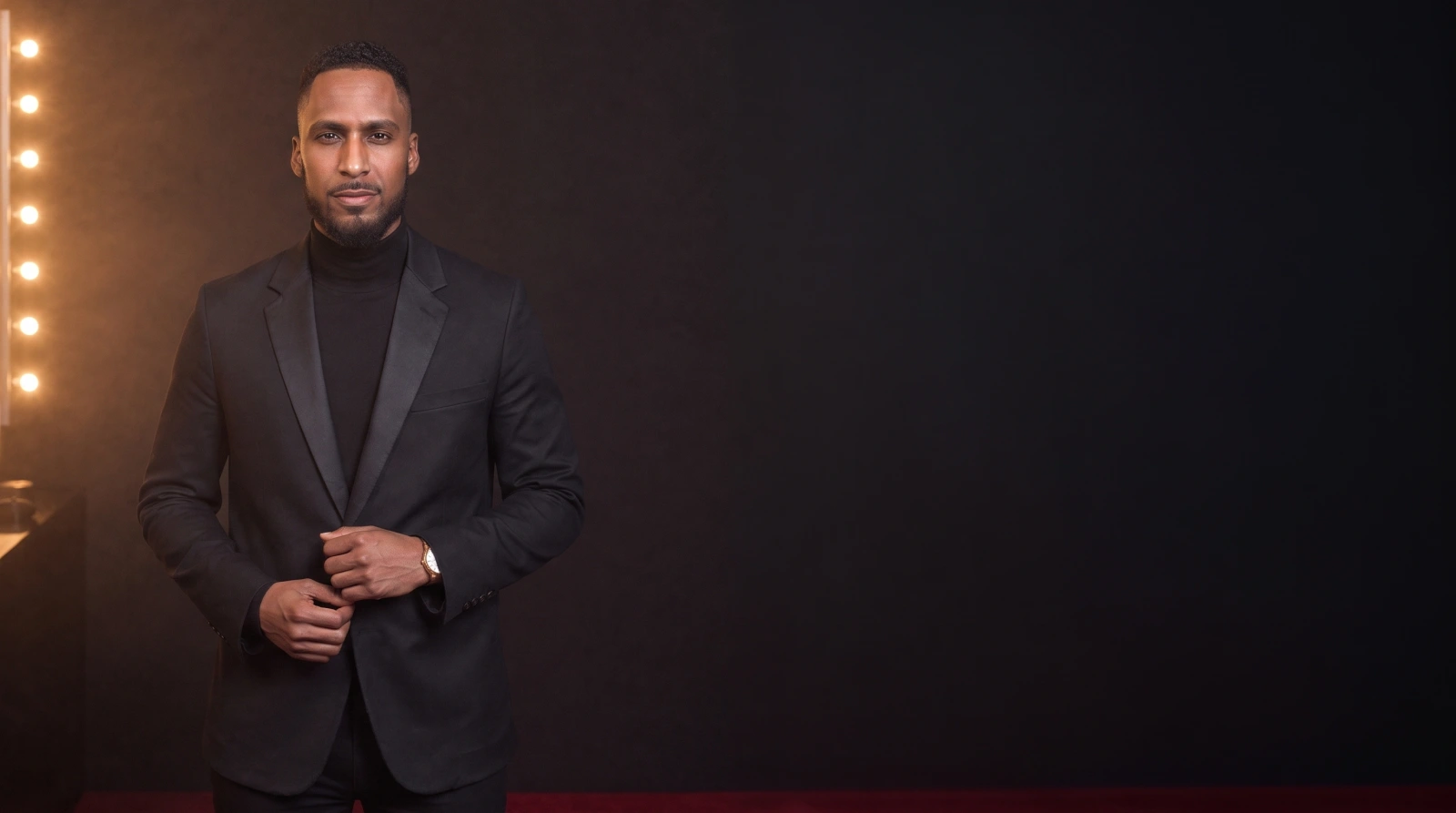
People love a clean answer.
What do you do?
Pick one. Make it easy. Give them a box they can label before the conversation gets complicated.
That has never really worked for me.
Yes, I sing. I dance. I act. I tell jokes. I model. I DJ. I write. I create. Sometimes I feel like all of those things at once. Sometimes I feel like none of them. Maybe that is the Libra in me. Maybe it is the Matrix refusing to render me as one simple character.
Either way, I am done treating range like a problem I need to solve.
The box was never big enough
King The Kemist is not a job title. It is not a costume I put on when the music starts. It is the formula I built from everything I am.
Music is one part of the formula. So are comedy, movement, fashion, performance, writing, and the random thought that will not leave me alone until I turn it into something. A lot of it comes from my own struggles, pain, lessons, and the parts of life I am still trying to understand.
I do not always know what form an idea is supposed to take when it arrives. It might become a song. It might become a joke. It might become a visual, a character, a DJ set, or something I do not have a name for yet.
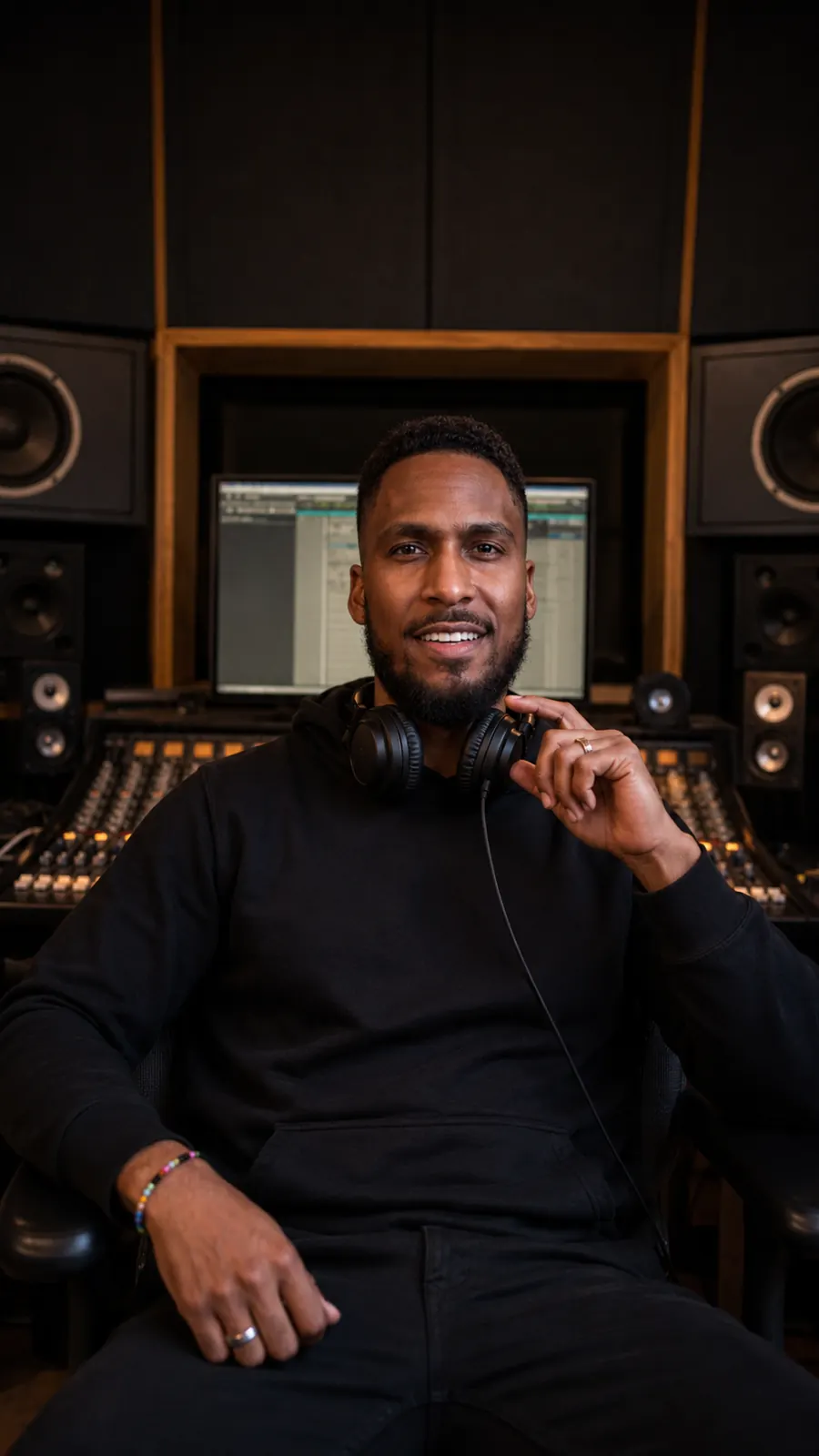
That uncertainty used to feel like confusion. Now it feels more like freedom.
“King The Kemist is not a box I climbed into. It is the formula I built from everything I am.”
My goal is simple, even if the path is not: create freely and bring as much light into this world as I can.
And yes, I am still figuring out what that means. I think that is part of the point.
Before I had words for it
My passion for music began as soon as my little baby ears could feel the vibrations. That is the best way I know how to explain it. Music was never introduced to me like a new subject. It was already in the room.
I grew up around music and Caribbean roots. Both of my parents sing. My mom and I sang in a choir. My dad is a photographer, and when I was a kid he took me to concerts. So sound, performance, and images were all part of the same world early.
I was usually the one DJing at family events—and sometimes at random bars, because apparently I cannot be trusted near an unattended playlist.

I have always been into dancing, writing, rapping, and creating. I even excelled in writing at school, but somehow did not immediately connect that with writing songs I could actually put into the world. Life will hand you clues and still let you walk past them for years.
Eventually, the clues started introducing themselves properly. I have had the pleasure of working with some really dope local vocal coaches, including Eric Arceneaux. Training gave shape to something that had been living in me long before I knew what to call it.
The camera was another instrument
Music was not the only language around me. With a photographer for a father, I grew up in front of the camera. Posing, movement, and expression became natural ways to communicate before I thought of them as skills.
I later trained at John Casablancas Modeling & Career Center and walked runway for the Aveda Institute in Washington, DC. Over the years, I have worked with different local photographers and built a portfolio that moves from studio work to streetwear and lifestyle concepts.
Modeling taught me something that connects to everything else I do: the body is part of the story. A song is not only what comes out of your mouth. A joke is not only the words. A photograph is not only a face. Timing, posture, movement, energy—those things speak too.
Maybe that is why choosing one lane has never made sense to me. All the lanes keep feeding each other.
The music makes the movement sharper. The camera makes me more aware of performance. Comedy keeps the whole thing human. Writing helps me understand what I was feeling after I have already felt it.
That is the alchemy.
Not pretending I have everything figured out. Not forcing every part of me into one neat category. Just taking the joy, the pain, the lessons, the Caribbean rhythm, the Libra indecision, the camera, the stage, the jokes, the late-night ideas, and whatever else shows up—and making something honest from the formula.
Today it might be a song. Tomorrow it might be a joke. The next day I may just be DJing at somebody's function because nobody else can be trusted with the aux.
All of it is me. All of it belongs.
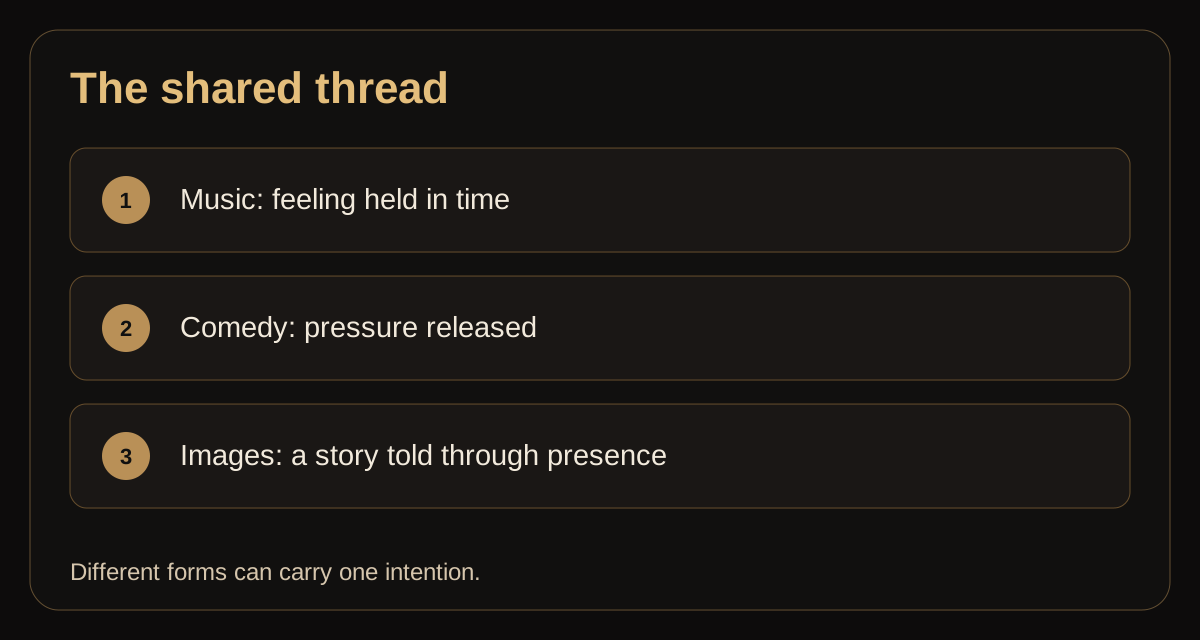
That does not mean an audience has to guess why the pieces belong together. A different sound, a different room, or a different format can still carry the same taste and intention. The honest work is to make that connection visible, not to pretend every creation is identical.
If you are trying to understand the thread through your own range, I go deeper on the practical side in “You Don't Need a Niche. You Need a Point of View.” You can give people a clear way into your world without throwing half of that world away.
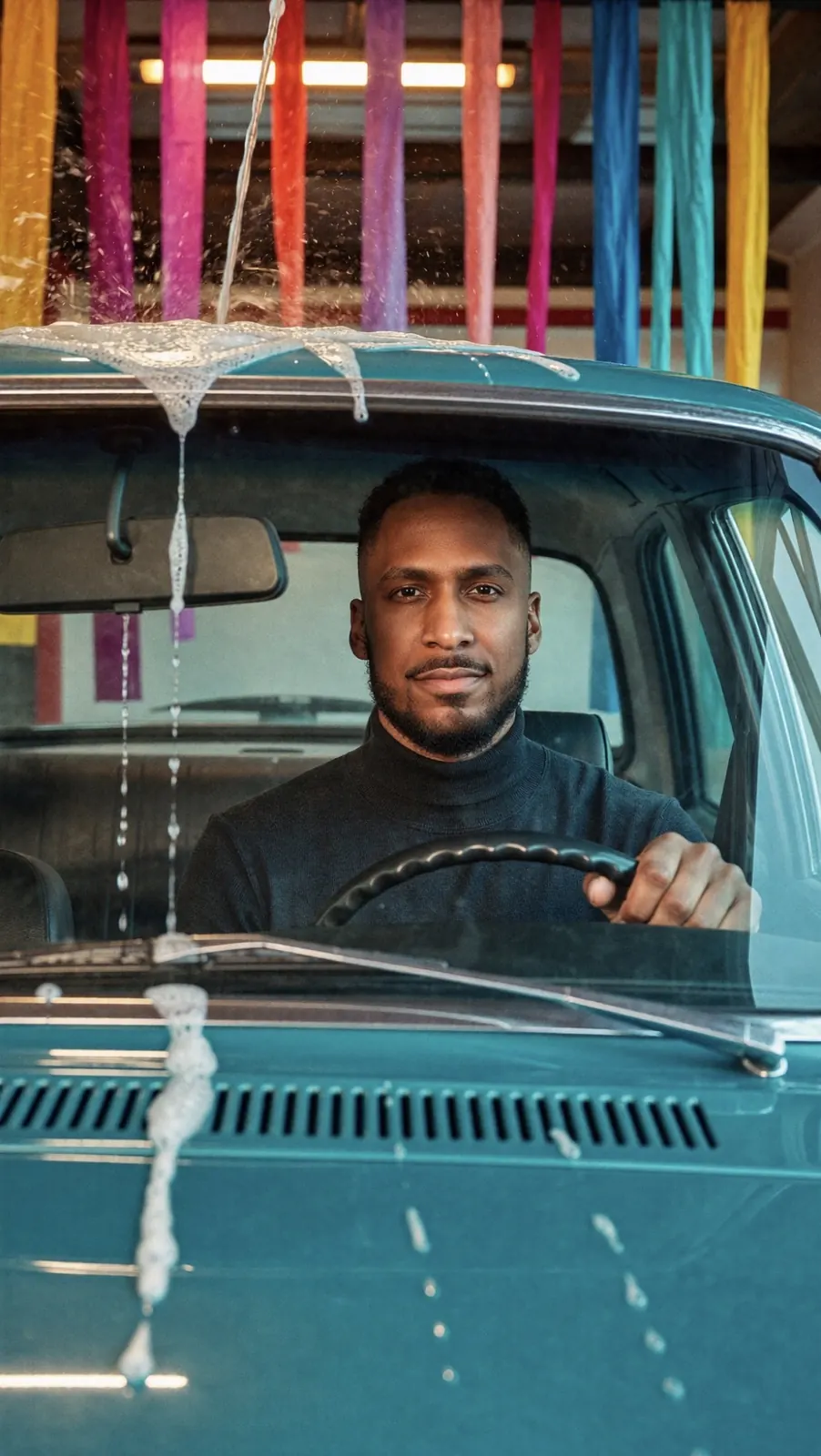
Range is not the same as indecision
I joked earlier that maybe this is the Libra in me. I want to be fair about that, because people mix up range and indecision all the time, and I have mixed them up too.
Indecision is standing in front of five doors and walking through none of them. Range is walking through all five, one at a time, and coming back with something from each room.
Is astrology science? No. But I wrote about the Libra habit of weighing every option in Why Are Libras Indecisive?, and I recognize that pattern in myself. When I can see the value in every direction, choosing one can feel like betraying the others.
Here is the honest part. Sometimes I have used “I do a lot of things” as a hiding place. If I never finish the song, nobody can judge the song. If I keep bouncing to the next idea, I never have to find out whether the last one was any good.
That is not range. That is avoidance with a nice résumé.
The test I use now is simple. Did something get finished? A verse recorded. A bit tested in front of real people. A set played from start to finish. A draft actually published. If the different lanes keep producing finished work, the range is real. If they only keep producing new beginnings, I need to sit down and close something.
Being many things is not the problem. Never landing on any of them is.
So when somebody asks me to pick one, I try to hear the useful part of the question. Usually they are not asking me to shrink. They are asking me to commit. I can commit to finishing this song, this set, this piece of writing, without promising to give up everything else forever.
What people actually mean when they say “pick a lane”
Sometimes that advice is useful. If a stranger lands on a page and cannot tell whether you make music, sell shoes, or fix boilers, the page has a communication problem. People deserve an entrance. They should not need a map and a decoder ring to understand why they are there.
But an entrance is not the whole house. A clear introduction can say what you make now and what someone can expect next without declaring that your other gifts are distractions. “I make music about change, tell stories about the mess in between, and bring humor to the parts we take too seriously” gives somebody a way in. It does not demand that every piece of work wear the same outfit.
The practical question is not “How do I hide everything except one talent?” It is “What thread would somebody recognize if they saw two different things I made?” Maybe that thread is a voice, a rhythm, a sense of humor, a recurring question, or the way the work leaves people feeling. A thread is more useful than a box because it can grow.
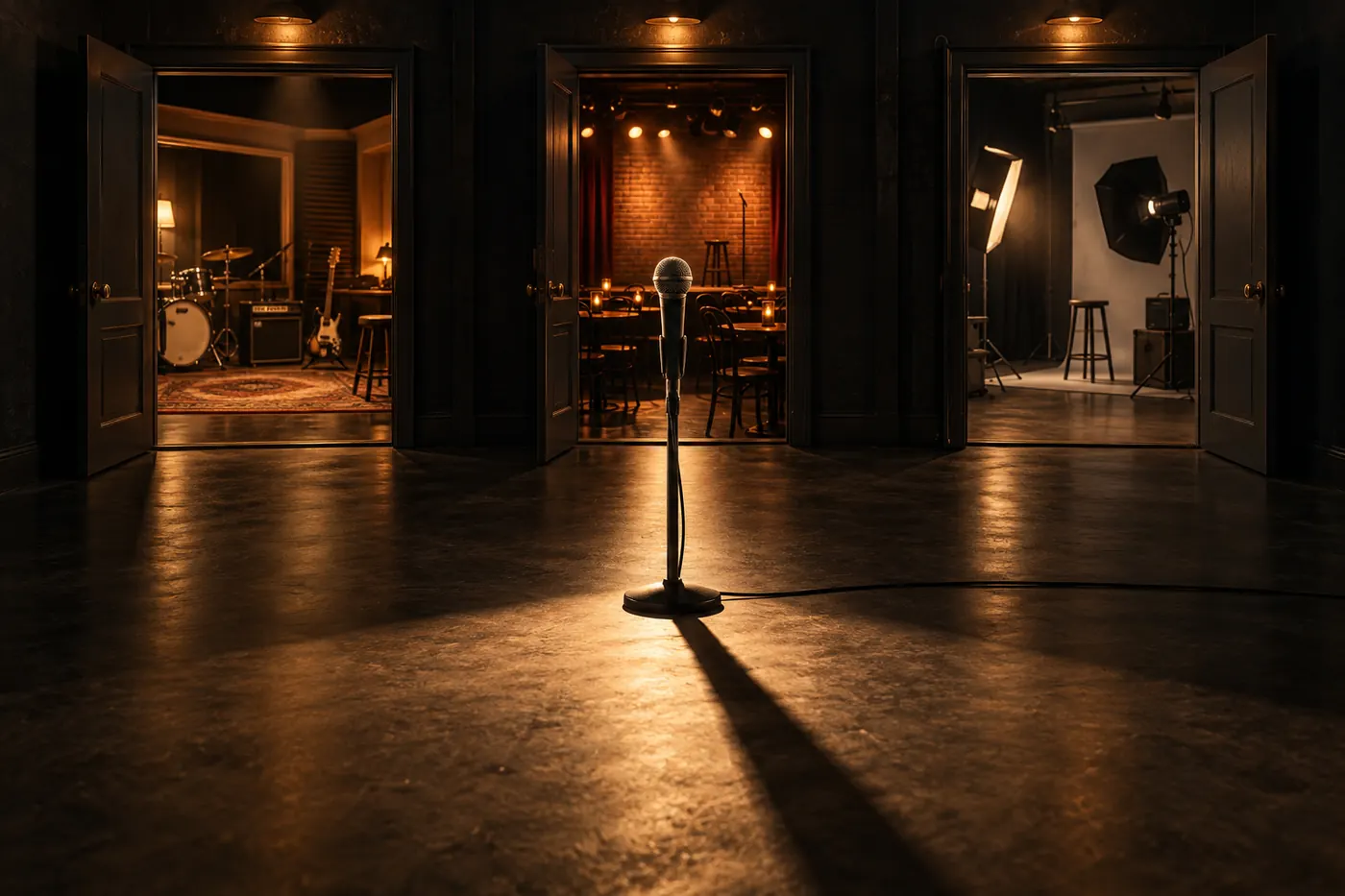
Genre boundaries are not fixed natural laws, either. Berklee has described how contemporary artists cross and blend musical categories. That does not mean every experiment will find the same audience. It means a creator can explain the relationship among experiments instead of treating variety itself as a mistake. If a new sound is a real turn, tell people what moved you toward it. Let them hear the bridge. Read Berklee's discussion of genre fluidity.
Give each part of the formula a job
I do not have to pretend a joke and a song do exactly the same thing. A song can hold a feeling longer than a punchline. A joke can puncture an ego faster than a ballad. A photograph can say something about posture that a paragraph might never catch. The formats do different jobs, and that is precisely why I keep them.
Think about the moment you are trying to create. If you want someone to sit with grief, the funny version may be a poor container. If you want to let somebody breathe after a hard truth, a little humor can open the door. If the idea depends on movement, the camera or stage may tell it more honestly than another caption. Range becomes intentional when you choose the form because it serves the idea, not because you are afraid to commit to anything.

That is a useful distinction for anyone building several creative lanes. Make a short list of your formats. Beside each one, write what it lets you say that another format cannot. The answer does not have to be deep or marketable. “DJing makes people move together in a room” is enough. “Writing lets me slow down and be precise” is enough. If you can name the job, you can explain why the work belongs in your world.
What range looks like on a regular Tuesday
From the outside, being multi-passionate sounds glamorous. From the inside, it mostly looks like a phone full of voice memos and half-finished notes.
A melody shows up while I am washing dishes, so I hum it into my phone before it disappears. Later, something ridiculous happens in line at the store and I write it down because it might be a bit. That night I am digging through songs for a set, and one transition gives me an idea for a visual. None of that is scheduled. It just keeps arriving.
The trick is not forcing every idea to become something today. Some ideas need a week in the drawer. Some need to be sung badly a dozen times before they sound right. Some turn out to be a joke when I was sure they were a song, and the other way around.
I wrote about this in Creative Flow Is Not Something You Can Bully Into the Room. Flow does not respond well to pressure. When I try to make one format carry an idea that wants to live somewhere else, everything gets stiff. When I let the idea pick its container, the work starts moving again.
There is a practical side, too. I keep all the ideas in one place, even if they end up in different lanes. A lyric sits next to a joke premise and a shot idea. Seeing them together reminds me they came from the same person, and sometimes two of them turn out to be the same idea wearing different clothes.
It also helps to give the week a little shape. One block for recording. One for writing. One for trying jokes out loud, even if the only audience is a mirror and a very unimpressed houseplant. The schedule is loose on purpose, but it keeps one lane from quietly eating all the others.
And yes, some days nothing arrives at all. That is part of it. Range does not mean every lane is busy every day. It means when something does show up, I have more than one way to catch it.
The audience can follow a person through change
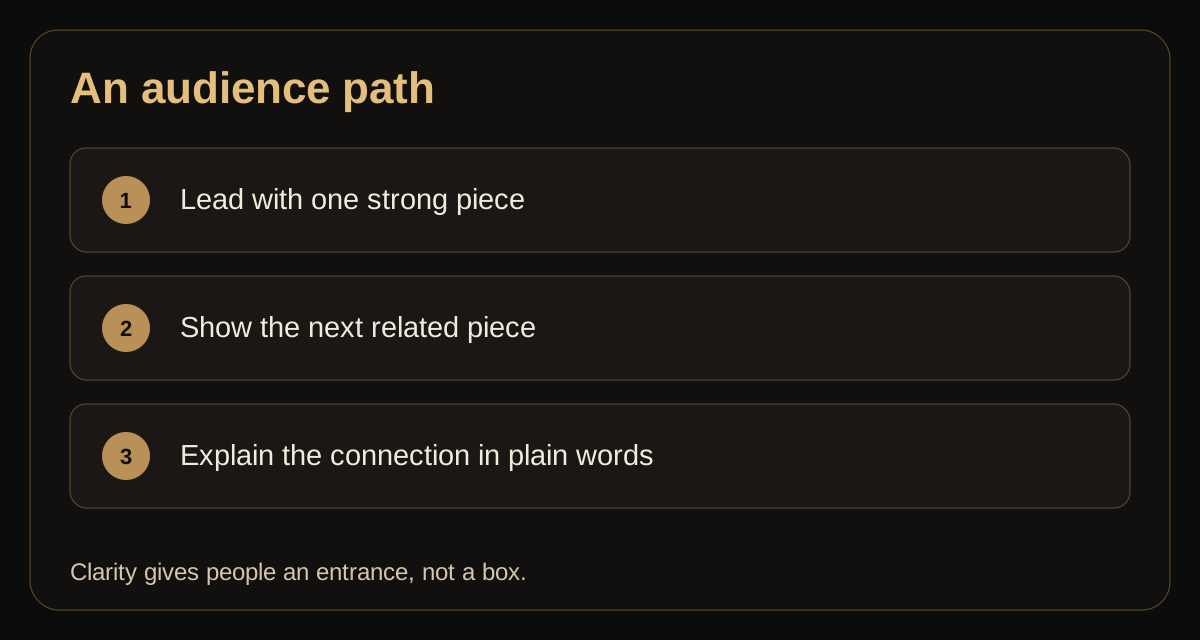
Of course, not every listener wants every experiment. Somebody may come for one song and skip the essay. Somebody else may love the joke and have no use for the playlist. I cannot control that. What I can do is make each doorway honest: say what this piece is, point to a sensible next piece, and let people choose how far they want to walk.
That is why I do not want “be consistent” to mean “repeat yourself until nobody can tell the days apart.” Consistency can mean that the invitation is clear. The titles make sense. The site connects the music and the writing. The work still sounds like the person who made it, even when the tempo or medium changes.
There is a difference between being many things and showing everything at once. A concert poster has one job. A booking page has another. An article like this can take more time. The whole identity does not need to fit on every surface. It only needs to make sense when someone follows the path between them.
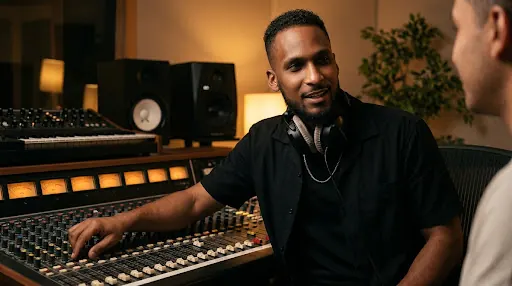
If you are a creator with several interests, try a small test. Put two pieces side by side. Ask a trusted person what they have in common before you explain your plan. If they can describe a shared feeling or question, you may already have a stronger center than you think. If they cannot, perhaps you need a better introduction, a stronger edit, or a more deliberate connection. That is information, not a sentence on your future.
Quick answers
Is it bad to have too many interests as a creative? No. Lots of interests only become a problem when nothing gets finished or when nobody can see how the work connects. Pick one piece, finish it, share it, and let the next one build on it.
Do artists need a niche? You need a clear way in, not a cage. A niche can help a stranger understand you quickly, but a consistent point of view, sound, or feeling can do the same job while still leaving room for your range.
What is a multi-hyphenate artist? It is a creator who works across more than one discipline, like a singer who also acts and does comedy, or a DJ who also writes and models. The hyphens describe the formats. The person and the point of view are what tie them together.
How do I explain what I do when I do a lot of things? Lead with what you are working on right now, then name the thread. Something like “I make music, and I also tell stories through comedy and writing” gives people an entrance. You can show them the rest of the house later.
What I will keep doing
There is a real cost to explaining yourself over and over. One day you can spend more time defending the range than making the work. I have to notice when a useful introduction has turned into a permission request. Once the path is clear, the next honest piece is a better answer than another argument about categories. A stranger may still prefer a simpler label. That is okay. They are allowed to need a shortcut, and I am allowed to be larger than it.
For someone at the beginning, this may mean choosing one strong piece to lead with, then connecting the others from there. Lead with what is ready, not with a promise that every talent will appear in equal measure. The body of work can reveal its width over time. Nobody needs to understand the entire formula at the door.
I am going to keep making the song when the song is the right shape. I am going to keep writing when an idea needs room to breathe. I am going to keep letting comedy through when life gets so serious it starts lying about itself. I am going to keep treating the camera, the stage, and the dance floor as places where a person can tell the truth without delivering a speech.
Some experiments will land. Some will teach me what I was really trying to make. Neither outcome means the range was a flaw. It means I was working. That distinction matters when the internet turns every release into a public referendum on your identity. One imperfect thing is still one thing you made; it is not a verdict on every version of you.
I want the person who arrives for one part to understand that the other parts are not a trick. They come from the same curiosity and the same desire to bring something useful, moving, or funny into a room. I can introduce them clearly. I can invite people in without handing them a fixed definition of me.
King The Kemist is the formula. Every creation is a new experiment. The only rule is to keep creating.
— King
♛ The Royal Reset
More of this lives in the pack - five wallpapers, three Notes from KTK, and the Royal Pass to whatever he shares next.
Claim Your Reset