The Formula
You Don't Need a Niche. You Need a Point of View.
A niche tells people what you talk about. A point of view tells them why it could only have come from you.
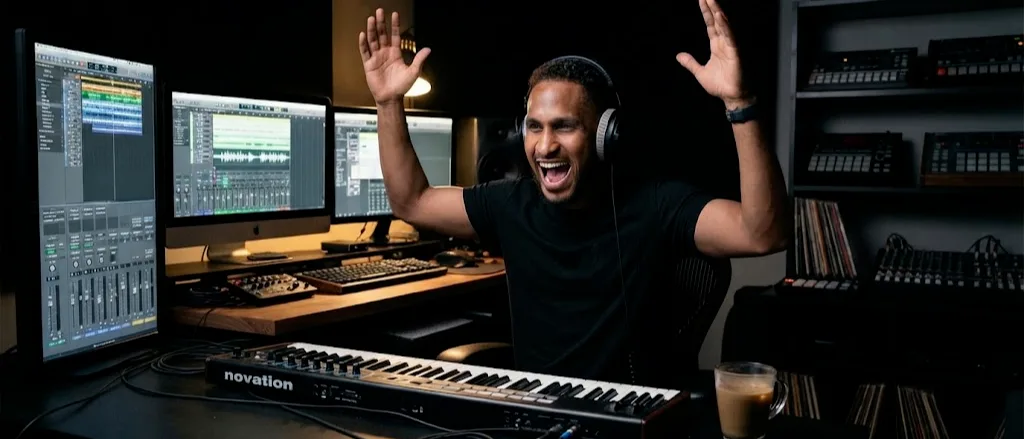
Most personal branding advice begins with a polite request for you to become easier to explain.
Pick one thing. Choose a lane. Find your niche. Repeat yourself until the algorithm, your audience, and your auntie can all describe you with the same sentence.
I understand why that advice exists. People need a way into your world. Confusion does not usually make somebody stop scrolling.
But some of us were never built to be one clean little sentence.
I sing. I write. I DJ. I dance. I act. I model. I tell jokes. I create things because some ideas refuse to leave me alone until I give them somewhere to go.
That kind of range gets treated like a branding problem. If you do too many things, people will not know what to call you. If they do not know what to call you, they will not know where to place you. And if they cannot place you, somebody will eventually suggest that you hide half of yourself until the other half becomes profitable.
No, thank you. 😂
The answer is not to cut yourself into a more convenient shape. The answer is to give all those parts a clear point of view.
A niche is a subject. A point of view is the lens.
A niche tells people what you talk about.

A point of view tells them what you notice, what you believe, what you find funny, what you refuse to fake, and why the thought could only have come from you.
That difference matters when you are building a personal brand around a person who genuinely has more than one interest.
Writer and artist Emilie Wapnick uses the word multipotentialite for people with several interests and creative pursuits rather than one single calling. I appreciate having a word for it. I also know that learning the word does not automatically solve the problem.
You still have to help people understand the connection.
My connection is the formula.
I wrote more about where that formula came from in “I Was Never One Thing. That's the Point.”
King The Kemist is where music, comedy, performance, style, reflection, Caribbean rhythm, curiosity, pain, growth, and a little Libra chaos get turned into something new. The output can change because the person making it has not changed.
A song and an essay may look like two different lanes. The same perspective can run through both.
The niche is not the container. The recognizable mind behind the work is the container.
Your range is not the confusing part
Doing several things does not automatically confuse people.
Presenting those things with no relationship between them does.

Imagine visiting somebody's page and finding a business lecture, a thirst trap, a recipe, a breakup monologue, a dance video, and a spiritual download from somebody who suddenly speaks like they have been appointed regional manager of the universe.
That can feel random.
Now imagine the same variety held together by a recognizable sense of humor, visual world, set of values, emotional temperature, and way of looking at life. The topics can move. The person remains familiar.
That is what a strong personal brand does. It creates recognition without requiring repetition.
People know what kind of experience they are entering, even when they do not know exactly what you are about to make.
For me, that experience should feel grown, creative, thoughtful, funny, musical, a little mysterious, and honest about the fact that I am still figuring some of this shit out too.
I do not need every post to say the same thing. I need everything I make to belong in the same world.
Consistency is bigger than content
The internet often treats consistency like a production schedule.
Post at the same time. Use the same format. Say the same three phrases. Train everybody to expect another serving from the content machine.
Schedules have their place. Structure keeps ideas from dying in the Notes app.
But the consistency that makes a multidimensional personal brand work goes deeper than frequency.
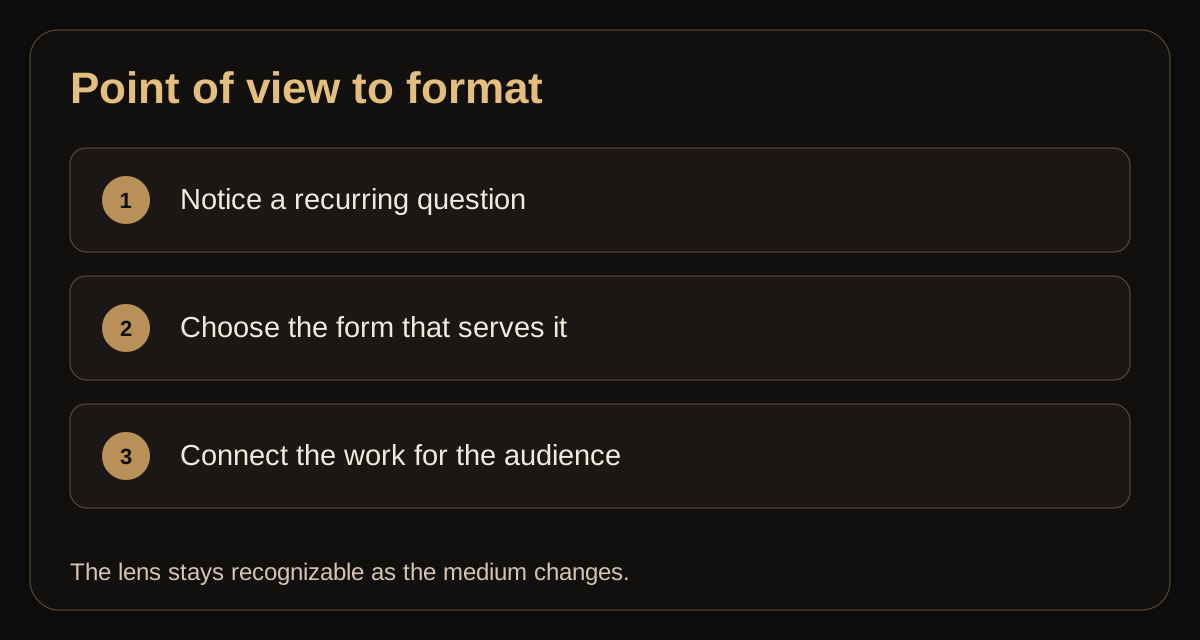
It lives in the questions you keep returning to.
What does freedom look like when you still need discipline? How do you turn pain into something useful without pretending the pain was a gift? What happens when the old version of you no longer fits? Why can one song make your whole body remember a life your mouth cannot explain yet? When is calm confidence, and when is it avoidance wearing a nice jacket?
Those questions could become music, comedy, an article, a visual, or a conversation. They still belong together because they come from the same curiosity.
The format is allowed to change. The reason for making it should remain recognizable.
A point of view will cost you a few followers
Here is the part branding advice tends to whisper.
A niche keeps people around because they know what to expect. A point of view keeps people around because they agree with how you see things. Some people will not.
That is fine. That is actually the job.
I have played sets where half the room wanted the song everybody knows and the other half wanted the deep cut that only works at the right moment. I picked a lane for that night, read the floor, and committed. A couple of people walked to the bar. The rest of the room got louder.
Nobody in that room needed me to be every DJ at once. They needed me to be clearly myself, with taste they could trust even when the next song was not the one they would have picked. That trust is the whole thing. It is what lets you surprise people without losing them.
A brand works the same way. If every caption is written to offend nobody, it will also move nobody. The joke that lands is usually the one somebody could take the wrong way. The song that stays with people usually says one sentence they could argue with.
This is hard for me, honestly. I can see every side of almost anything, which I wrote about in Why Are Libras Indecisive? Seeing every side is a gift in a conversation. It is a problem when it turns your work into a polite summary of everybody else's opinions.
At some point you have to say what you think and let the room react. I wrote about that muscle in Why Do Libras Avoid Conflict? It turns out the same muscle runs your creative life too.
Losing a few followers who wanted a different person is not a branding failure. It is the audience sorting itself. The ones who stay are staying for you, not for a format somebody else could copy tomorrow.
You are not required to monetize every room
There is another trap hiding inside personal branding advice. Once people realize you have several abilities, they start trying to turn each one into a department.
The music needs a funnel. The jokes need a strategy. The writing needs a product. The dancing needs a content calendar. Suddenly your personality has quarterly targets.
Please relax. 😂
Some interests will become offers. Some will strengthen the work indirectly. Some are allowed to remain part of your life without immediately reporting for duty.
The point of bringing your whole self into the brand is not to squeeze money from every piece of yourself. It is to stop hiding the connections that make the work yours.

My experience in front of a camera affects how I think about performance. DJing affects how I read a room. Comedy affects timing. Writing helps me understand what I already felt. Music gives the whole thing somewhere to breathe.
Every ingredient does not need its own storefront. It can still change the formula.
How to build a personal brand without shrinking yourself
If you do more than one thing, start with four questions.
What do you keep noticing?
Not what performs best this week. What keeps pulling your attention even when nobody asks you to talk about it?
Your repeated curiosities are evidence. Mine tend to circle creativity, identity, music, growth, contradiction, energy, humor, and what people reveal when they are trying not to reveal anything.
What do you believe strongly enough to repeat?
A personal brand needs more than interests. It needs a position.
I believe range is not a flaw. Taste matters. Pain can become material without becoming your whole identity. Creative freedom still needs structure. People do not need another perfect person on the internet. They need something real enough to recognize themselves inside it.
Those beliefs can travel across formats.
How should people feel after spending time in your world?
Informed is fine. Inspired is overused. Be more specific.
Maybe you want people to feel less alone. More curious. Calmer without becoming passive. Seen without being babied. Entertained, then caught off guard by a thought that follows them home.
That feeling becomes part of the brand too.
What belongs, even when it looks different?
This is where taste earns its job.
Not every good idea belongs in every world. A point of view gives you freedom, but it also gives you a filter. The question becomes less “Am I allowed to talk about this?” and more “Can I say something honest about this in a way that belongs here?”
If the answer is yes, make it.
If the answer is no, you can still enjoy having a thought without making the thought everybody else's problem. A lesson I continue to learn as a Libra with internet access.
Show the connection before asking people to find it
Imagine somebody who makes songs, photographs, and short essays about the places they grew up. “I do music, photography, and writing” lists the formats. “I document how a place sounds, looks, and stays with you” gives the audience a reason to follow all three.
That sentence will not build a career by itself. It gives the creator a test: does this new piece reveal something about that world, or is it asking the same audience to follow an unrelated project? Sometimes one name can hold the range. Sometimes a separate project makes the promise clearer. The point of view helps you decide; it does not make every decision for you.

The goal is recognition, not reduction
I am not trying to become impossible to describe.
I want the description to be wide enough to be true.
King The Kemist is an artist, but the art is not limited to music. It is the process of taking whatever life hands me and finding the form it wants to become. Sometimes that is a song. Sometimes it is a joke. Sometimes it is a photograph, a performance, or one of these thoughts from the quiet side of the noise.
Your point of view is allowed to grow
There is one fear I hear a lot from people with range. "What if I commit to a point of view and then I change?"
You will change. That is not a risk. That is a guarantee.
The version of me who started making music is not the same person writing this. My taste got sharper. Some jokes I used to tell do not feel true anymore. Some subjects I avoided are now the ones I care about most. The lens moved, and it was still my lens.
A point of view is not a tattoo. It is closer to a voice. It deepens with use. People who have followed you for a while will usually notice the growth before you announce it, because they have been watching the same mind work through new material.
Even the more structured advice leaves room for that. In Harvard Business Review, Harvard Business School marketing lecturer Jill Avery and coach Rachel Greenwald describe personal branding as an intentional practice that includes building a personal narrative and reevaluating your brand once a year. Their audience is mostly professionals, not artists. I still like the idea that a brand is supposed to be checked on, not carved into stone.
So check on yours. Once in a while, read back through what you made. Notice what you keep circling. Notice what you have quietly outgrown. Then update the introduction so it describes the person who is actually making the work now.
You also cannot force the new direction on a deadline. Some of the best shifts in my work showed up when I stopped squeezing. I wrote about that in Creative Flow Is Not Something You Can Bully Into the Room. Growth works the same way. Make room for it and let it arrive.
Show the connection in a place people can find it
A point of view is easier to recognize when you build a path through the work. Imagine a photographer who also writes about neighborhood memory and makes short audio pieces. A profile that says only “multidisciplinary creative” asks the audience to do all the interpretation. A stronger introduction might say, “I document the places people carry with them through images, essays, and sound.” The subjects and formats still vary, but now a visitor knows what to look for.
That is a hypothetical creator, not a formula that fits everybody. The lesson is to name the question that keeps pulling you back, then show the different ways you answer it. On a homepage, a short sentence can lead to three well-labeled paths. In a caption, one honest line can explain why today's video sits beside yesterday's essay. The bridge does not need to sound like a marketing department wrote it.
If your interests have truly separate audiences or promises, a second project may make sense. That is a practical decision about navigation and expectations, not proof that you are two people. Before creating a second identity, consider the maintenance: another profile, another publishing rhythm, another place where somebody can lose the trail. Keep one name when the same point of view can hold the work clearly. Split when the promises would otherwise compete.
Quick answers
Do you need a niche to build a personal brand? Not necessarily. A niche makes you easy to describe, which helps. But people can also follow a clear perspective across several subjects and formats, as long as you show them what connects the work. If a niche fits you naturally, use it. If it would force you to hide half of what you make, focus on a point of view instead.
What is the difference between a niche and a point of view? A niche is the subject you cover. A point of view is how you see it: what you notice, what you believe, what you find funny, and what you refuse to fake. Two people can share a niche and feel completely different. One person can cover several subjects and still feel familiar.
How do I build a personal brand with multiple interests? Find the questions you keep returning to, write one honest sentence that connects your formats, and make it easy for a stranger to find one strong example of each. Link related pieces together so the audience can follow the thread instead of guessing at it.
How do I find my point of view as a creator? Look back at what you have already made and what you keep talking about when nobody asks. Write down the beliefs you would repeat for free. Then ask somebody who knows your work to describe it back to you, and listen for the ideas they mention without prompting.
Make the first impression specific
It helps to keep the promise honest, too. If most of your work is music today, do not present a future film project as though it is already a library. If writing is a new experiment, say that. People can follow a becoming. They do not need a finished mythology. The point of view becomes more believable when it grows from work they can actually see and hear. Keep the introduction current, revisit it after a few releases, and let the evidence on the page shape the words.
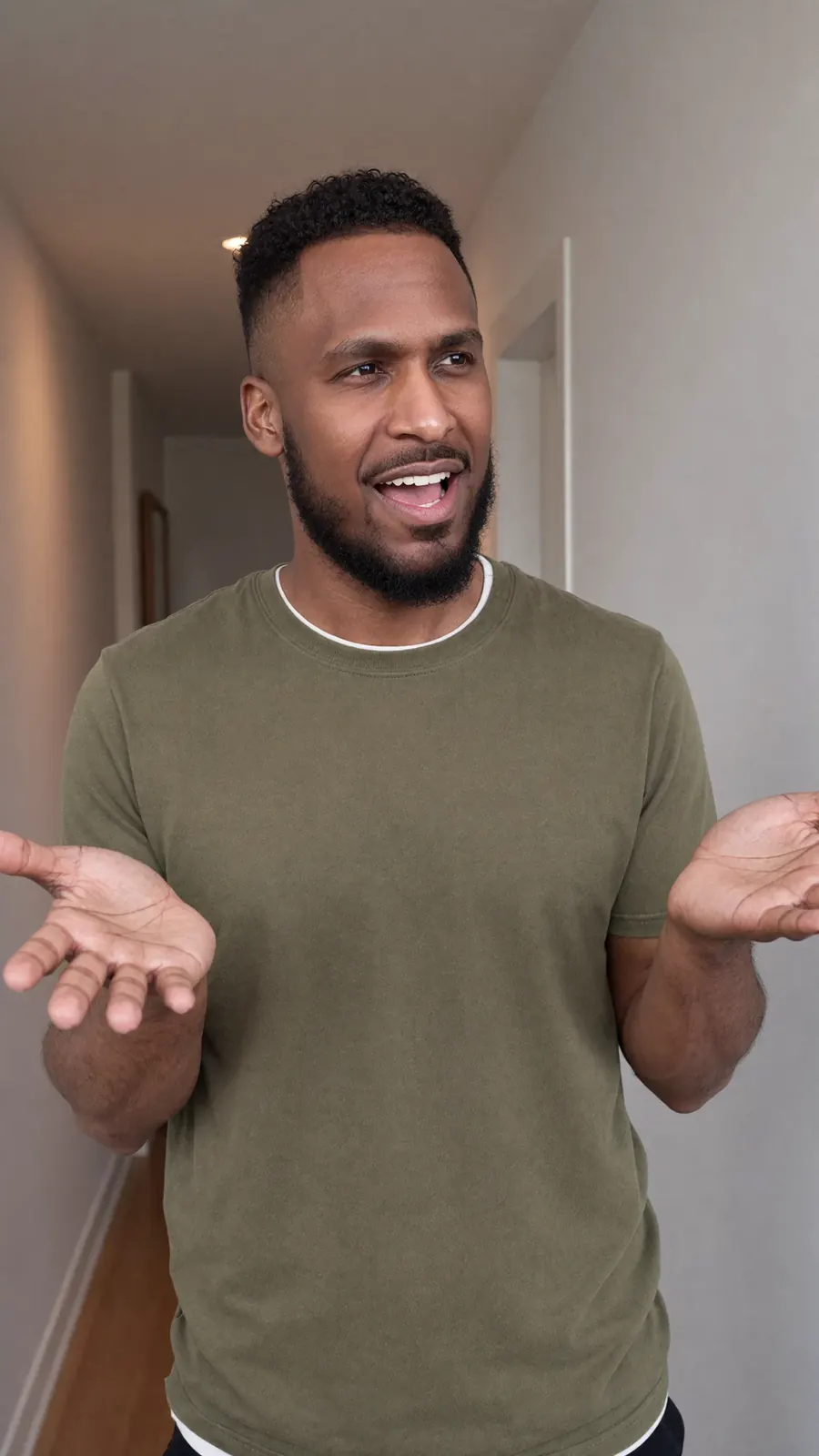
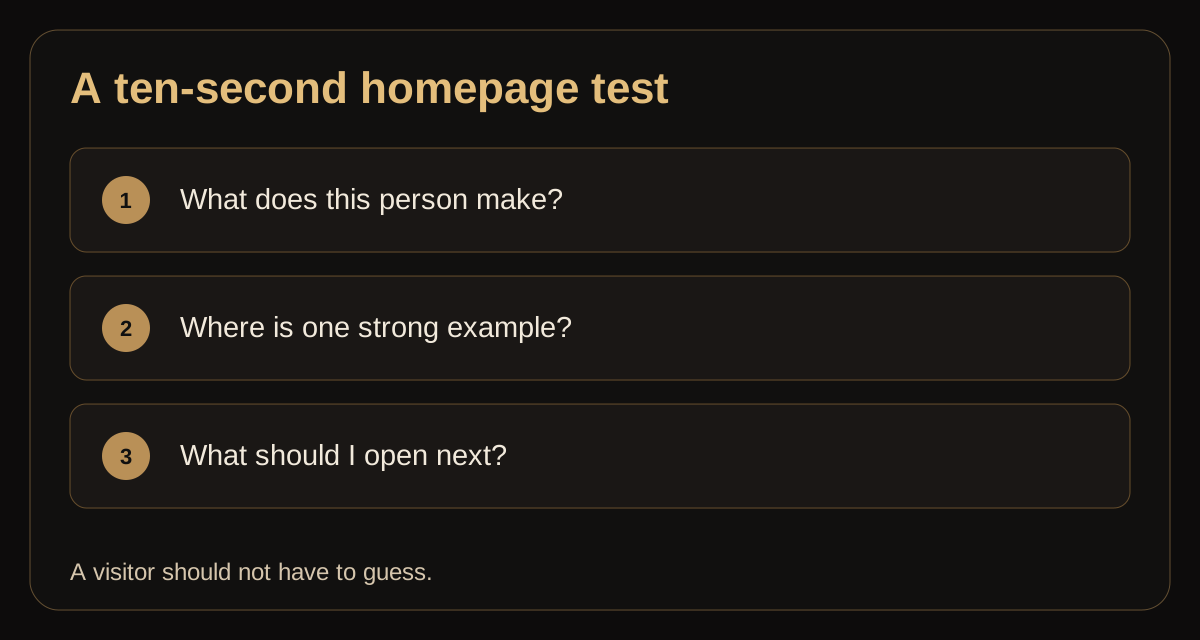
Try looking at your site through a stranger's eyes for ten seconds. Can they say what you make? Can they find one strong example? Can they tell what to do next if they like it? If the answer is no, add clarity at the entrance. You do not need to flatten the rest of the house. A short introduction, three clear labels, and links between related pieces can do more than a giant declaration of personal complexity.
Then ask somebody who knows the work but did not help build the page to describe it back to you. Listen for the words they use. If they name a feeling or a recurring idea you care about, keep that. If they only recite job titles, show more of the connection. This is a small editorial test, not a scientific measurement of brand strength. It is useful because the audience meets what you actually published, not the explanation still living in your head.
The work does not need to look identical. It needs to carry the same fingerprints.
That is the personal brand.
Not a smaller version of me that is easier to market. A clearer version of the connection between everything I make.
I do not need to be one thing.
I need to be recognizable in everything.
— King