Creative Chemistry
Creative Flow Is Not Something You Can Bully Into the Room.
Creative flow does not respond well to threats, timers, or the desperate energy of “be brilliant right now.” You cannot command it. You can make the room easier for it to enter.
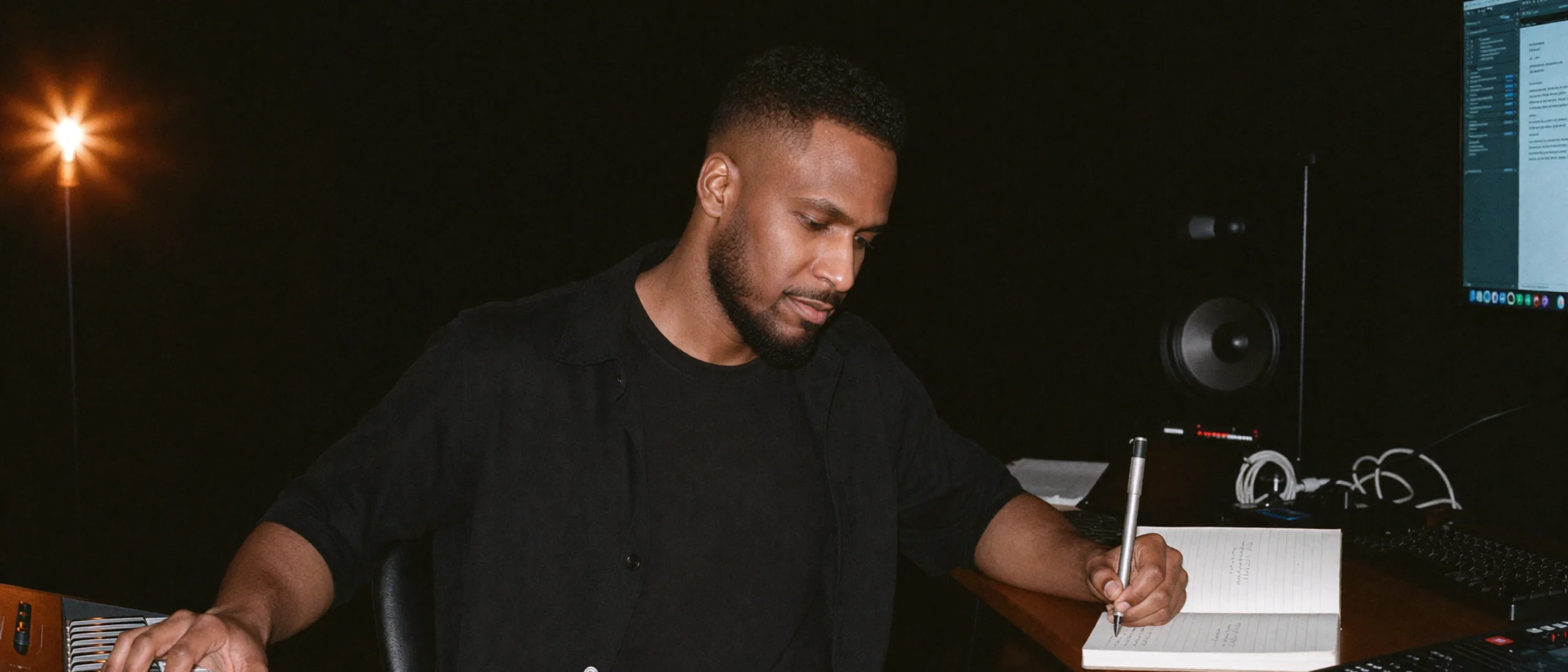
Nothing makes creativity leave the building faster than standing over it yelling, “Be brilliant. We have things to do.” 😂
You know the scene. The project is open. The idea is somewhere nearby. You can almost feel it breathing. Then the pressure arrives and starts checking its watch.
Now the song has to be great. The sentence has to be profound. The visual has to look expensive. The joke has to land. The post has to perform. Preferably before lunch, because apparently the mysterious force of creation has been added to the calendar.
That is usually when the room gets very quiet.
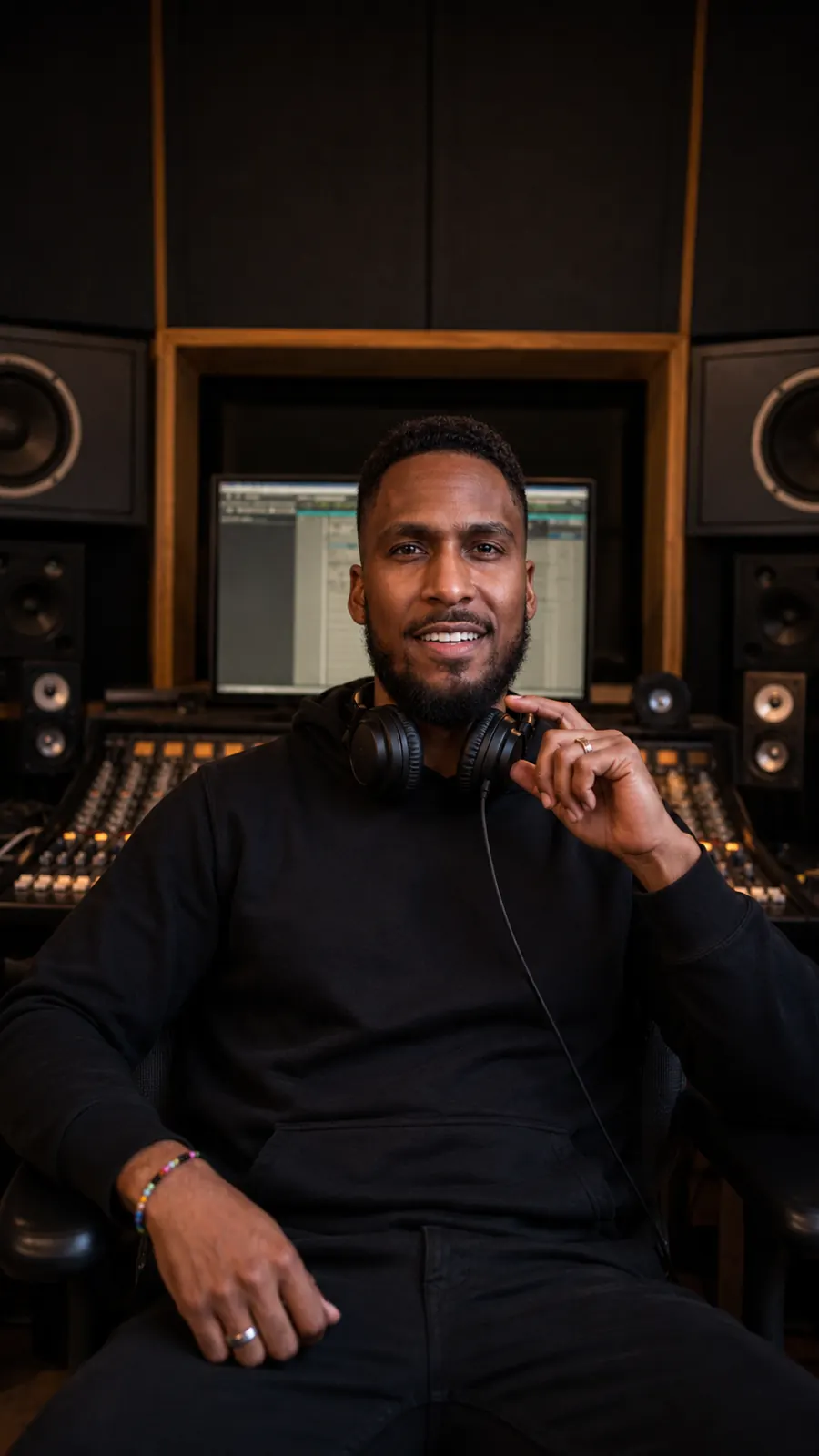
My work moves through music, writing, DJing, performance, comedy, visuals, and whatever else the formula asks for. Each form has its own language, but they have taught me the same thing: showing up for the work and trying to force the work are not the same act.
Showing up creates a place for something to happen.
Forcing it demands that something happen on command.
Creative flow knows the difference.
What a flow state actually feels like
Flow is often described as complete absorption in an activity. Attention narrows. Action and awareness begin to merge. Self-consciousness gets quieter. Time may feel faster, slower, or temporarily irrelevant.
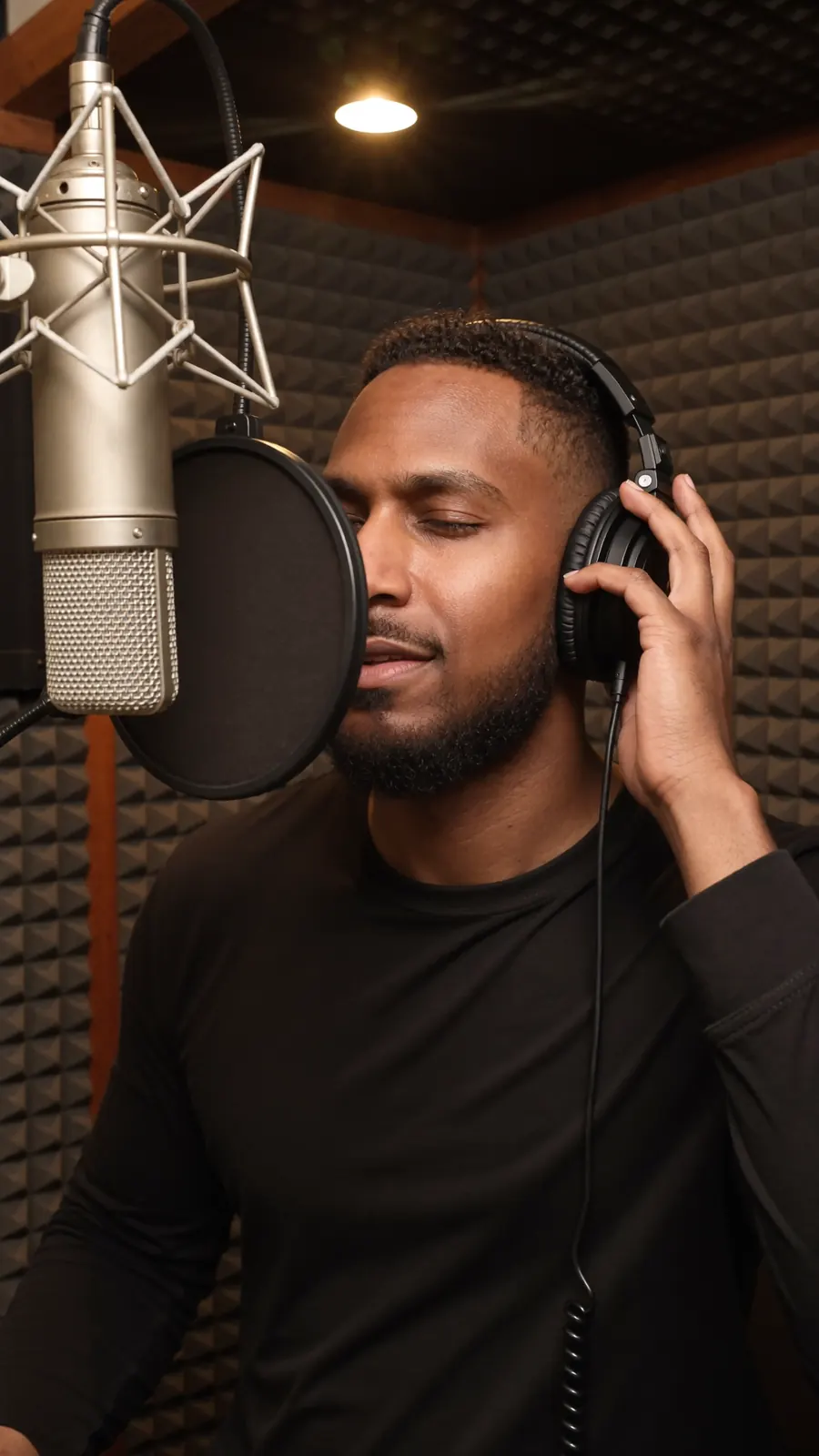
Researchers who studied creative flow in dancers describe several common dimensions: a balance between challenge and skill, clear goals, direct feedback, deep concentration, a sense of control, reduced self-consciousness, and altered perception of time. The dancers did not become less skilled or less prepared when flow arrived. They became less divided while using the skills they had built. The study also found measurable relationships between aspects of flow and the dancers’ physiological responses during live performance.
That distinction matters.
Flow is not magic replacing preparation. It is preparation becoming so integrated that you can stop supervising every breath it takes.
A 2024 study of music students during piano performance also found a positive relationship between flow and performance, with the balance between perceived challenge and skill helping explain part of that relationship. Not all of it. Human beings remain annoyingly more complicated than a diagram. 😂
Still, the basic shape is useful. If the work is far beneath your ability, your mind may wander. If it feels impossibly beyond you, panic can take over the whole studio. Somewhere between boredom and terror is a challenge demanding enough to hold your attention without convincing you that you have no business being there.
That is one of the doors into flow.
It is not the only door, and it does not open every time.
Showing up is discipline. Forcing it is fear wearing a watch.
Creative freedom still needs structure.
I believe that. Inspiration is beautiful, but it has terrible administrative skills. If you only create when every internal condition feels perfect, you may spend a lot of time preparing to prepare.
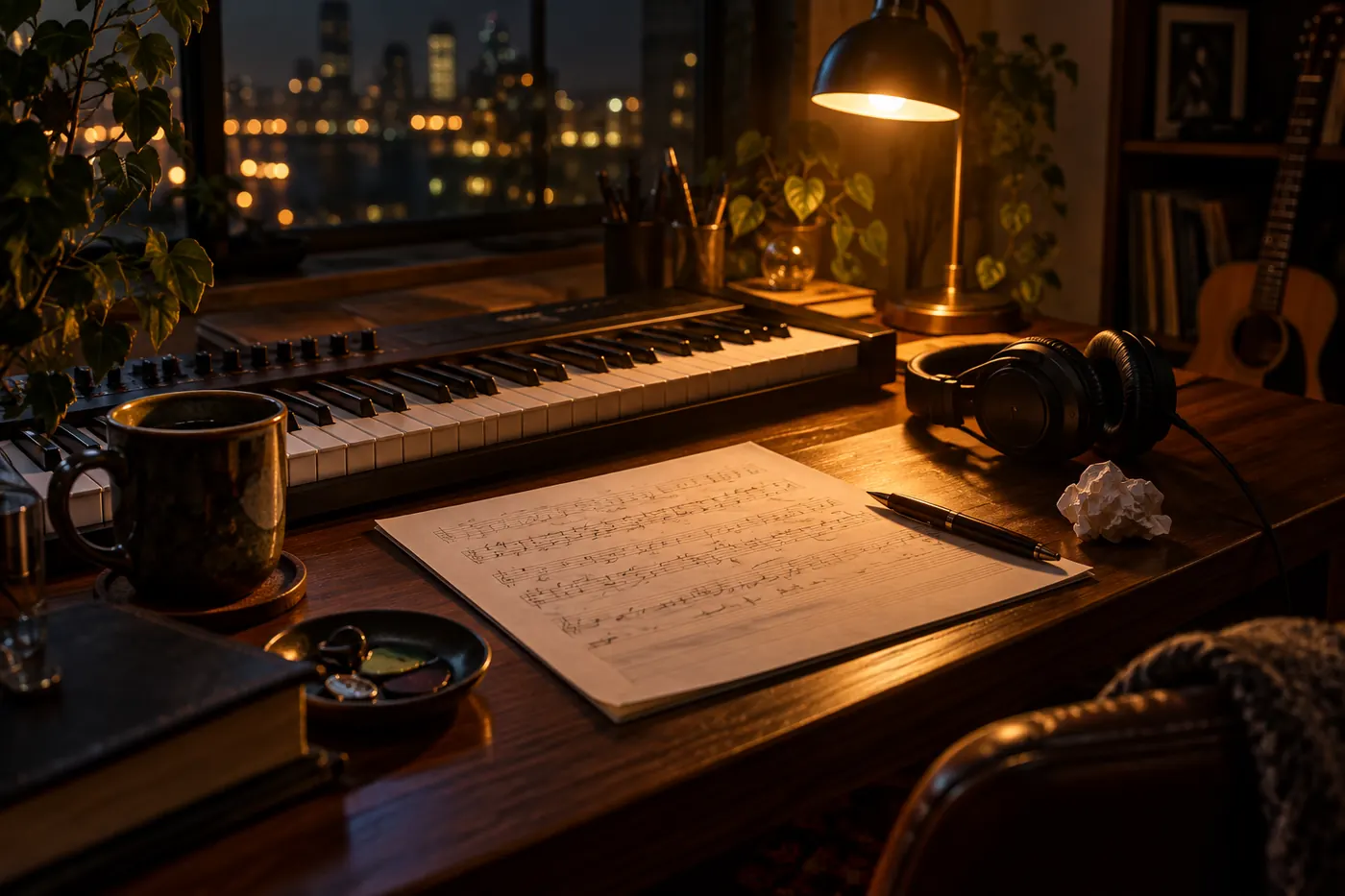
So yes, sit down. Open the session. Touch the keys. Write the ugly first line. Put your body in motion. Give the idea something more useful than your imagination to live inside.
But discipline should bring you into contact with the work. It should not threaten the work until it performs.
There is a particular desperation that enters when the result becomes more important than the act. Instead of listening for what the piece wants, you start scanning for proof that it will be good. Instead of making the thing, you watch yourself making the thing.
Is this clever enough?
Will people care?
Does this fit the brand?
Should the chorus arrive sooner?
Is this healing my inner child while satisfying the algorithm and looking grown and sexy on mobile?
Please. The idea just got here. Let it take its coat off.
Stop staring at yourself while you create
Pressure can do strange things to attention.
In an experimental study of a learned rhythmic movement, researchers tested the idea that performers can choke when they start consciously monitoring a skill that normally runs more automatically. Under pressure, step-by-step control sometimes interfered with execution instead of improving it. The results were more complicated than “pressure always makes performance worse,” but explicit monitoring was central to what the researchers examined.
That study was about skilled movement, not songwriting or writing an essay, so I am not going to dress one piece of research in a lab coat and make it explain the entire creative universe.
But the principle feels familiar: too much attention on yourself can steal attention from the thing you are doing.
The creator and the editor both matter. They just should not always be in the room at the same time.
The creator needs permission to follow a strange sound, write the line that may be too honest, try the move that might look ridiculous, and discover meaning after the fact.
The editor needs distance. The editor can return later, turn on the lights, clean the floor, and ask whether any of this makes sense.
When the editor arrives too early, possibility starts behaving like it is already on trial.
Flow on a stage does not wait for permission
A studio lets you stop, rewind, and try again. A stage does not.
When I DJ, there is no pause button for the room. The next track has to be cued, the energy has to be read, and the decision has to happen before the current song runs out. When I do comedy, the laugh either comes or it doesn’t, and I find out in real time with everybody watching.
You would think that kind of pressure would make flow impossible. Sometimes it does. But on the good nights, the pressure turns into focus. There is no time to stand outside myself and grade the performance, so I stop grading it. I just listen to the room and answer it.
That is the part I try to carry back into the studio. Not the adrenaline. The listening.
It also explains why preparation matters so much on stage. I can only stop thinking about the transition because I have practiced it enough that my hands know where to go. The freedom is built on the reps. Nobody watching sees the hours of rehearsal. They just see someone who looks relaxed.
On stage, my attention is pointed outward: at the crowd, the groove, the timing of the next line. In the studio, it is very easy to point it inward and start interviewing myself about whether I am good enough. Same person. Same skills. Completely different direction of attention.
And when it really clicks, you can feel it in the room. The crowd goes quiet at the right moment. Somebody grabs their friend’s arm. I wrote about that physical rush in That Chill Down Your Spine Has a Name: Frisson. I cannot schedule that feeling for an audience any more than I can schedule flow for myself. I can only show up prepared enough to let it happen.
Creative block is not always laziness
Sometimes a creative block means the idea is not ready.
Sometimes you are tired.
Sometimes the project is too vague, so your mind has nowhere to place its attention.
Sometimes the stakes have become so inflated that a rough draft feels like a public failure.
Sometimes you have consumed so many other people’s voices that your own cannot get a sentence in.
And yes, sometimes you are avoiding the work because scrolling is easier. We can be spiritually complex and still be procrastinating. Both things can be true. 😂
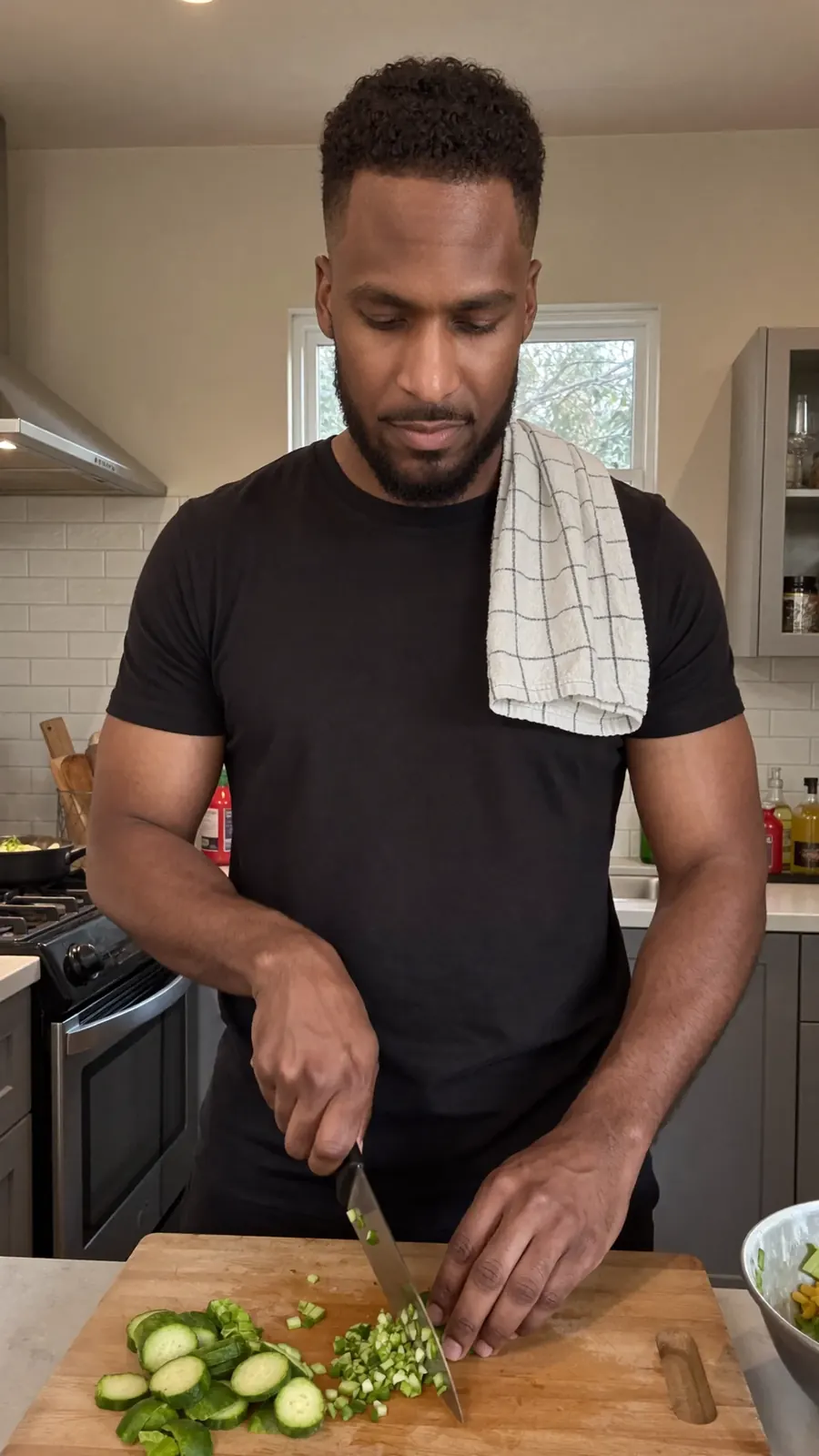
The useful question is not “What is wrong with me?”
It is “What kind of resistance is this?”
Exhaustion needs rest. Fear needs a smaller first move. Confusion needs a clearer target. Inexperience needs practice. Perfectionism needs to be removed from management.
Calling every creative block laziness is like prescribing the same medicine because every bottle is the same color.
Name the actual problem. Then you can change the condition feeding it.
Sometimes the best move is to leave the room
Here is a confession. Some of my best ideas did not show up while I was working. They showed up while I was washing dishes.
That used to annoy me. I put in the hours at the desk, and the hook waits until my hands are covered in soap to introduce itself.
But I have stopped treating that as a coincidence. When I step away, the pressure drops. My attention loosens its grip. The problem I was strangling gets a little air, and sometimes the answer walks in through the side door.
A walk counts. A shower counts. Driving with no music counts. Sleep definitely counts.
None of that is laziness. The work you did before you left is still doing something. You loaded the problem, and your mind keeps turning it over in the background while your hands do something boring. You still have to come back and do the building. Leaving just gives the idea a chance to show up without you breathing down its neck.
The trick is leaving on purpose instead of escaping. Escaping is opening an app and disappearing for an hour. Leaving on purpose is saying, “I am stuck on the second verse. I am going to take a walk and let it sit.” Then you come back.
There is a related trap I know very well. Sometimes I am not stuck because I have no ideas. I am stuck because I have two good ones and I refuse to pick. Take A or take B. This key or that key. I can weigh options until the session is over. (I unpacked that habit in Why Are Libras Indecisive?) When that happens, stepping away helps too. Usually one option still feels alive when I come back, and the other one feels like homework.
You cannot command flow. You can prepare the room.
I do not have a ritual that guarantees a flow state. Nobody does.
What you can build are conditions that make deep attention more possible.
Give the session one honest target
“Make something amazing” is not a clear goal. It is pressure in a nice outfit.
Choose something the mind can actually hold: find the hook, draft the opening, build the drum pattern, test three visual directions, rehearse one section until it becomes physical.
The target can be small without the vision being small.
Match the challenge to the version of you who showed up
Some days you have the energy to invent. Some days you have the energy to refine. Both can move the work forward.
If the task is too easy, increase the constraint. If it feels impossible, reduce the distance between where you are and the next visible step.
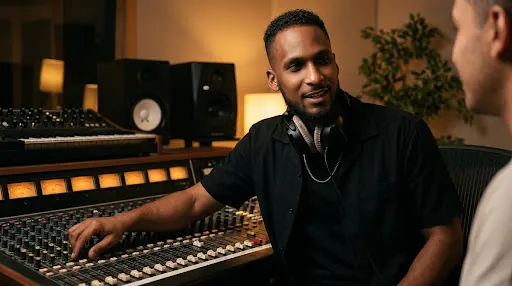
You do not have to lower the standard. You may need to shorten the reach.
Protect enough time to disappear
Flow has trouble entering a room where every notification gets a vote.
That does not mean everybody needs a six-hour candlelit ritual in a cabin with no Wi-Fi. It means attention needs a stretch of time long enough to stop reintroducing itself to the task.
Put the phone somewhere boring. Close what does not belong. Let one thing become the loudest thing for a while.
Create before you evaluate
Do not ask the first draft to prove the final idea.
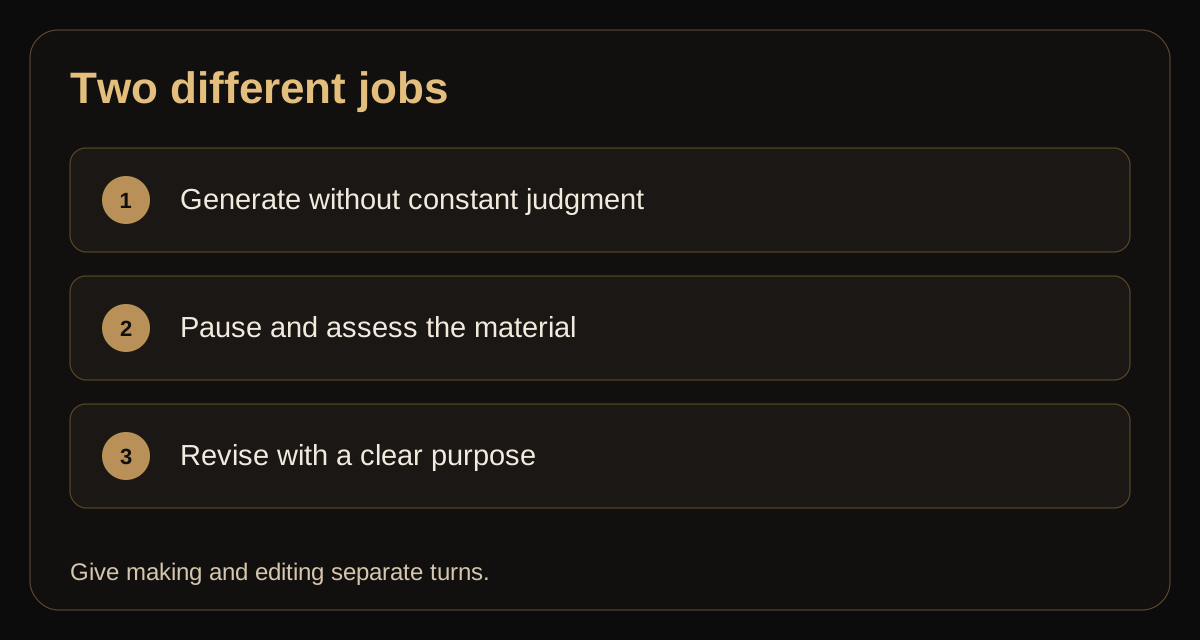
Make the raw material. Follow the unexpected turn. Save the judgment for a separate pass.
The goal is not to become careless. The goal is to stop confusing constant self-surveillance with quality control.
Leave yourself a way back in
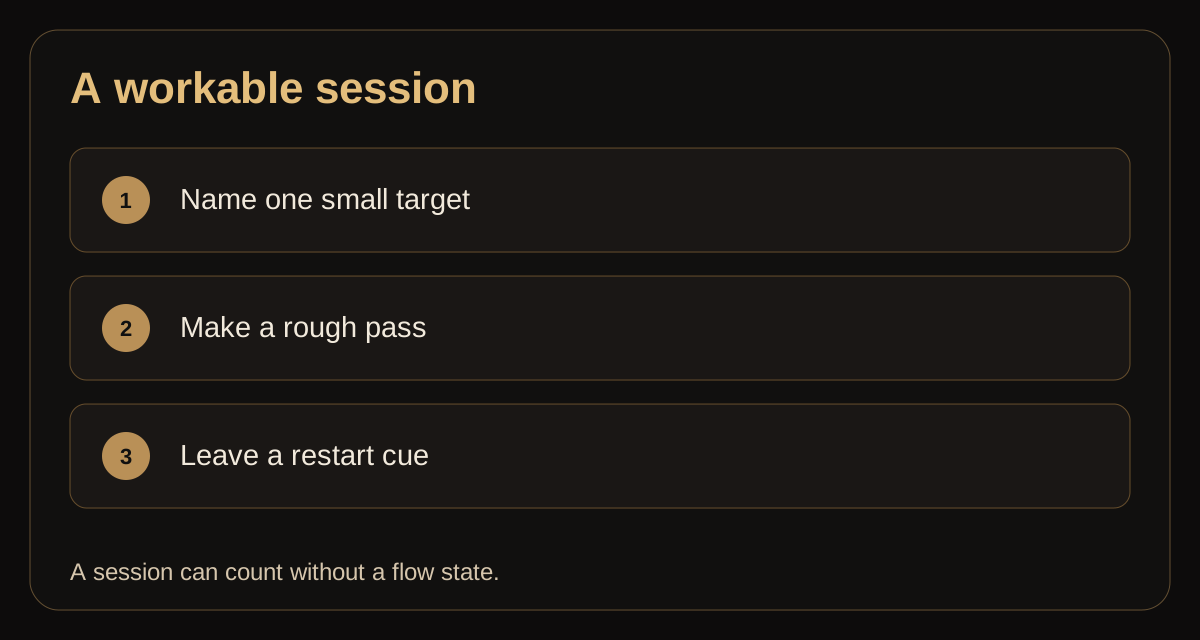
When you stop, leave a note. Save the unfinished lyric. Mark the next edit. Name the question the piece still needs to answer.
An open door is easier to walk through than a wall you have to rebuild every morning.
If flow never shows up, the session can still count
Give yourself five minutes to make one rough thing: a bad first line, a drum pattern with no polish, three thumbnail sketches. Keep the part that teaches you something and write down the next move. A useful session can produce a question, a discarded option, or a better starting point for tomorrow.
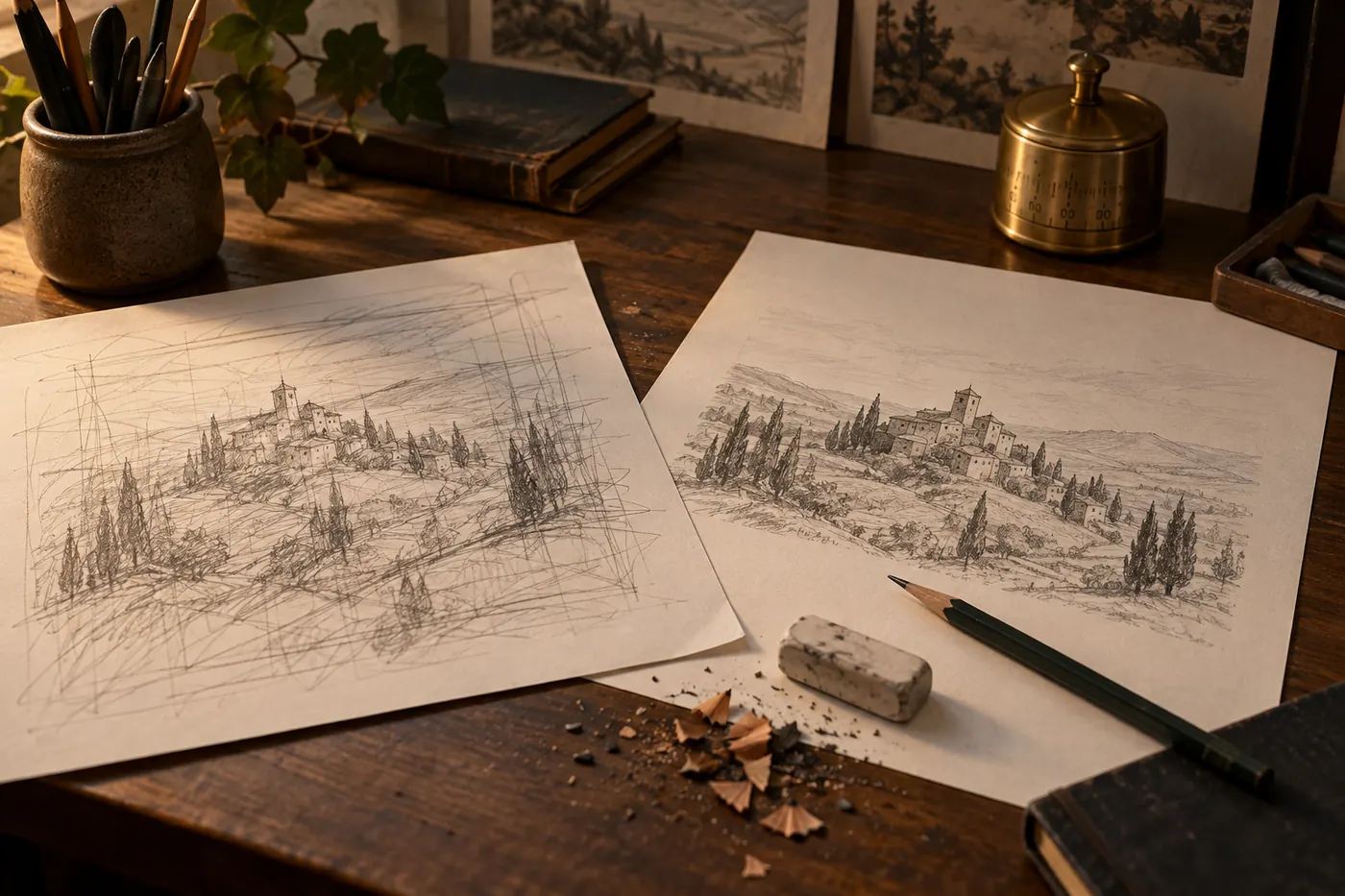
This is a practical way to lower the cost of beginning, not a switch that research has proven will trigger flow. Do the work you can do without demanding the feeling that sometimes comes with it.
Choose the part of the task that can move today
Research on flow often discusses clear goals and a workable balance between challenge and skill. That gives us a better question than “How do I make a perfect thing?” Ask, “What is the next task I can recognize and complete?” If the whole song feels impossible, shape the first eight bars. If the article feels impossible, write the paragraph that answers one reader question. If the edit feels impossible, choose the opening shot. Small is not a lower artistic standard; it is a way to get actual material in front of you. Read the flow research review.
There is also a difference between a task that stretches you and one that buries you. On a tired day, producing a finished master may be the wrong target. Listening back and writing two precise notes might be the right one. On an energized day, a tiny warmup may become a place to hide. Match the target to the person at the desk today, then raise it if you have more to give.
When interruption is inevitable, leave a restart note before you step away. Write the next physical action: “Open the chorus session and test the harmony under line three.” That note is more useful than “work on music.” It prevents tomorrow's energy from being spent reconstructing today's intention. None of these steps guarantees flow. They make it easier to begin and easier to return.
Do not confuse a good session with a good mood
There is a social side to this, too. If you collaborate, agree on what kind of session you are having. A room for generating ideas behaves differently from a room for choosing and polishing them. Both are necessary, but switching between them every thirty seconds can make everyone defensive. Try a short window where no idea has to justify itself, followed by a separate pass where you ask what serves the piece. This is a working practice, not a claim that every team will enter flow. It simply gives each job a fair turn.
Some worthwhile sessions feel awkward all the way through. You still find the wrong turn in a verse. You still learn that the photograph needs a different angle. You still discover the joke is hiding in the second sentence. If the only session you count is the one where time vanishes, you will overlook the ordinary work that makes those rare sessions possible.
At the end, record one concrete result and one next step. “The bridge is still rough, but I know its rhythm” is a result. “Try the lower key before rewriting the lyric” is a next step. This is how a creative practice stays alive between breakthroughs. The feeling may arrive later. The work can begin now.
Quick answers
How do you get into a creative flow state? You cannot flip a switch, but you can set up the conditions. Pick one clear, specific target. Choose a challenge that stretches you without overwhelming you. Protect a stretch of time from interruptions. Then make rough material before you judge any of it.
Can you force creative flow? Not really. You can force yourself to show up, and you should. But demanding brilliance on command usually pulls your attention onto yourself and away from the work. Showing up creates the opening. Forcing tends to close it.
Why can’t I focus when I try to be creative? Common culprits are a goal that is too vague, a task that feels too big, notifications cutting in, exhaustion, or judging every idea the second it appears. Figure out which one you are dealing with, then change that one condition.
What should I do when I have a creative block? Ask what kind of resistance it is. Rest if you are tired. Make the first move smaller if you are scared. Get a clearer target if you are confused. And if nothing is flowing, make one rough thing and leave yourself a note for tomorrow. That session still counts.
The work needs your attention, not your panic
I wrote in “I Was Never One Thing. That’s the Point.” that King The Kemist is the formula I built from everything I am. A formula still needs conditions. Heat changes things. Pressure changes things. Timing changes things.
The same is true creatively.
And if your point of view is what makes the work recognizable, flow is one of the places where that point of view gets to move without being interrupted every ten seconds by the need to explain itself.
You do not need to become passive and wait for a mystical download. You do not need to bully yourself either.
Practice. Prepare. Choose the next honest target. Protect your attention. Then give the work enough room to surprise you.
I cannot force the current.
I can stop damming it with panic.
Sometimes that is how the room gets quiet enough for the real thing to enter.
— King