Grown Man Notes
Emotional Maturity Is Sexy. So Is Knowing When to Leave.
Emotional maturity is attractive because it makes honesty safer. It also knows when honesty has said enough and the grown decision is to leave.

Anybody can look emotionally mature while nothing is happening.
The lighting is soft. Everybody ate. Nobody has misunderstood a text message. Boundaries are respected because none have been tested. We are all healed and speaking in complete sentences.
Beautiful.
Now add disappointment, jealousy, fear, an old wound, and one person saying “nothing is wrong” with the energy of a federal investigation. 😂
That is when emotional maturity stops being a personality description and becomes a practice.
It shows up in what you do with the feeling after the feeling arrives.
Can you tell the truth without turning it into a weapon? Can you listen without preparing a countersuit? Can you admit what belongs to you? Can you stay when repair is possible and leave when staying requires you to keep betraying yourself?
That is grown.
And yes, it is sexy.
Calm is not always maturity
Some people are calm because they know how to regulate emotion.
Some are calm because they checked out of the conversation twenty minutes ago.
The outside can look similar.
Emotional maturity does not require you to become unbothered by everything. A person who never reacts may be grounded. They may also be avoiding, suppressing, performing control, or waiting to punish you later with a silence long enough to qualify as a season.
Maturity lets the feeling exist without appointing it chief executive officer.

Anger can tell you a boundary was crossed. Fear can tell you something matters. Jealousy can expose insecurity, dishonesty, or a need nobody has named. Sadness can reveal that the relationship you have is not the relationship you thought you were building.
The emotion carries information.
It does not automatically carry instructions.
You can feel angry without becoming cruel. You can feel afraid without becoming controlling. You can feel hurt without making somebody else bleed so the room feels fair again.
Regulation is what makes communication usable
A 13-year longitudinal study followed middle-aged and older, long-term married heterosexual couples and observed how they handled negative emotion during conflict. The strongest findings involved wives: faster downregulation of negative emotion predicted marital satisfaction for both spouses at the same time, and wives' constructive communication helped explain later gains in their own marital satisfaction. That is useful evidence from one specific sample, not a universal relationship formula.
The useful point is simple: when emotional arousal comes down enough, people have a better chance of communicating instead of reacting.
That does not mean the calmest person is automatically right.
It means a nervous system at full volume has trouble hearing nuance.
Take the walk. Drink the water. Ask for twenty minutes. Sleep before sending the paragraph that begins with “Since you want to be honest.” 😂

Regulation is not abandoning the conversation. It is returning with enough of yourself available to have one.
If you use the pause only to avoid the issue until the other person gets tired, that is not regulation.
That is a disappearing act with wellness language.
Emotional maturity looks boring up close
People want maturity to look like a movie scene. The big speech. The perfect apology in the rain. The violin comes in right on cue.
Up close, it is way less cinematic.
It looks like somebody saying, “I’m getting heated. Can we pick this up after dinner?” And then actually picking it up after dinner.
It looks like remembering what your partner told you last month about the thing that stresses them out, and adjusting before they have to ask again.
It looks like realizing you are wrong in the middle of an argument and saying so out loud, even though you still had two good points loaded and ready.
It looks like asking a question when you are tempted to assume. “What did you mean by that?” has saved more relationships than any grand gesture ever will.
It looks like not needing an audience. You do not post the vague quote about loyalty. You do not run the story past six friends to collect votes before you talk to the one person who was actually involved.
It looks like keeping a small promise on a random Wednesday, because trust is mostly built on days nobody would ever put in a highlight reel.
It looks like apologizing for your tone even while you still believe your point. Both things can be true at the same time.
It looks like letting somebody else have a bad day without turning it into a referendum on you.
None of that is going to trend.
Nobody is going viral for calmly saying, “You’re right, I didn’t think about that.” 😂
I have been the person with the beautiful explanation of how much I had grown, followed by the exact same move a week later. The explanation was not the growth. The changed Wednesday would have been.
So if you are trying to figure out whether somebody is emotionally mature, skip the speech and watch the follow-through. The mature person is usually the one whose ordinary days match what they said on the important one.
Accountability should cost you something
“I take accountability” has become one of those phrases that can sound meaningful while changing absolutely nothing.
Real accountability costs comfort.
It may cost the pleasure of defending yourself. It may cost an excuse you have used for years. It may require an apology with no request for immediate forgiveness. It may require different behavior when the same trigger appears again.
An explanation can help somebody understand you.
It does not erase what your behavior did to them.
Your childhood may explain why conflict feels dangerous. Your last relationship may explain why trust comes slowly. Stress may explain why your patience is short.
Those facts deserve compassion.
They do not make another person responsible for absorbing the damage forever.
Maturity can hold both truths: something happened to you, and something is now required from you.
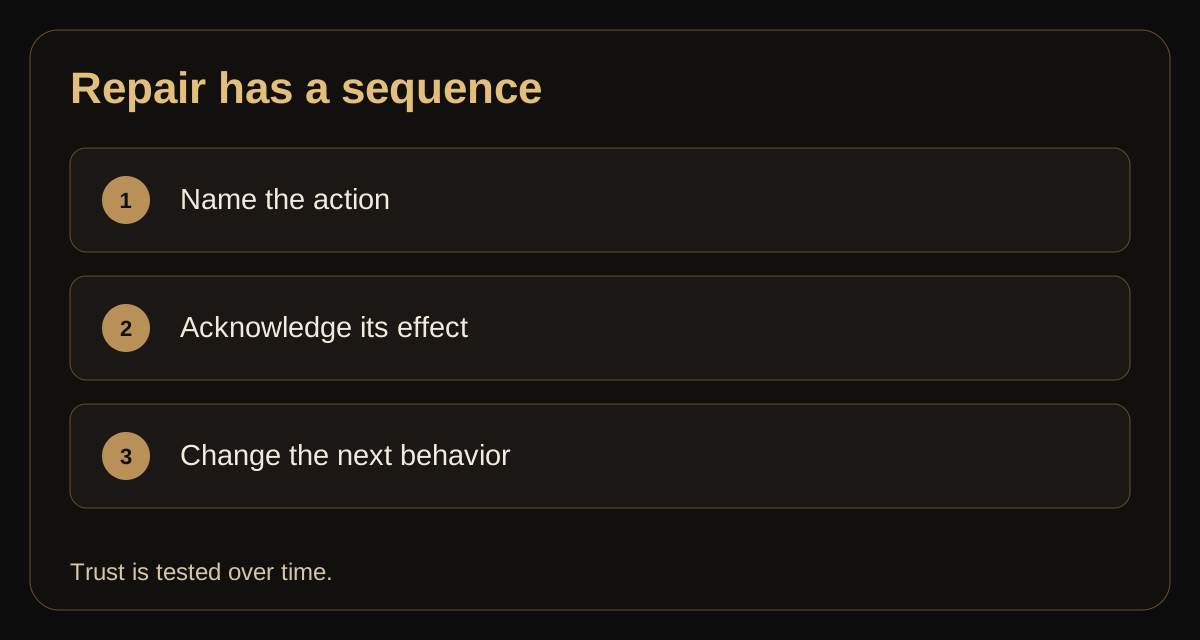
Repair has to become visible. Name the action without making the other person prove it happened. Acknowledge the effect. Ask what would help and say what you will do differently when the same moment arrives again. Then let your next actions answer whether you meant it. Research on how couples recover after conflict is one reason to look beyond the argument itself to what happens afterward; it does not offer a universal script for every relationship.
Being understood is not the same as getting your way
Healthy communication has been turned into a strange customer-service policy where everybody believes that if they explain a feeling clearly enough, the other person must approve the request.
No.
Somebody can understand why you want something and still say no.
You can understand why they said no and still decide the answer does not work for you.
That is where compatibility enters.
Communication can solve a misunderstanding. It cannot negotiate two opposing life plans into becoming one. It cannot make somebody want intimacy, commitment, children, honesty, monogamy, freedom, quiet, adventure, or a shared future in the same way you do.
Sometimes the relationship does not need better wording.
It needs an honest decision.
Swallowing it is not the same as keeping the peace
There is another version of calm that deserves its own warning label.
It is the person who never brings anything up.
They do not argue. They do not complain. They say “it’s fine” so often it starts to sound like a ringtone.
From the outside, that can look like the most mature person in the relationship.
Sometimes it is. Not every annoyance needs a meeting with an agenda.
But when the important things stay unsaid, they do not disappear. They pile up. Then one night a conversation about who forgot to text back turns into a conversation about the last two years, and the other person has no idea where any of it came from.
I wrote about this pattern in Why Do Libras Avoid Conflict? Because Peace Was Their Job. Quiet is the absence of noise. Peace is the absence of unfinished business. You can have a very polite relationship that is quietly running out of honesty.
Emotional maturity is not choosing silence so you look easygoing. It is saying the true thing early, while it is still small, still kind, and still fixable.
“That comment stung a little” is a much easier sentence than “I have been unhappy for a year.”
Silence can feel like you are protecting the relationship. A lot of the time, it is protecting you from a few awkward minutes and leaving the other person to guess. And people usually guess worse than the truth.
If you are on the other side of this, make it safe for the quiet person to talk. Ask, then actually listen. If every honest sentence gets met with a counterattack, do not be surprised when the honest sentences stop coming.
Say the small one while it is still small.
Chemistry can keep a bad fit looking expensive
Chemistry is powerful because it makes possibility feel like evidence.
The attraction is real. The conversation is electric. The body has submitted its vote and would now like the committee to stop asking questions.
But chemistry does not tell you whether somebody can communicate, repair, remain consistent, tell the truth, or build the kind of relationship you want.

Intensity can make two people feel deeply connected before they have gathered enough information to know whether they are safe together.
That does not make chemistry fake.
It makes chemistry incomplete.
Watch the pattern after the spark.
Do words and behavior agree? Can conflict move toward understanding, or does every disagreement become a trial? Are boundaries respected after the romantic speech ends? Does affection remain available when somebody is not getting their way?
Grown love still gets to be hot.
It also needs somewhere stable to put the heat.
Knowing when to leave is part of emotional maturity
Staying is not always proof of depth.
Sometimes staying is fear with excellent endurance.
You can love somebody and recognize that the relationship is not healthy enough to keep. You can understand their wounds and refuse to keep volunteering as the place where those wounds express themselves. You can see their potential and stop dating the future version who has not arrived.
Leaving does not always mean somebody became a villain.
It may mean the pattern became clear.
An apology without change becomes a schedule. A boundary without consequence becomes a suggestion. A relationship where one person keeps translating their pain and the other keeps debating the grammar will eventually exhaust the translator.
The mature question is not only “Can this be repaired?”

It is “Are both people participating in the repair?”
If the answer stays no, leaving may be the most honest form of self-respect available.
Leave without needing to destroy the person
Knowing when to leave does not give you permission to humiliate somebody on the way out.
You do not need a final speech designed to live in their nervous system for ten years. You do not need to expose every weakness they trusted you with. You do not need to win the breakup so completely that no tenderness survives the evidence.
Say what is true. Make the boundary clear. Handle the practical pieces. Protect yourself when safety requires distance.
Then stop using access to each other as a way to postpone grief.
Some endings need conversation. Some need no contact. Some need professional or legal support. The details change, especially where abuse, threats, coercion, or shared responsibilities are involved.
The principle remains: leaving can be firm without becoming theatrical.
Outgrowing the relationship does not erase what was real
In “Spiritual Awakening Can Feel Lonely. Nobody Warns You About That Part.”, I write about the space between an old identity and the person becoming visible underneath it.
Relationships can occupy that space too.
You may outgrow the agreement without deciding the entire history was a mistake. A person can matter deeply and still not belong in the next chapter in the same role.

None of your labels tell the whole story. Neither does one ending.
Emotional maturity lets you grieve without rewriting every good memory into evidence against yourself. It lets you admit where you failed, keep the lesson, and leave the door closed when reopening it would only repeat the course.
A real apology has a next chapter
Repair also asks the hurt person what would actually help. One person may want an uninterrupted conversation. Another may want the practical problem fixed. Someone else may need space before either is possible. Asking is more respectful than assuming a hug or a long explanation will solve it. The person who caused harm can take responsibility without demanding that their preferred repair be accepted.
In the same way, receiving an apology does not require you to announce a final verdict immediately. You can say, “I hear what you are saying, and I need to see what changes.” That answer is neither cruelty nor a promise to stay. It is a truthful description of where trust stands today.
“I'm sorry you were upset” can be an exit sign dressed as an apology. Better repair starts with the action: “I interrupted you when you were explaining why that hurt.” Then comes its effect: “You had to fight to finish a sentence, and I made the conversation feel unsafe.” The next step is not a promise to become a new person by Tuesday. It is a specific change someone can observe, such as pausing before responding or returning to the conversation after a short break.
The other person does not have to forgive on a schedule. They may need time, a different boundary, or evidence that the pattern has changed. If the same action returns after every polished apology, pay attention to the pattern. Words matter, but a repeated behavior tells a story too. Research on conflict recovery in couples suggests that what happens after an argument has consequences for relationship quality; it does not give us a simple pass/fail test for any one couple. Read the conflict recovery study.
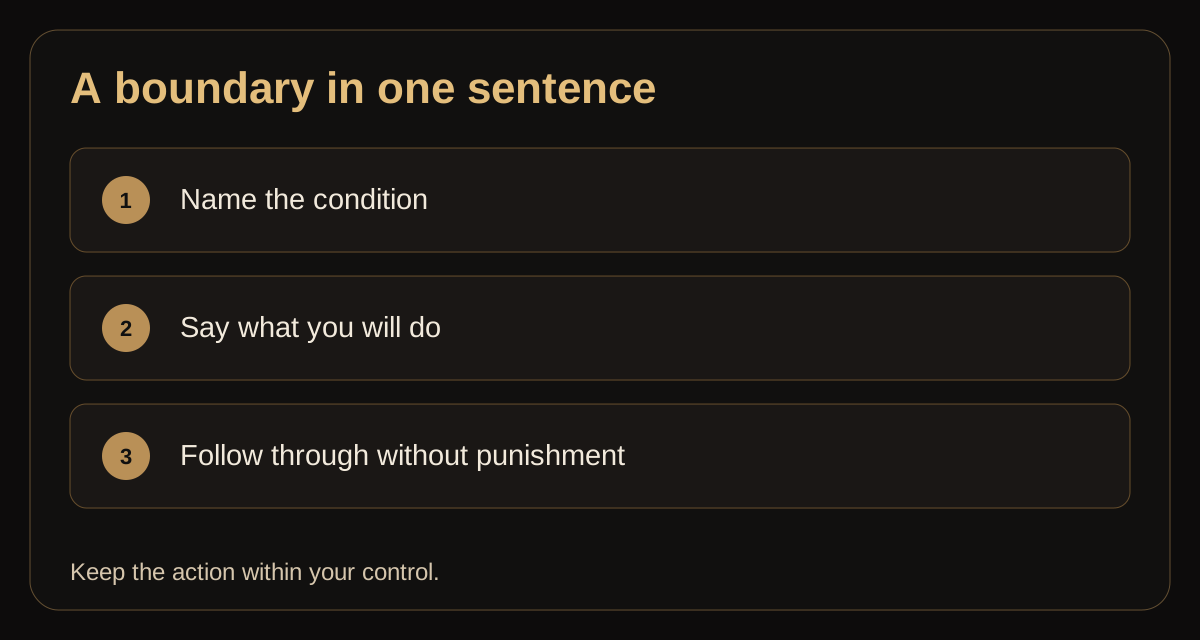
A boundary names what you will do
A threat tries to control the other person's behavior with fear: “Do exactly what I want or else.” A boundary tells the truth about your own action: “If we start shouting, I will pause this conversation and return when we can both speak without yelling.” That does not mean you never ask for change. It means you make the consequence clear and within your control.

It is possible to set a boundary badly. If you use it to punish, disappear without explanation, or win an argument, the word “boundary” cannot rescue the behavior. Look at the purpose. Are you protecting the conditions for a workable conversation? Can you state the limit without humiliating somebody? Can you follow it yourself? Those questions make the idea more useful than a slogan.
If you are unsure whether to repair or leave, write down what actually changes over time. Record the action, the repair attempt, and what happened the next time the issue came up. A single beautiful conversation can feel like a turning point. A pattern is a better guide. You can be compassionate about why a person struggles and still decide what you can live with.
Quick answers
What are signs of emotional maturity in a man? The same signs you would look for in anybody. He can name what he feels without making it your job to manage it. He takes accountability without a long speech about why it was not really his fault. He can hear “that hurt me” without turning it into a debate. And his behavior on ordinary days matches what he promised in the serious conversation.
How do you know when to leave a relationship? There is no single test, but patterns help. If the same harm keeps repeating after every apology, if only one person is doing the repair, or if staying means regularly abandoning what you need, take that seriously. If you ever feel unsafe, reach out to a counselor or a trusted person outside the relationship for support before you make the next move.
Can an emotionally immature person change? Yes, people can grow. But growth shows up as changed behavior over time, not as promises made in the middle of a fight. You can support somebody’s growth without putting your own life on hold while you wait for it.
Is it emotionally mature to stay and work on things? Sometimes. Staying is mature when both people are participating in the repair and something is actually changing. It is not maturity when staying mostly means avoiding the grief of leaving.
The grown decision may not feel good immediately
Maturity is rarely the choice that removes every uncomfortable feeling.
Sometimes it is the choice that produces cleaner pain.
The honest conversation may hurt. The boundary may disappoint somebody. Leaving may create loneliness, doubt, and a very persuasive memory reel at 1:17 in the morning.
You can miss a person and still know the relationship was costing too much of you.
You can love somebody and stop confusing love with permission.
You can leave without pretending you never wanted to stay.
That is emotional maturity too.
— King