Alchemy & Symbols
Freemasonry Explained: Famous Freemasons, Symbols and What It’s Really About
Secret handshakes, mysterious buildings and the eye on the dollar bill. 😂 The real story of Freemasonry: famous Freemasons from George Washington to Duke Ellington, Prince Hall Freemasonry, what the symbols mean and the myths that aren’t true.

Few groups get more conspiracy theories, more side-eye and more curiosity than the Freemasons. 😂
Secret handshakes. Mysterious buildings. Symbols on the dollar bill. Rumors that they run the world. Your uncle who suddenly has a ring with a square and compass on it and won't tell you what happens at "the meetings."
So let's do this properly. No paranoia, no worship, just the real story. Here's what Freemasonry actually is, where it came from, the famous Freemasons you've definitely heard of (including a lot of Black legends through Prince Hall Freemasonry), what the main symbols mean and which popular "Masonic" myths aren't true.
If you've been reading the Alchemy & Symbols series here, like What Is Alchemy? and The Kybalion and the 7 Hermetic Principles, this fits right in. Freemasonry is one of the places where old symbolic traditions stayed alive.
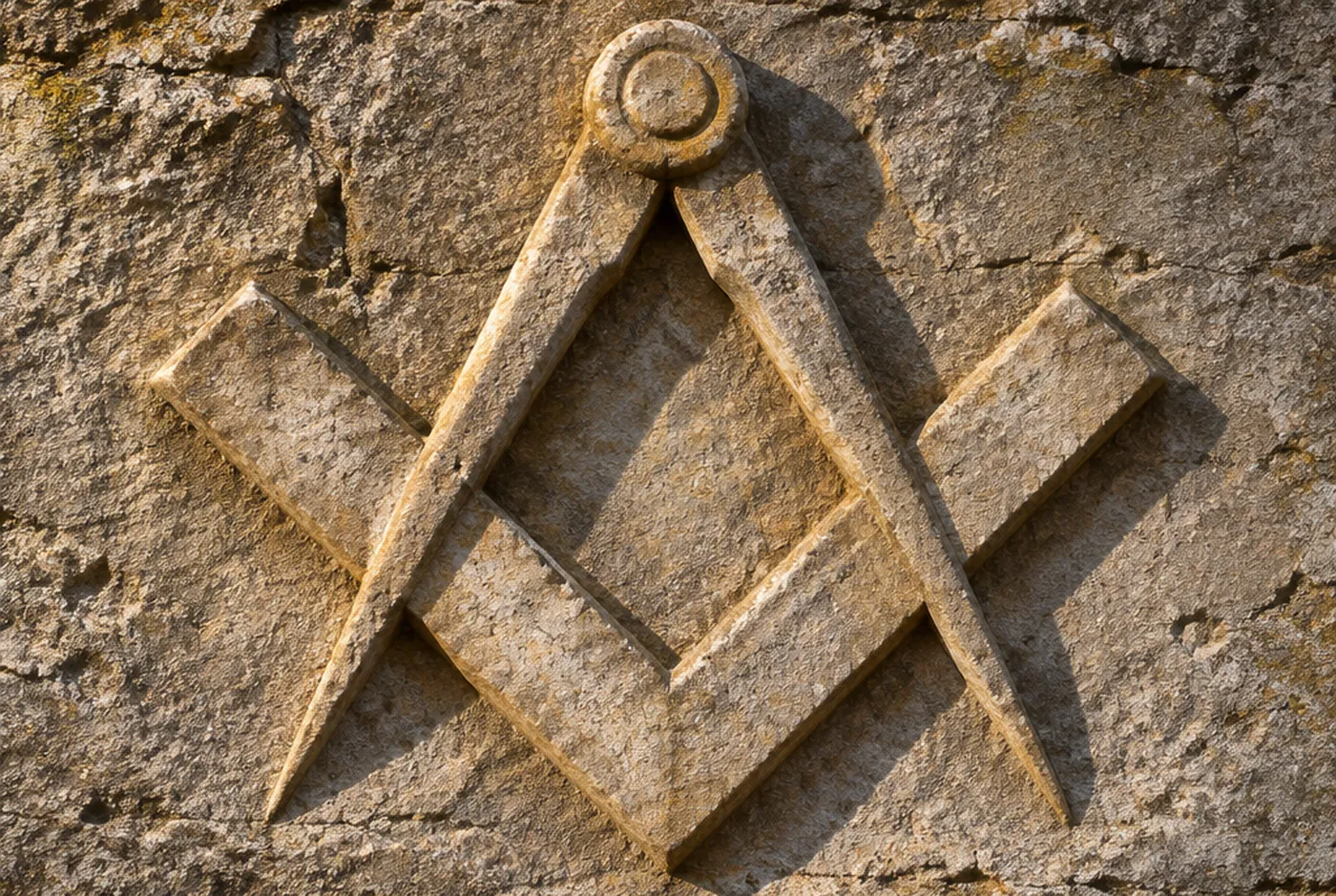
What is Freemasonry?
Freemasonry is one of the oldest fraternal organizations in the world. At its core, it's a membership group built around ritual, symbolism, moral lessons, charity and brotherhood.
Members meet in local groups called lodges. Through a series of ceremonies called degrees, they learn moral and philosophical lessons taught through symbols, many of them borrowed from the tools and traditions of medieval stonemasons.
The three basic degrees, often called the Blue Lodge or "craft" degrees, are:
- Entered Apprentice
- Fellowcraft
- Master Mason
After that, some Masons join additional groups (sometimes called "appendant bodies") like the Scottish Rite or the York Rite, which offer more degrees and more symbolic teachings. The famous "33rd degree" is an honorary degree in the Scottish Rite.
Freemasonry describes itself as a society with secrets, not a secret society. The meetings, rituals and modes of recognition (the grips and passwords) are private, but the existence of lodges, many members and a lot of their history are public. Plenty of lodges have signs out front and websites. 😂
What do Freemasons believe?
Freemasonry isn't a religion, but in most traditional jurisdictions members are expected to believe in a Supreme Being. Masons often use the phrase "the Great Architect of the Universe" as a general term that people of different faiths can share. Members are generally encouraged not to argue about religion or politics inside the lodge.
The big themes are moral improvement, charity, truth, loyalty to friends and community and becoming a better man (or, in some branches, a better person). The classic Masonic phrase is that it makes "good men better."
Where did Freemasonry come from?
The honest answer is that historians still debate the exact origins.
The most common theory is that Freemasonry grew out of the guilds of working stonemasons in medieval Britain, the people who built cathedrals and castles. Over time, these guilds began accepting members who weren't actual builders. Those "accepted" or "speculative" Masons used the tools and language of stonemasonry as symbols for building a better life and a better character.
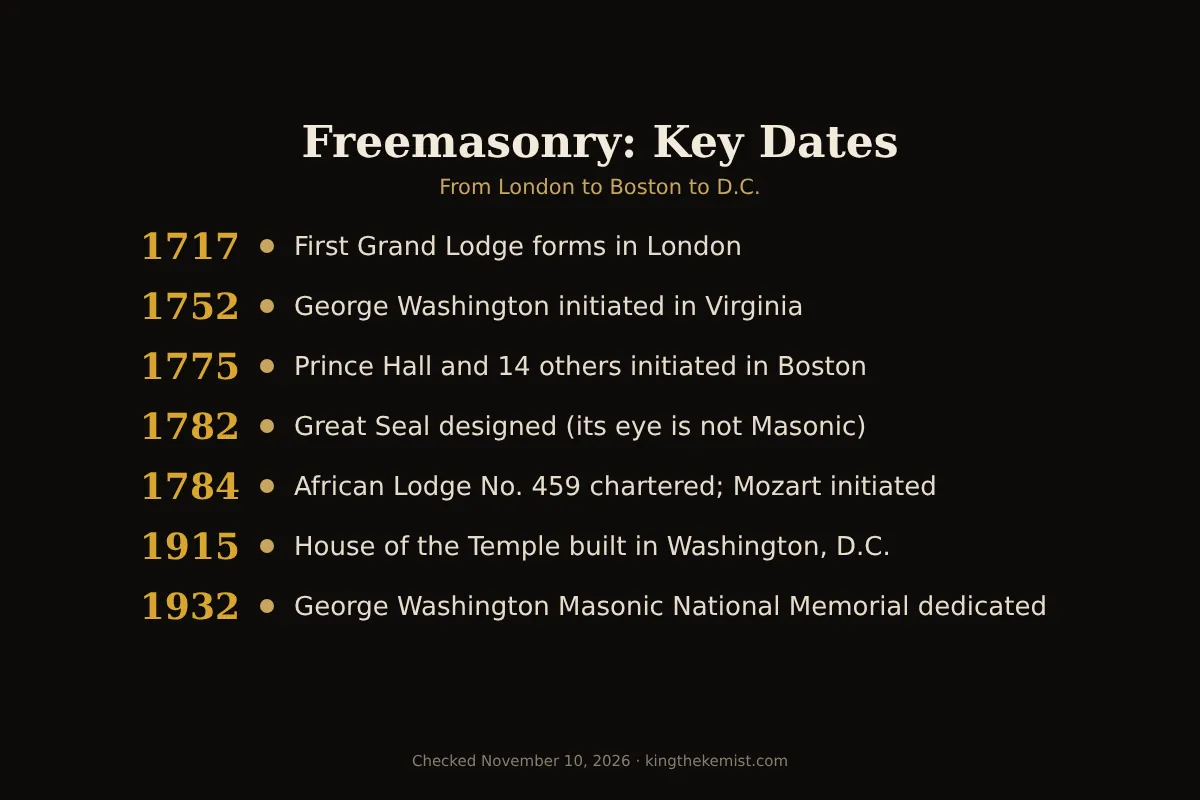
The big turning point everyone agrees on: in 1717, four London lodges came together to form the first Grand Lodge, the Grand Lodge of London and Westminster, which later became part of the United Grand Lodge of England. That's usually treated as the start of organized, modern Freemasonry.
From there, it spread fast through Europe and the American colonies in the 1700s, carried by merchants, soldiers and thinkers of the Enlightenment.
Famous Freemasons
Freemasonry's membership list reads like a who's who of history. Here are some of the most famous names.
U.S. presidents
At least 14 U.S. presidents were Freemasons, and 15 if you count Lyndon B. Johnson, who took only the first degree. The list includes:
- George Washington, initiated in 1752 in Fredericksburg, Virginia. He took the oath of office in 1789 on a Bible borrowed from a Masonic lodge in New York.
- James Monroe
- Andrew Jackson
- James K. Polk
- James Buchanan
- Andrew Johnson
- James Garfield
- William McKinley
- Theodore Roosevelt
- William Howard Taft
- Warren G. Harding
- Franklin D. Roosevelt
- Harry S. Truman, who served as Grand Master of Missouri
- Gerald Ford
Founders and revolutionaries
- Benjamin Franklin, who became Grand Master of Pennsylvania's Masons in the 1730s and printed one of the first Masonic books in America.
- Paul Revere, yes, the midnight ride guy, who later led the Grand Lodge of Massachusetts.
- The Marquis de Lafayette, the French general who fought for American independence.
- Simón Bolívar, who led independence movements across South America.
Writers, artists and entertainers
- Wolfgang Amadeus Mozart, initiated in Vienna in 1784. His opera The Magic Flute is full of imagery people connect to Freemasonry.
- Mark Twain
- Rudyard Kipling, who wrote poems about lodge life.
- Sir Arthur Conan Doyle, the creator of Sherlock Holmes.
- Harry Houdini
- John Wayne
Other famous names
- Winston Churchill
- Henry Ford
- Buzz Aldrin, the Apollo 11 astronaut
Prince Hall Freemasonry and famous Black Freemasons
This is the part a lot of Freemasonry articles skip, and it's one of the most important.
Prince Hall was a free Black man in Boston. On March 6, 1775, he and 14 other free Black men were initiated into Freemasonry by a lodge attached to a British army regiment. American lodges at the time wouldn't admit them, so they formed their own: African Lodge. In 1784, the Grand Lodge of England granted them a charter as African Lodge No. 459.
That lodge became the root of Prince Hall Freemasonry, which is now the oldest and largest fraternal organization founded by Black Americans. For generations, Prince Hall lodges were places where Black men organized, built leadership, supported their communities and pushed for civil rights.
The list of famous Prince Hall and Black Freemasons is long:
- Thurgood Marshall, the first Black Supreme Court justice
- W.E.B. Du Bois, scholar and co-founder of the NAACP
- Booker T. Washington, founder of Tuskegee
- Medgar Evers, civil rights leader
- John Lewis, congressman and civil rights icon
- Alex Haley, author of Roots
- Duke Ellington, a member of Social Lodge No. 1 in Washington, D.C.
- Count Basie
- Nat King Cole
- W.C. Handy, the "Father of the Blues"
- Jesse Owens
- Sugar Ray Robinson
- Richard Pryor
- Shaquille O'Neal, raised in a Prince Hall lodge in Boston
One common myth: Martin Luther King Jr. was not a Freemason, even though his father, Martin Luther King Sr., was.
Freemason symbols and what they mean
This is where it gets fun. Freemasonry teaches almost everything through symbols. Here are the big ones.
The square and compasses
The most famous Masonic symbol. A builder's square and a drawing compass, laid over each other. The square traditionally stands for morality and honesty in how you treat people ("on the square"). The compasses stand for self-control, keeping your desires within proper limits.
The letter G
Often seen in the middle of the square and compasses. Masons commonly explain it as standing for God and for Geometry, which was considered the foundation of the stonemason's craft and a symbol of order in the universe.
The all-seeing eye
An eye, often in a triangle with rays of light, representing a higher power watching over humanity. Masons do use it as a symbol. But here's a big myth buster coming up below about the one on the dollar bill.
The two pillars
Called Boaz and Jachin, from the description of King Solomon's Temple in the Bible. They show up at the entrance of many lodges and stand for strength and establishment. A lot of Masonic symbolism is built around the story of Solomon's Temple.
The checkered floor
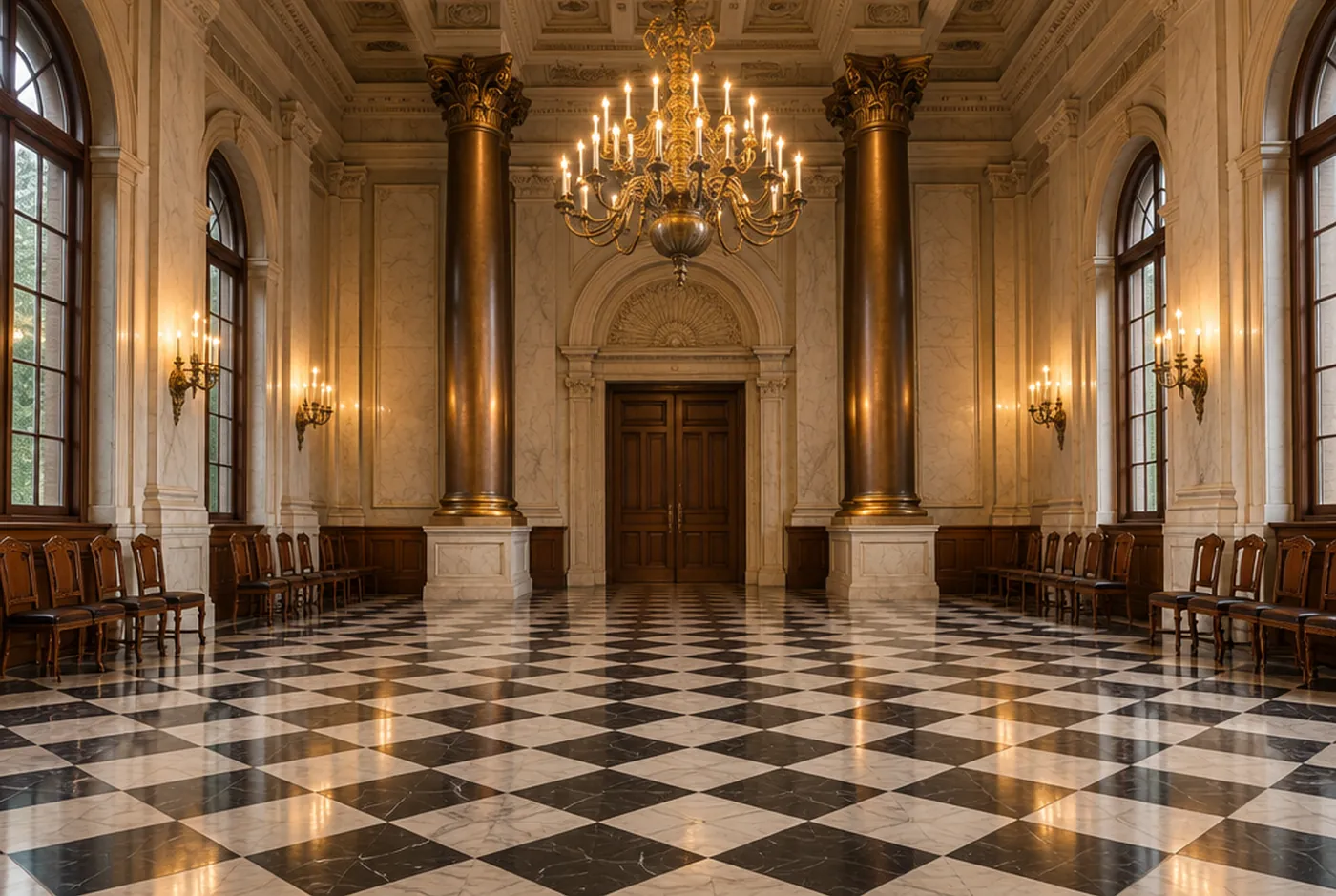
The black-and-white mosaic pavement on lodge floors. It's often explained as a reminder that life is a mix of good and bad, light and dark, joy and sorrow.
The apron
Usually white lambskin, the apron is one of the first things a new Mason receives. It symbolizes innocence and the working stonemason's apron.
The trowel
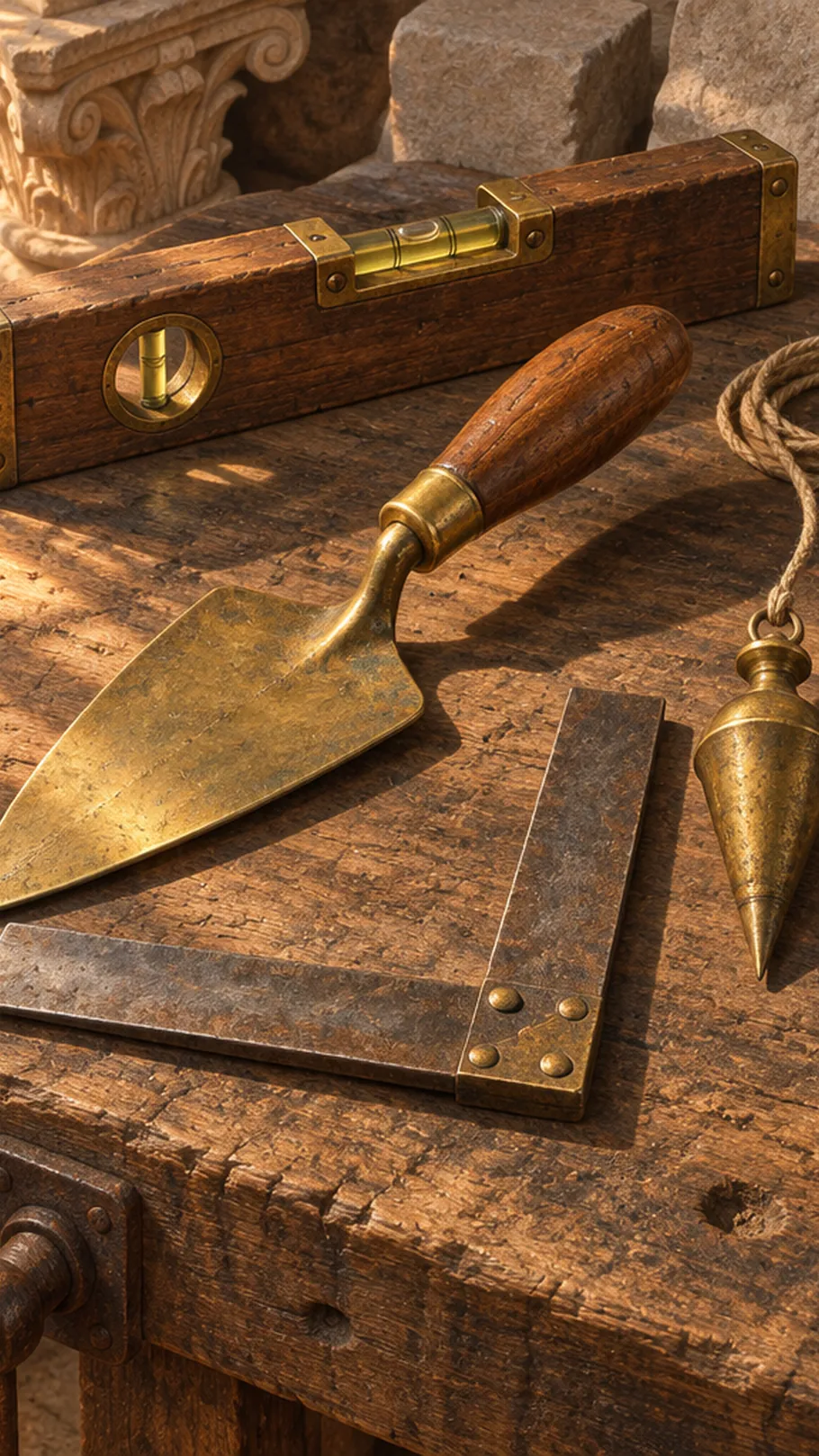
A builder's tool used to spread mortar. In Masonic symbolism, it stands for spreading brotherly love that binds people together.
The beehive
A symbol of hard work and cooperation. A hive gets things done because everyone works together.
The level and the plumb
The level stands for equality, the idea that all members meet on the same level. The plumb line stands for living upright and honestly.
The double-headed eagle
A symbol used by the Scottish Rite, especially connected with its higher degrees.

Masonic myths that aren't true
"The eye on the dollar bill is Masonic"
This is the big one, and it's not true. The pyramid with the eye on the back of the dollar bill comes from the Great Seal of the United States, designed in 1782. The eye represented divine providence watching over the new nation, and the unfinished pyramid represented strength and the idea that the country was still being built. According to historians of the seal, Masons only started regularly using the all-seeing eye as a symbol after Congress adopted the Great Seal, and the eye-and-pyramid combo wasn’t designed as a Masonic emblem. The Seal is the first documented time the two appear together; Masons borrowed the image later, and the Grand Lodge of Italy worked it into its seal in 1805. The design was added to the dollar bill in 1935.
"Freemasons secretly run the world"
There's no credible evidence that Freemasons control governments, banks or world events. Freemasonry is decentralized: there are many separate Grand Lodges, each in charge of its own territory. They often can't even agree with each other on rules, let alone coordinate world domination. 😂
"Freemasonry is a religion or a cult"
Freemasonry isn't a religion. It doesn't have its own scripture, sacraments or path to salvation. Members come from many different faiths. It does use ritual and symbols, which is part of why people get suspicious.
"Masons worship the devil"
No. This rumor goes back to a famous 19th-century hoax by a French writer named Léo Taxil, who later admitted he made up his stories about Masonic devil worship. The rumor has outlived the confession by more than a century.
"Every Mason is rich and powerful"
Most Masons are regular people: teachers, mechanics, small business owners, retirees, veterans. Lodges are often small community groups that do charity work, host dinners and hand out scholarships.
Masonic phrases you already use
Freemasonry left fingerprints on everyday English. You might be using Masonic-flavored phrases without knowing it.
- "On the square." Meaning honest and fair. The square is the Masonic symbol for morality and fair dealing.
- "On the level." Meaning truthful and straightforward. The level is the Masonic symbol for equality.
- "Blackballed." Many clubs and lodges historically voted on new members by dropping white or black balls into a box. One black ball could block someone from joining.
- "The third degree." Today it means intense questioning. Some people connect it to the Master Mason degree, the third degree in Freemasonry, though word historians debate exactly where the phrase came from.
- "Square deal." Fair treatment, again tied to the square.
So next time someone says "Are you being on the level with me?" you can drop a little history on them. 😂
Masonic landmarks in the Washington, D.C. area
If you want to see Freemasonry's footprint up close, the D.C. area has two of the most famous Masonic buildings in the country.
- The House of the Temple in Washington, D.C. is the headquarters of the Scottish Rite's Southern Jurisdiction. It was designed by architect John Russell Pope and built in 1915, and it's considered one of the city's great Neoclassical buildings. It offers tours, so check its website for current times.
- The George Washington Masonic National Memorial in Alexandria, Virginia, was dedicated in 1932 to honor Washington as a Freemason. Its tower was inspired by the ancient lighthouse of Alexandria in Egypt, and its observation deck looks out over Alexandria and toward Washington, D.C.
Both are worth a visit if you're into history, architecture or symbols, Mason or not.
What happens in a lodge?
The private rituals are private, but a lot of lodge life is pretty ordinary:
- Business meetings. Voting on new members, budgets and charity projects.
- Degree ceremonies. Where members move up through the degrees.
- Education. Talks about history, symbolism and philosophy.
- Charity. Lodges often support scholarships, children's hospitals, food drives and local causes. The Shriners, a group connected to Freemasonry, are known for their children's hospitals.
- Fellowship. Dinners, cookouts and family events.
How do you become a Freemason?
The traditional saying is "to be one, ask one." Masons generally don't recruit hard, so if you're interested, you usually have to ask.
The general path in most U.S. jurisdictions looks like this:
- Meet the basic requirements. Typically being a man of a certain minimum age (often 18 or 21, depending on the state), of good character and believing in a Supreme Being.
- Find a lodge. Many Grand Lodges have online lodge locators.
- Ask for a petition. You fill out an application.
- Get recommended and interviewed. Members usually meet you and ask about your background.
- Get voted on. The lodge votes on your membership.
- Take your degrees. Entered Apprentice, then Fellowcraft, then Master Mason.
Requirements and processes vary by jurisdiction, and Prince Hall lodges have their own Grand Lodges and processes. There are also branches of Freemasonry, like co-Masonic orders, that admit women, as well as related organizations for women and families, like the Order of the Eastern Star.
Freemasonry and alchemy
Since this lives in the Alchemy & Symbols section, here's the connection people ask about.
Freemasonry and alchemy are separate traditions, but they grew up in the same world of Renaissance and Enlightenment thinkers who were fascinated with hidden wisdom, sacred geometry, Hermetic philosophy and symbolic language. Some later Masonic degrees and related groups borrowed alchemical, Hermetic and Rosicrucian imagery.
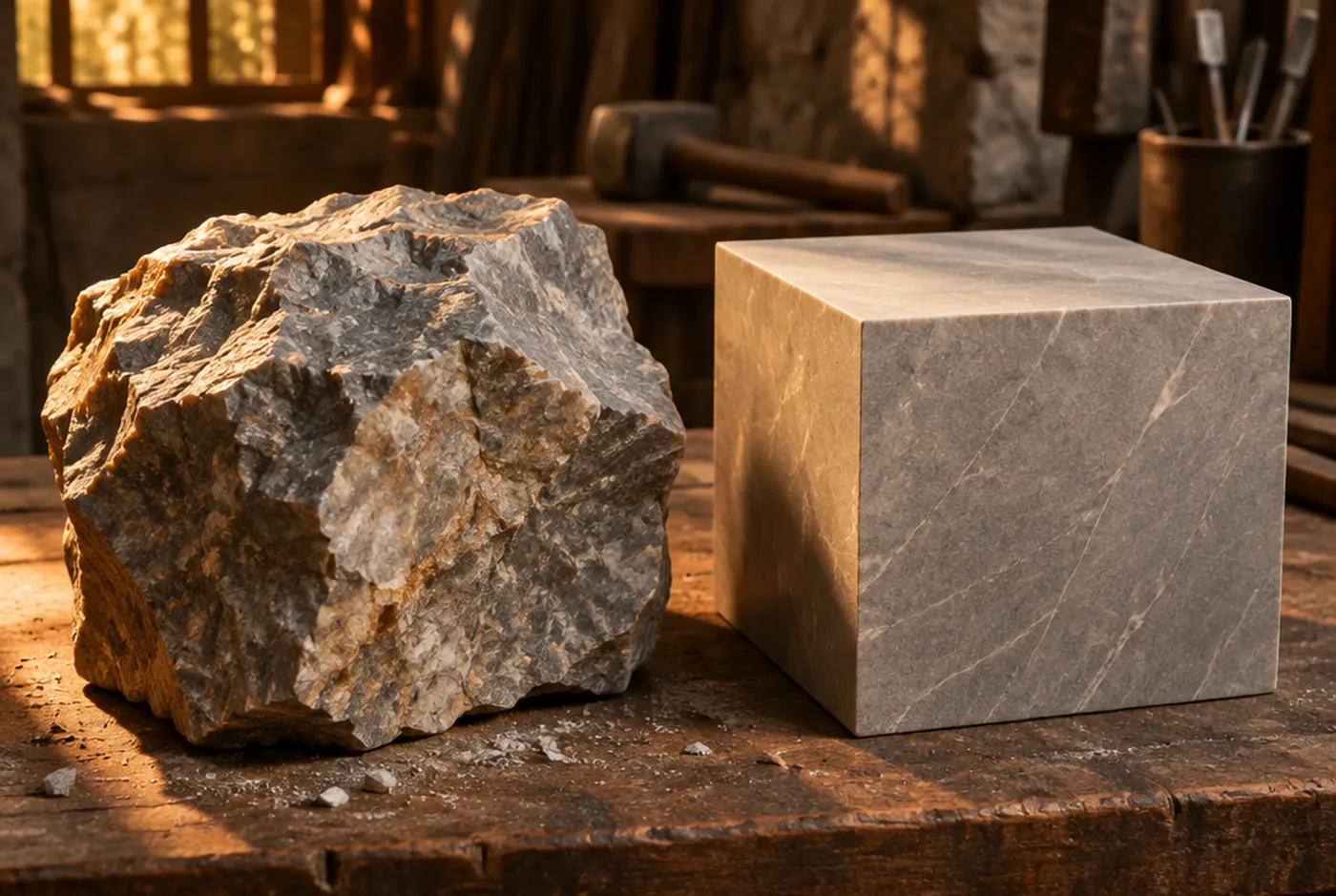
The shared idea is the one at the heart of both: inner work. Alchemists talked about turning lead into gold. Masons talk about turning a "rough ashlar," an unfinished stone, into a "perfect ashlar," a smooth, finished stone ready for building. Both are metaphors for working on yourself.
If that idea resonates, check out As Above, So Below: What It Really Means and The Emerald Tablet, Line by Line.
Frequently asked questions
What is a Freemason? A member of Freemasonry, a fraternal organization built around moral lessons, symbolism, charity and brotherhood, organized into local lodges.
Who are some famous Freemasons? George Washington, Benjamin Franklin, Paul Revere, Mozart, Mark Twain, Harry Houdini, Thurgood Marshall, Duke Ellington, Jesse Owens and Shaquille O'Neal, among many others.
How many U.S. presidents were Freemasons? At least 14, or 15 if you count Lyndon B. Johnson, who took only the first degree.
What is Prince Hall Freemasonry? The branch of Freemasonry founded by Prince Hall and other free Black men in Boston, initiated in 1775 and chartered as African Lodge No. 459 in 1784. It's the oldest and largest fraternal organization founded by Black Americans.
What does the square and compass mean? The square stands for morality and fair dealing, and the compasses stand for self-control. The letter G in the middle is often explained as God and Geometry.
Is the eye on the dollar bill a Masonic symbol? No. It comes from the Great Seal of the United States, designed in 1782. Historians of the seal say it was not a Masonic design, though some Masonic groups later borrowed the eye-and-pyramid image.
Was Martin Luther King Jr. a Freemason? No. His father, Martin Luther King Sr., was.
Can women be Freemasons? Traditional mainstream and Prince Hall lodges admit men, but co-Masonic and women's Masonic orders exist, as do related groups like the Order of the Eastern Star.
What is the difference between Freemasons and the Illuminati? They're different things. The Bavarian Illuminati was a short-lived Enlightenment secret society founded in 1776 and banned in the 1780s. Some of its members were also Masons, which is part of why conspiracy theories mash the two together. Freemasonry is still around and pretty public about existing.
What is a 33rd degree Mason? The 33rd degree is an honorary degree in the Scottish Rite, given to members for outstanding service. It isn't a secret "top level" that controls the rest of Freemasonry.
The bottom line
Freemasonry isn't a shadowy cabal running the world, and it isn't nothing either. It's a centuries-old brotherhood that taught moral lessons through the tools of builders, gave a lot of famous people a place to gather and, through Prince Hall Freemasonry, gave Black men a place to organize and lead when the rest of the country wouldn't let them in.
Whether you ever join or not, the symbols are worth understanding. A square for fairness. A compass for self-control. A rough stone you spend your whole life smoothing out.
That's a pretty good blueprint, honestly.
— King
Sources
- History of Freemasonry, United Grand Lodge of England
- African Lodge #459, Prince Hall Grand Lodge of Massachusetts
- History of the Temple, Scottish Rite, Southern Jurisdiction
- List of U.S. presidents who were Freemasons, Wikipedia
- Famous Freemasons and non-Masons, Grand Lodge of British Columbia and Yukon
- The all-seeing eye and the Great Seal, Grand Lodge of British Columbia and Yukon
Sources checked November 10, 2026.